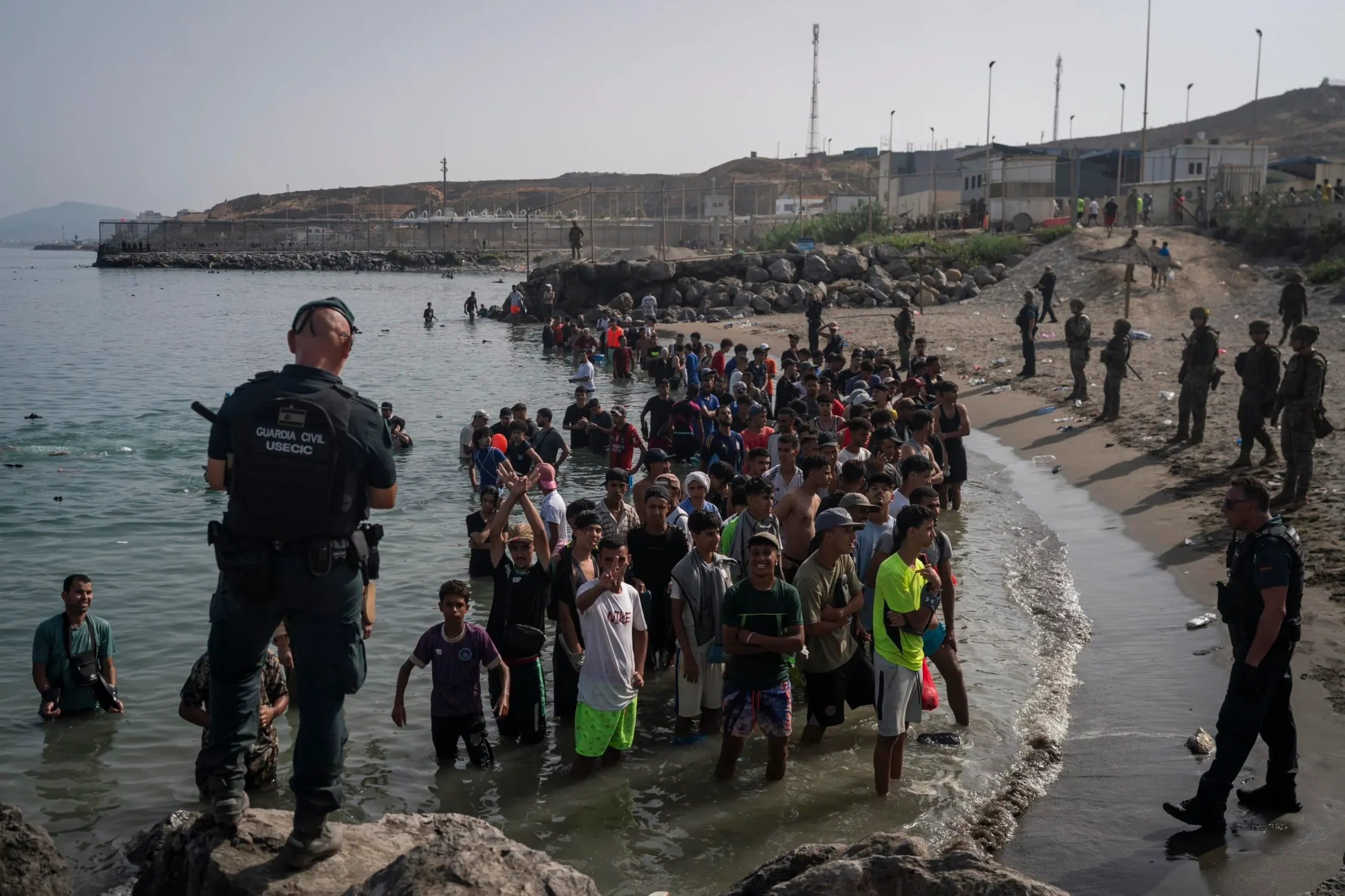
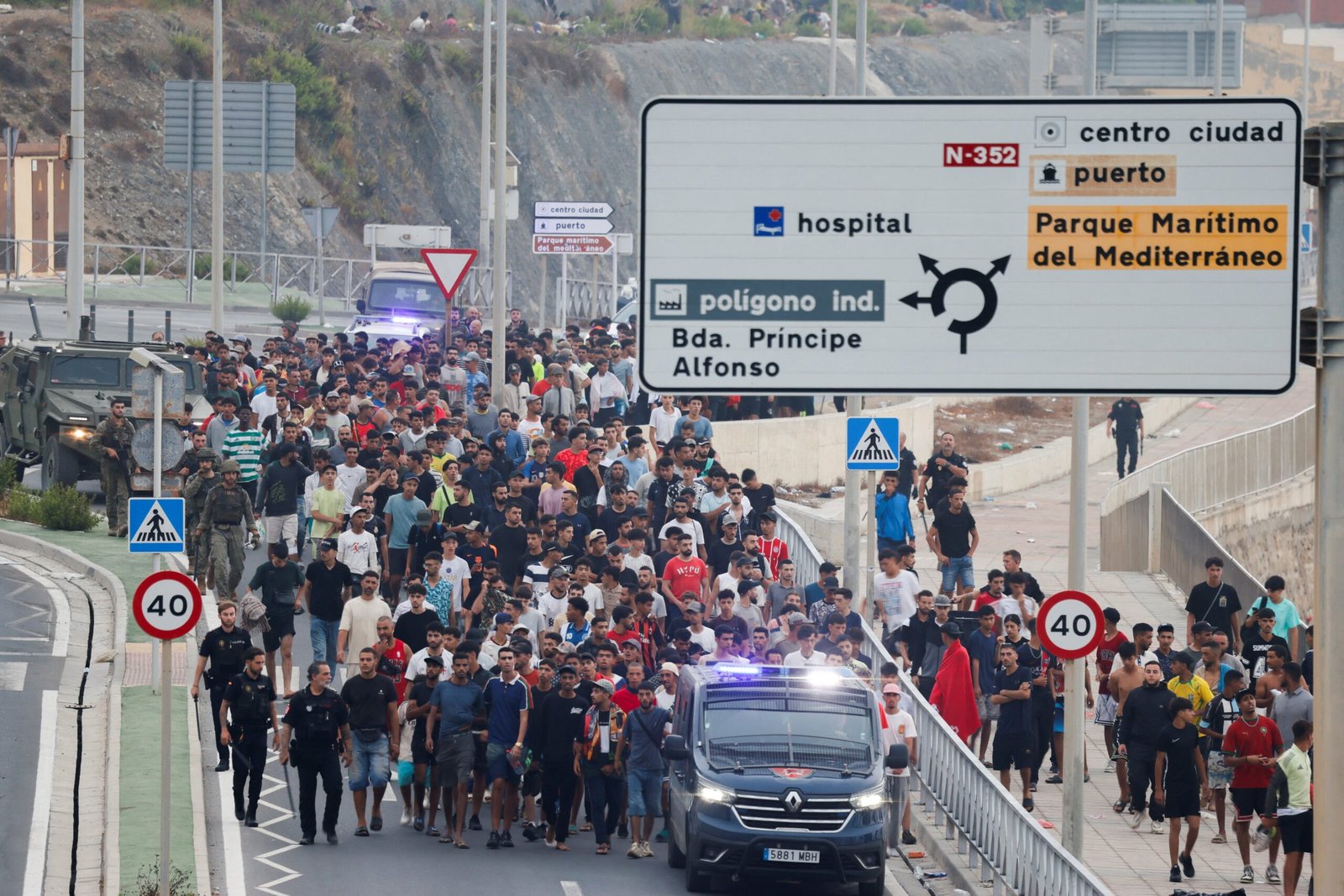
In late July 2026, the border separating Morocco from the tiny Spanish North African enclave of Ceuta effectively collapsed. In a staggering wave of sudden migration, an estimated 50,000 to 60,000 people—predominantly young Moroccan men, but also families, women, and unaccompanied minors—rushed the frontier, bypassing the Tarajal and Benzú breakwaters or swimming miles around the border fences.
This unprecedented influx, far surpassing Ceuta’s ordinary population of roughly 83,000, triggered a profound humanitarian emergency and exposed deep, lingering fractures in European Union migration policy and Spanish-Moroccan diplomatic relations.
The Human Toll and the Ground Reality
The scale of the crossing quickly overwhelmed Ceuta’s infrastructure. Juan Jesús Vivas, Ceuta’s Mayor-President, declared an “absolute humanitarian and social emergency,” noting that facilities for foreign unaccompanied minors were operating at 2,400% capacity.
Tragically, the chaotic sea crossings proved fatal for many. By early August, at least 83 deaths had been recorded, though some reports indicate the total fatality count across Ceuta, Melilla, and Morocco has surpassed 110. The discrepancy in numbers became an immediate point of contention: Spain reported at least 72 bodies recovered, while Morocco’s Interior Ministry initially acknowledged only 11 deaths, mostly from drowning or falling from rocky coastal areas.
However, the influx was short-lived. Met with closed mainland borders, a lack of food and shelter, and the rapid deployment of the Spanish military, an estimated 48,000 to 50,000 migrants had voluntarily returned to Morocco within 48 hours.
Catalysts: The Supreme Court and Social Media Disinformation
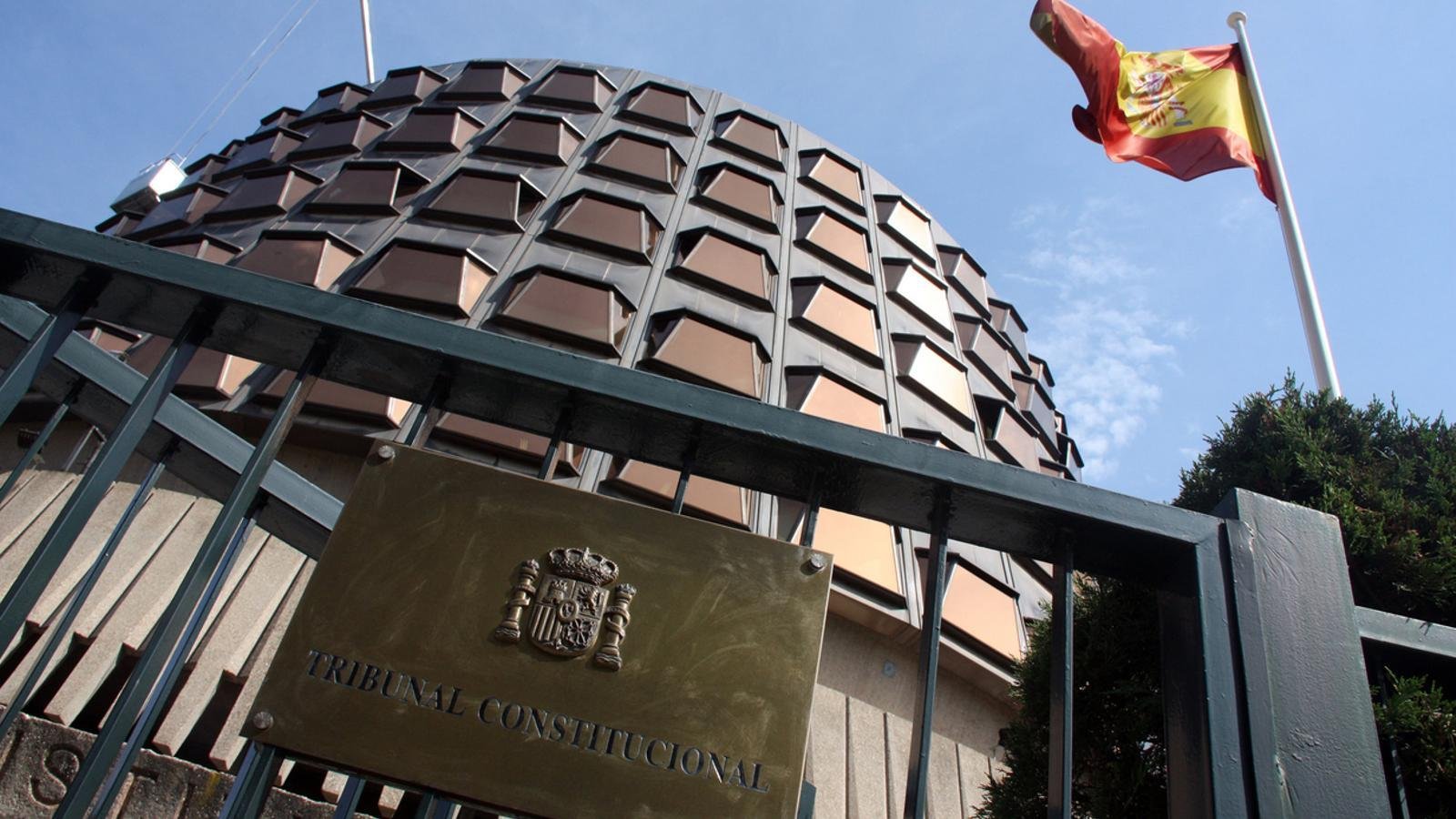
The causes of this sudden mass migration are complex, intertwining legal interpretations with rampant digital disinformation. A critical trigger was a ruling by the Spanish Supreme Court, made public on July 8, 2026, which restricted the government’s ability to summarily return migrants intercepted at sea. The court ruled unanimously that open water does not legally equate to a physical containment barrier like a fence, meaning swimmers must be processed under ordinary return procedures rather than immediate “hot returns”.
This nuanced legal shift was rapidly weaponized online. Misleading social media campaigns—some featuring young people in wetsuits shouting that “Spain is Open”—went viral across Morocco, creating a false promise of easy entry into continental Europe. Morocco’s Interior Ministry directly blamed the “malicious exploitation” of social media and the “misinterpretations of legal provisions” for the surge.
Domestically, Spanish right-wing politicians, including Vox leader Santiago Abascal, blamed the crisis on Prime Minister Pedro Sánchez’s progressive migration policies—specifically, a January 2026 decree designed to regularize approximately 500,000 undocumented workers already living in Spain. However, experts like Mauricio Valiente of the Spanish Refugee Aid Commission dismissed a direct cause-and-effect relationship, noting that the regularization scheme was already closed to new arrivals.
The Geopolitical Shadows: Algeria and Western Sahara
Beyond social media, geopolitical maneuvers played a significant role. Matteo Villa, a migration researcher, argued that such massive, coordinated movement is impossible without state-level awareness, suggesting that Morocco may have loosened border controls to demonstrate its leverage over Europe.
This theory aligns with reports from Spanish intelligence services (CNI), which concluded that while Rabat may not have orchestrated the mass crossing, Moroccan border controls were gradually relaxed during July and removed entirely during the Throne Day holiday.
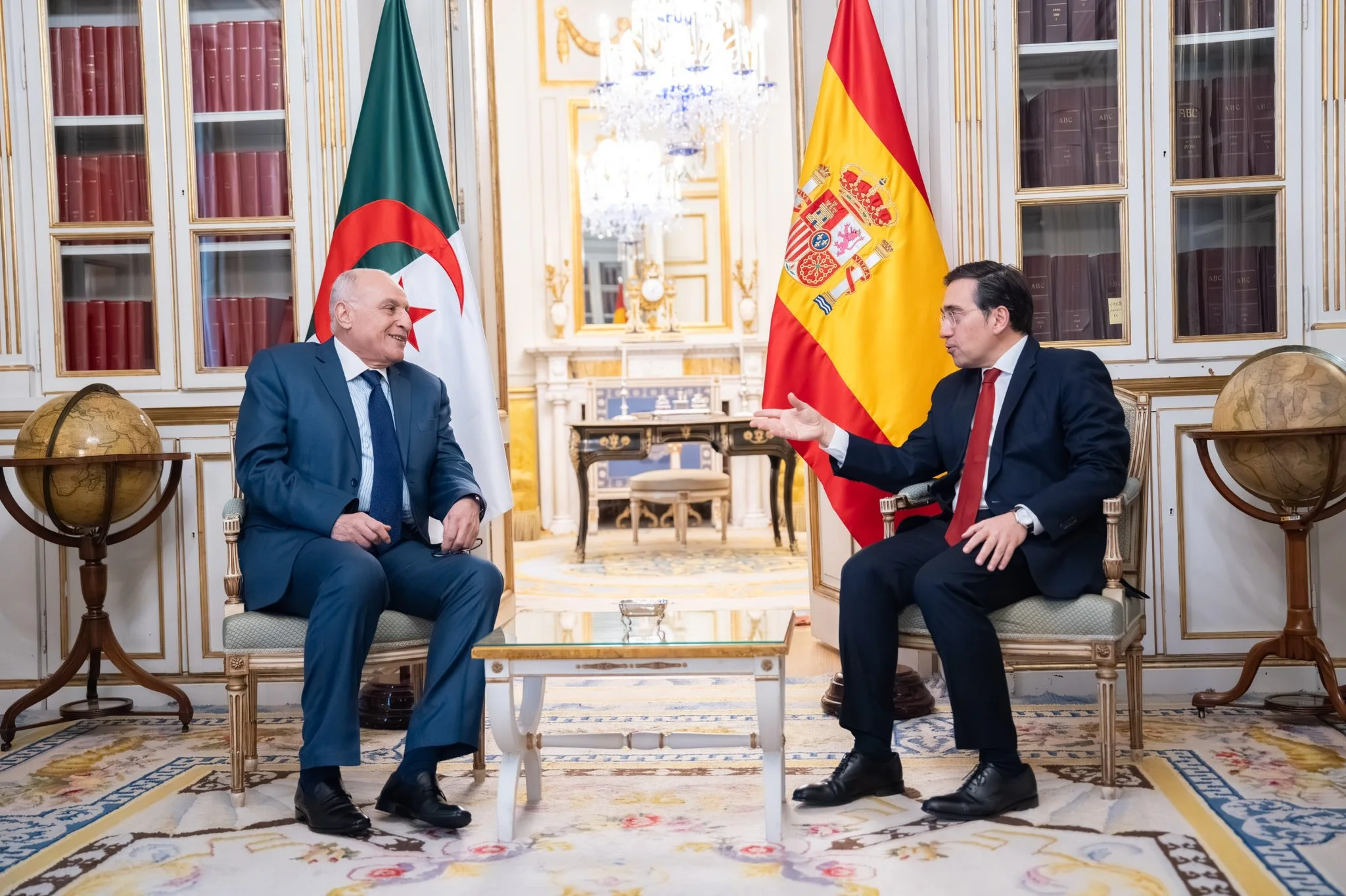
The diplomatic context is crucial. The last major border incident occurred in 2021 when Morocco retaliated against Spain for hosting the leader of the Western Sahara independence movement, the Polisario Front. That rift was healed in 2022 when Spain reversed its neutrality and backed Morocco’s claim over Western Sahara. However, this pivot angered Algeria, which supports the Polisario. Just days before the Ceuta crisis, on July 20, 2026, Prime Minister Sánchez visited Algiers, marking a thaw in relations with Algeria—a move heavily disfavored by Rabat.
Simultaneously, the crisis underscored deep economic despair among Moroccan youth. Despite Morocco showcasing grand infrastructure projects ahead of co-hosting the 2030 World Cup, youth unemployment remains nearly three times the national average of 11%. “I tried to work and have a job and make a living, but there is nothing for me here,” said Mohammed Kinani, a 21-year-old who was forced back to Morocco.
Fractured European Response
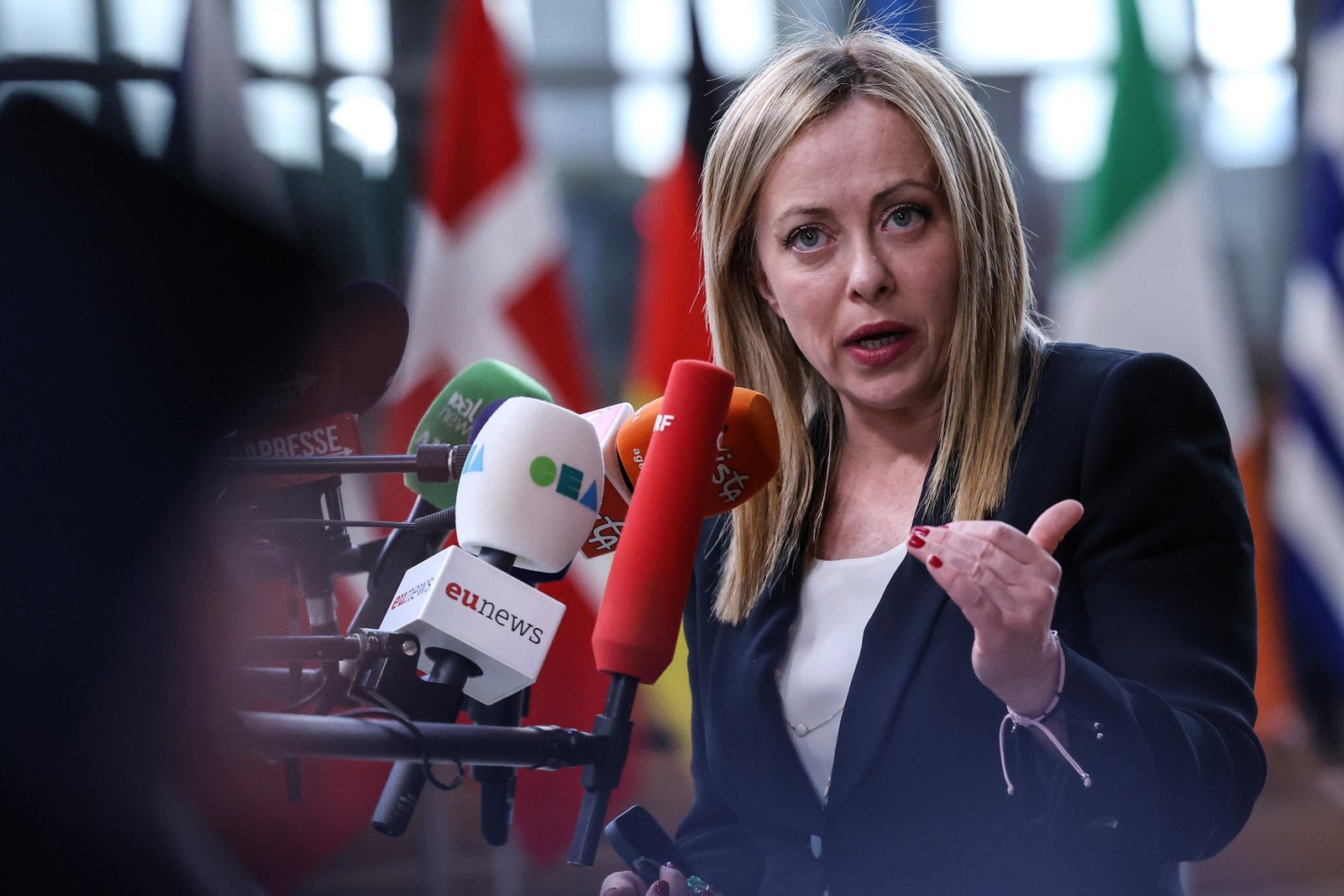
The images from Ceuta sparked immediate panic and division within the EU, resulting in an emergency meeting of EU interior ministers. The most aggressive response came from Italy’s right-wing Prime Minister Giorgia Meloni, who unilaterally suspended Italy’s Schengen free-movement agreement with Spain for one month, starting August 1. Meloni cited the need to “safeguard national security” and implement targeted checks on non-EU travelers arriving by air and sea from Spain.
This move, supported by Finland and Denmark, infuriated Madrid. Prime Minister Sánchez fired back in a letter to EU leaders, condemning the Italian response as “driven by prejudice, fake news, ignorance or political interest,” and explicitly pointed out that Ceuta is not part of the standard Schengen area, meaning the migrants could not have freely traveled to Italy regardless. Critics, including Italian center-left lawmakers, dismissed Meloni’s suspension as a demagogic stunt aimed at domestic voters ahead of looming elections.
Ultimately, the July 2026 Ceuta crisis serves as a stark reminder of the extreme fragility of Europe’s external borders. It demonstrates how localized legal rulings, combined with the rapid spread of digital disinformation and the quiet geopolitical leverage of neighboring states, can instantly overwhelm physical borders and ignite a continental political crisis.