
Historical Evolution: From Fort to Palatine City
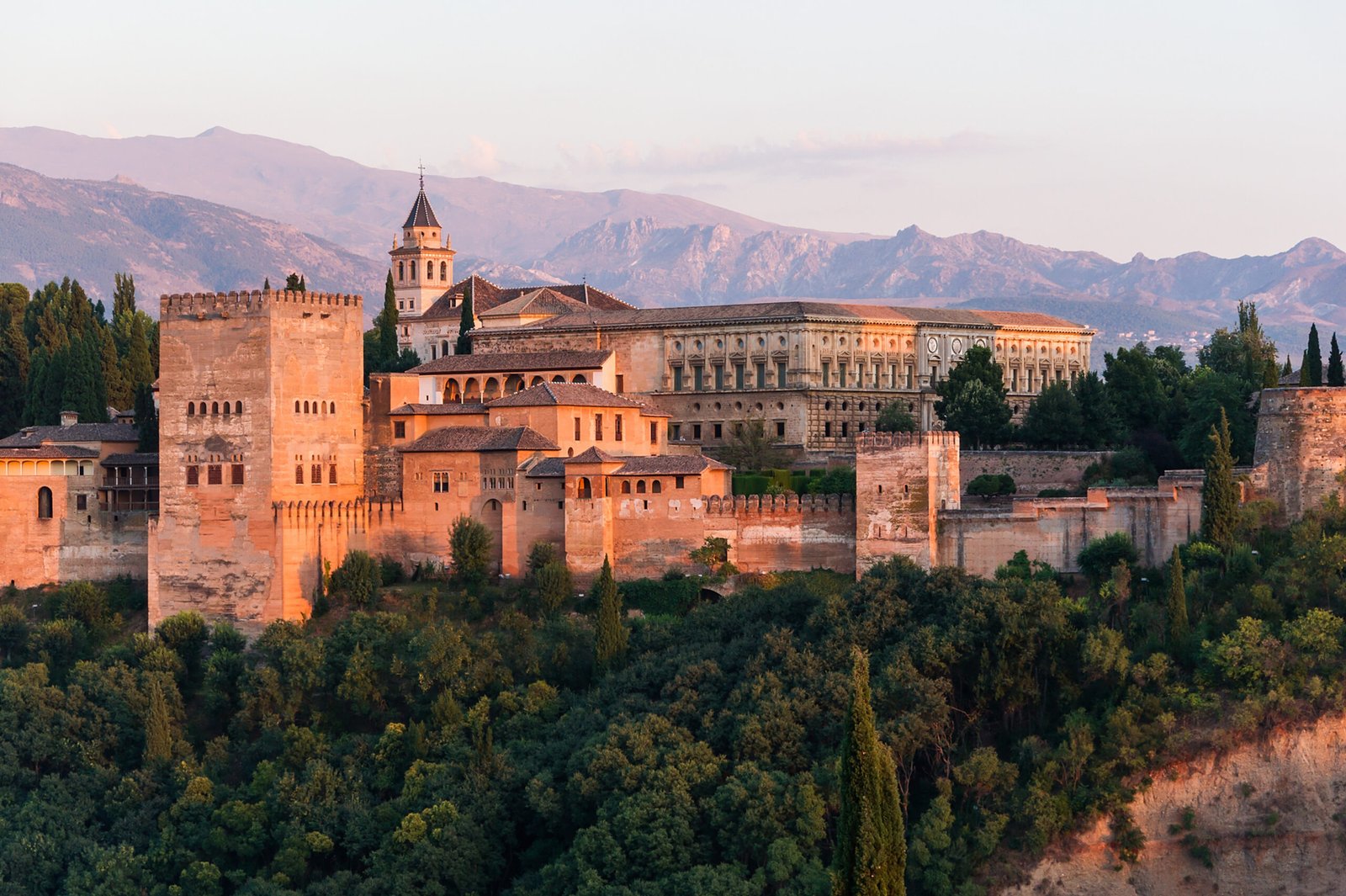
The Alhambra’s history is deeply intertwined with the rise and fall of the Nasrid Dynasty, the last Muslim dynasty in Spain. While a fortification existed on the hill as early as the 9th century, the Alhambra as we know it began to take shape in 1238 under the orders of Muhammad I, also known as Alhamar. The name “Alhambra” is a subject of historical debate; it may derive from the Arabic word “al-Ḥamrā,” meaning “the Red One,” referencing the vermilion tone of its walls, or it may be a colloquial shortening of “Qsar al-Hamra” (Palace of Alhamar).
The most significant palatial expansions occurred during the 14th century under the reigns of Yusuf I and Muhammed V. Together, they commissioned some of the site’s most iconic structures, including the Comares Palace and the Palace of the Lions.
In 1492, the Catholic Monarchs, Ferdinand II of Aragon and Isabella I of Castile, conquered Granada, bringing an end to the 770-year Reconquista. Unlike many Islamic buildings that were destroyed during this period, the Alhambra was spared and repurposed as a Christian court. Later, in 1527, Charles V commissioned a monumental Renaissance palace within the complex to serve as his summer residence, though it remained unfinished until 1967.
Cultural and Architectural Brilliance
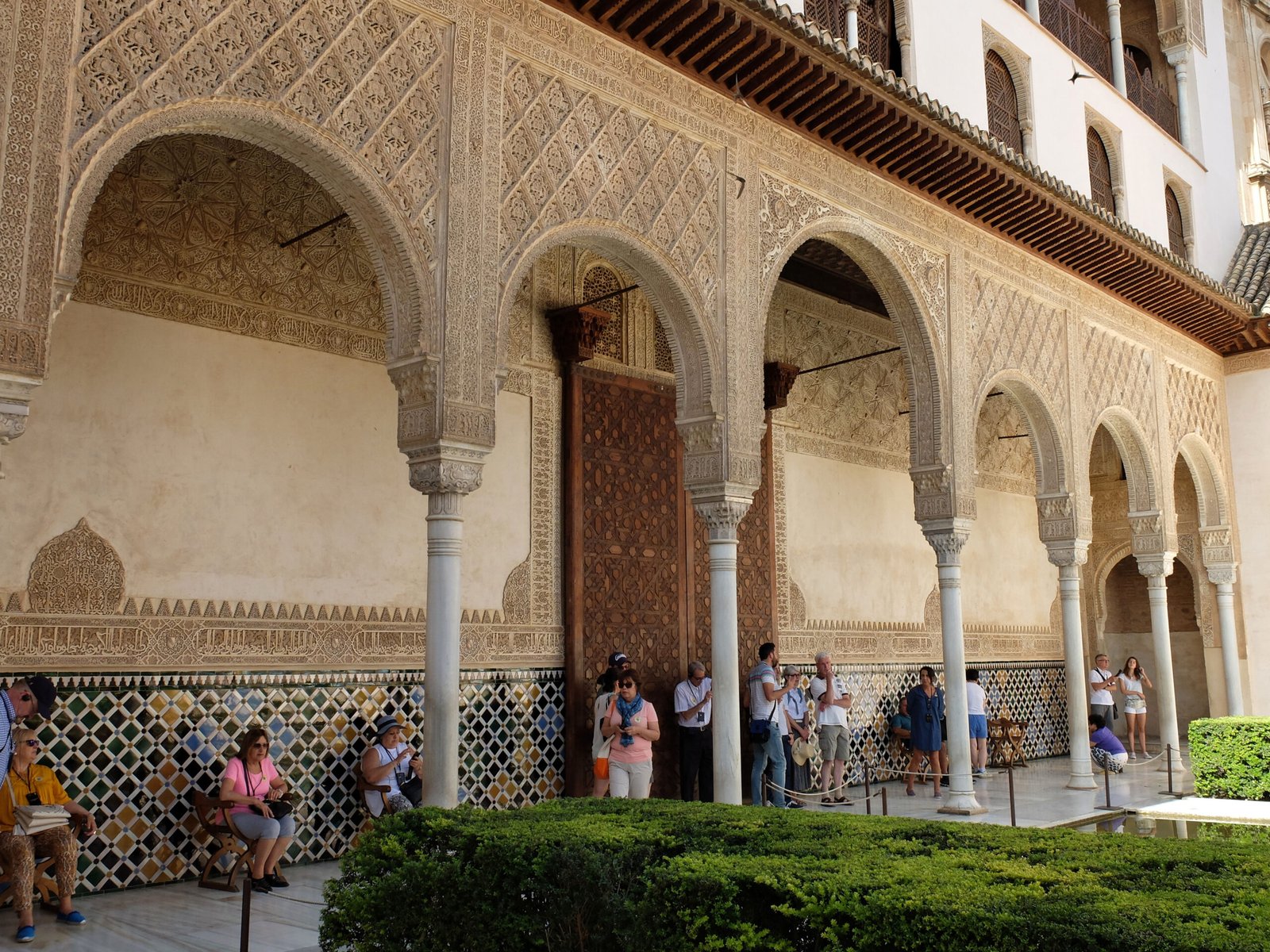
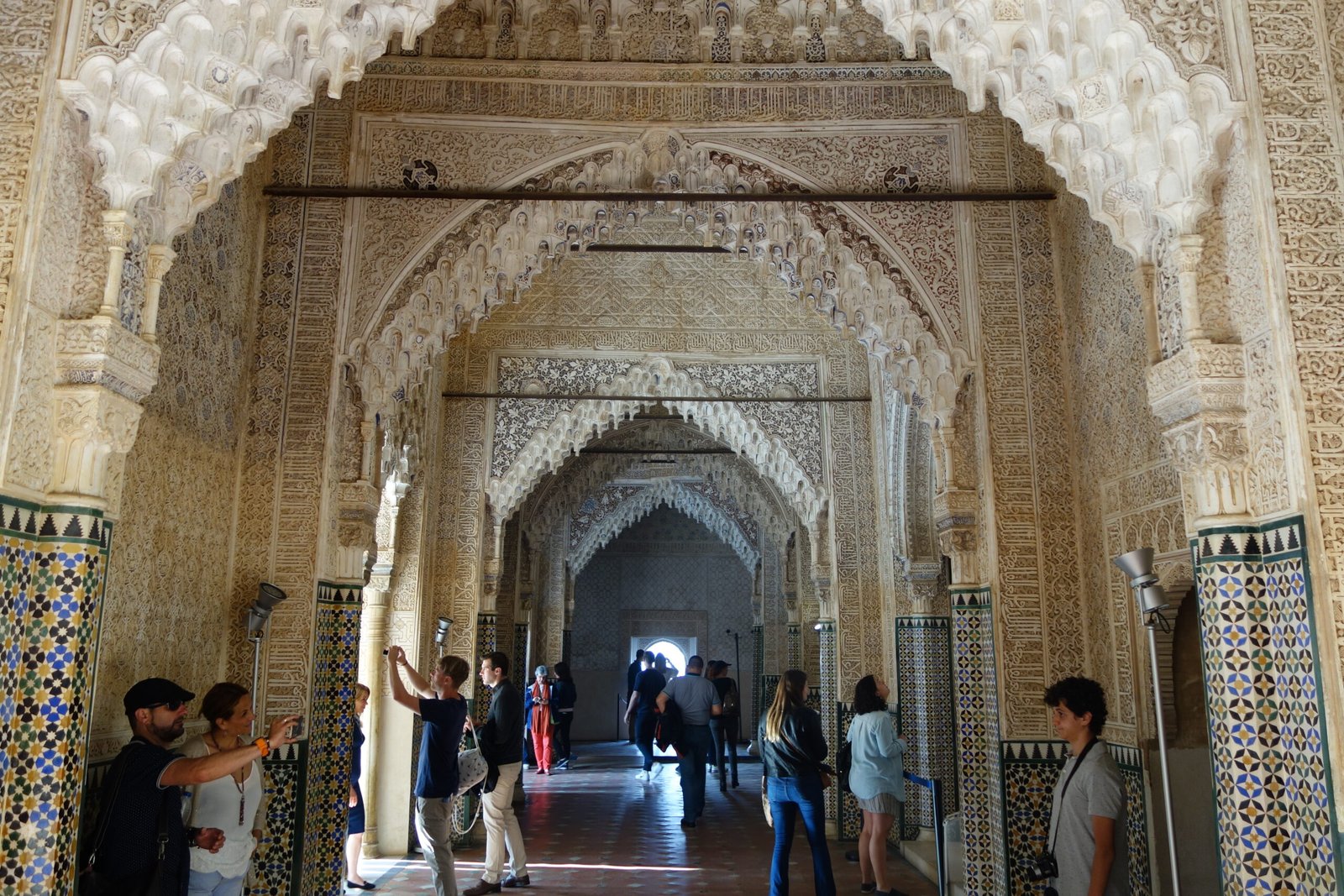
The Alhambra is a masterclass in Hispano-Muslim artistry, heavily influenced by the poets and viziers of the Nasrid Dīwān al-Ins͟hā’ (chancery). Figures such as Ibn al-Jayyab, Ibn al-Khatib, and Ibn Zamrak oversaw major construction phases and composed the poetry that adorns the walls. The interior decoration creates a sensory masterpiece through specific materials and techniques:
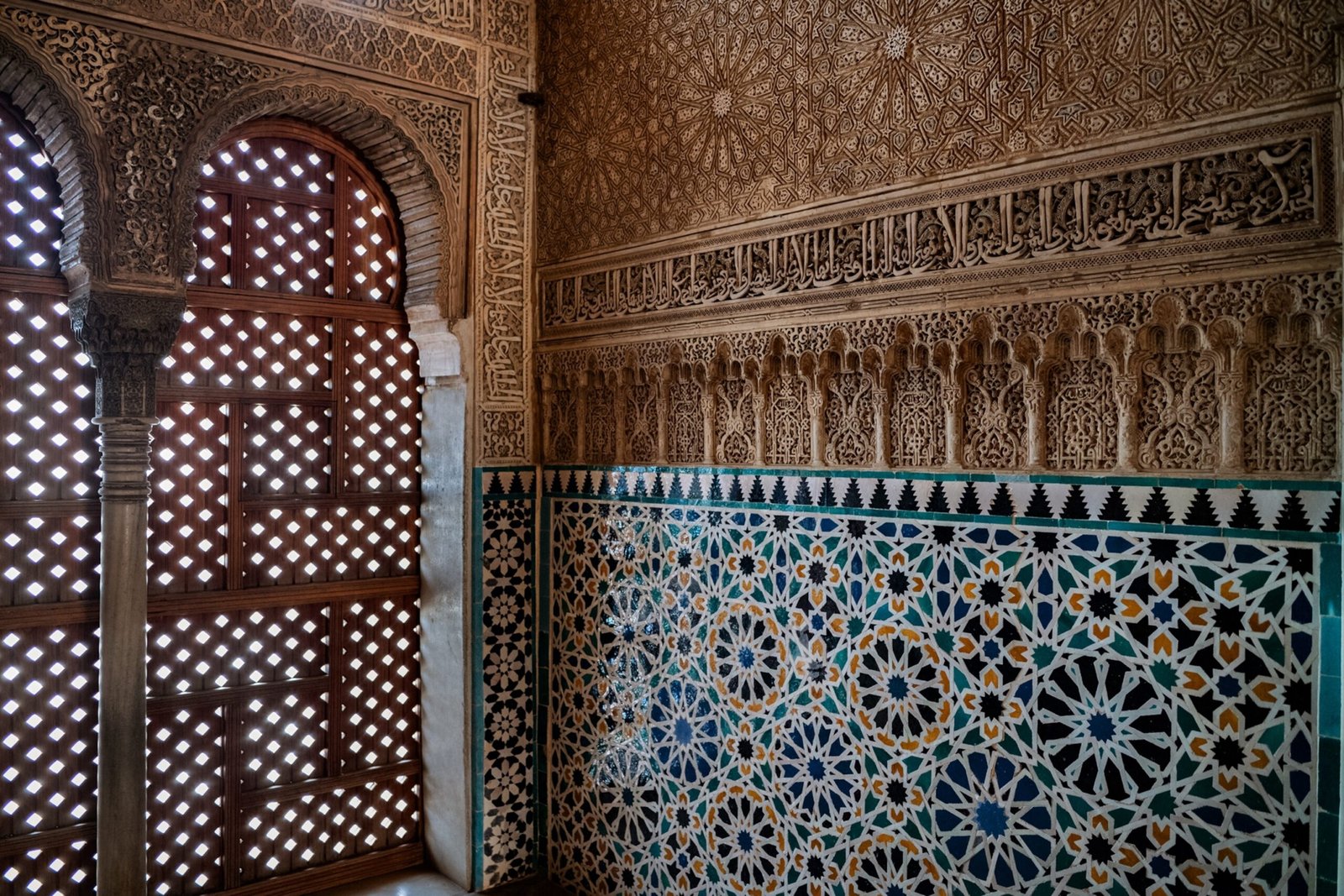
- Carved Stucco (Yesería): Upper walls were decorated with intricately carved stucco featuring vegetal arabesques, geometric patterns, and three-dimensional muqarnas (stalactite-like carvings).
- Mosaic Tilework (Zellij): Lower walls and floors were covered in vibrant geometric tile mosaics. Incredibly, these tiles contain nearly all of the 17 mathematically possible wallpaper groups—a unique architectural achievement that profoundly inspired the Dutch artist M.C. Escher in 1922.
- Vibrant Colors: While many surfaces appear monochrome today, the original stucco, wooden ceilings, and Macael marble capitals were brilliantly painted in primary colors of red, blue, and gold.
A Feat of Hydraulic Engineering
Water was not merely decorative in the Alhambra; it was a fundamental element of its existence and an engineering marvel. Nasrid engineers defied gravity to bring running water to the 840-meter-high Sabika Hill.
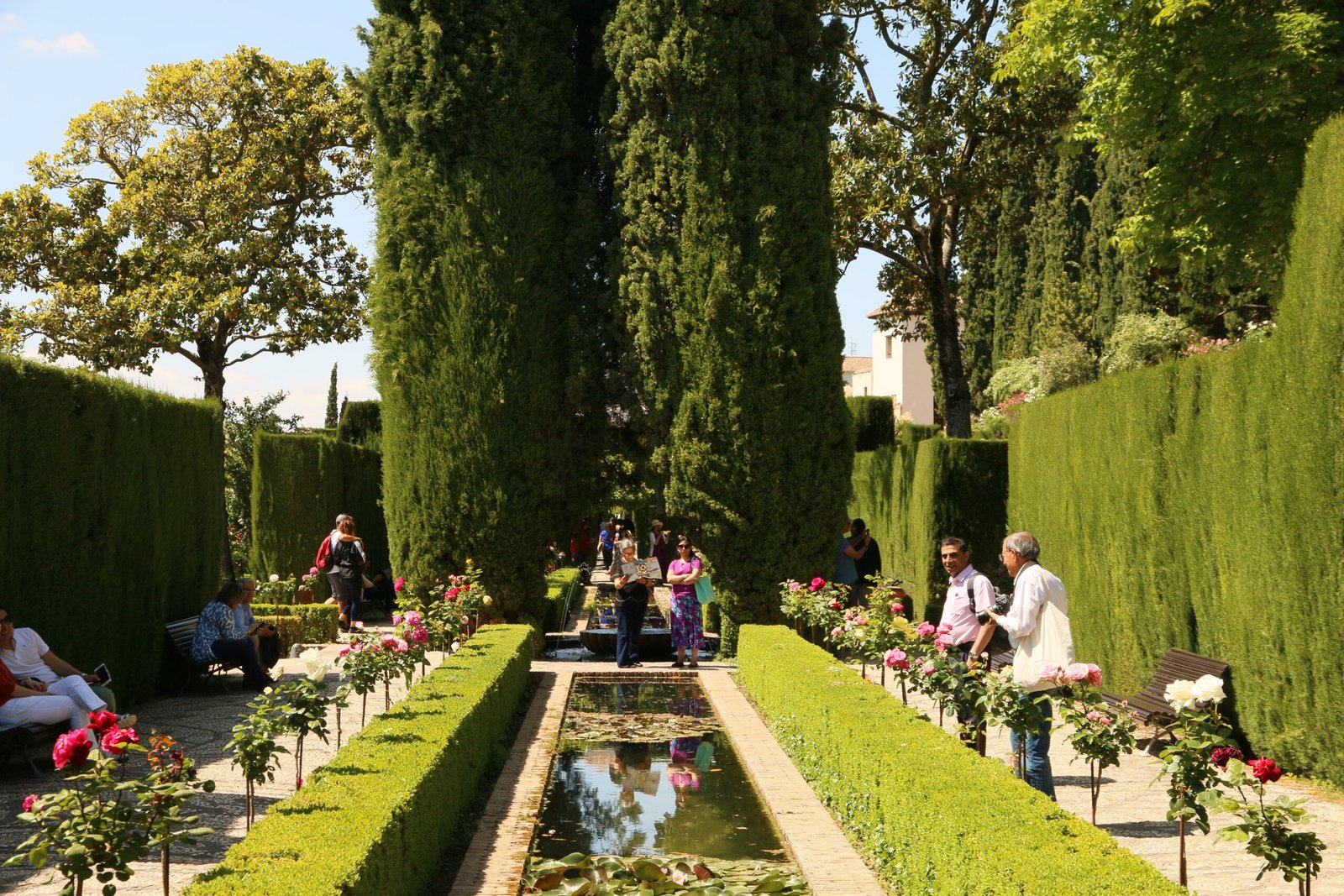
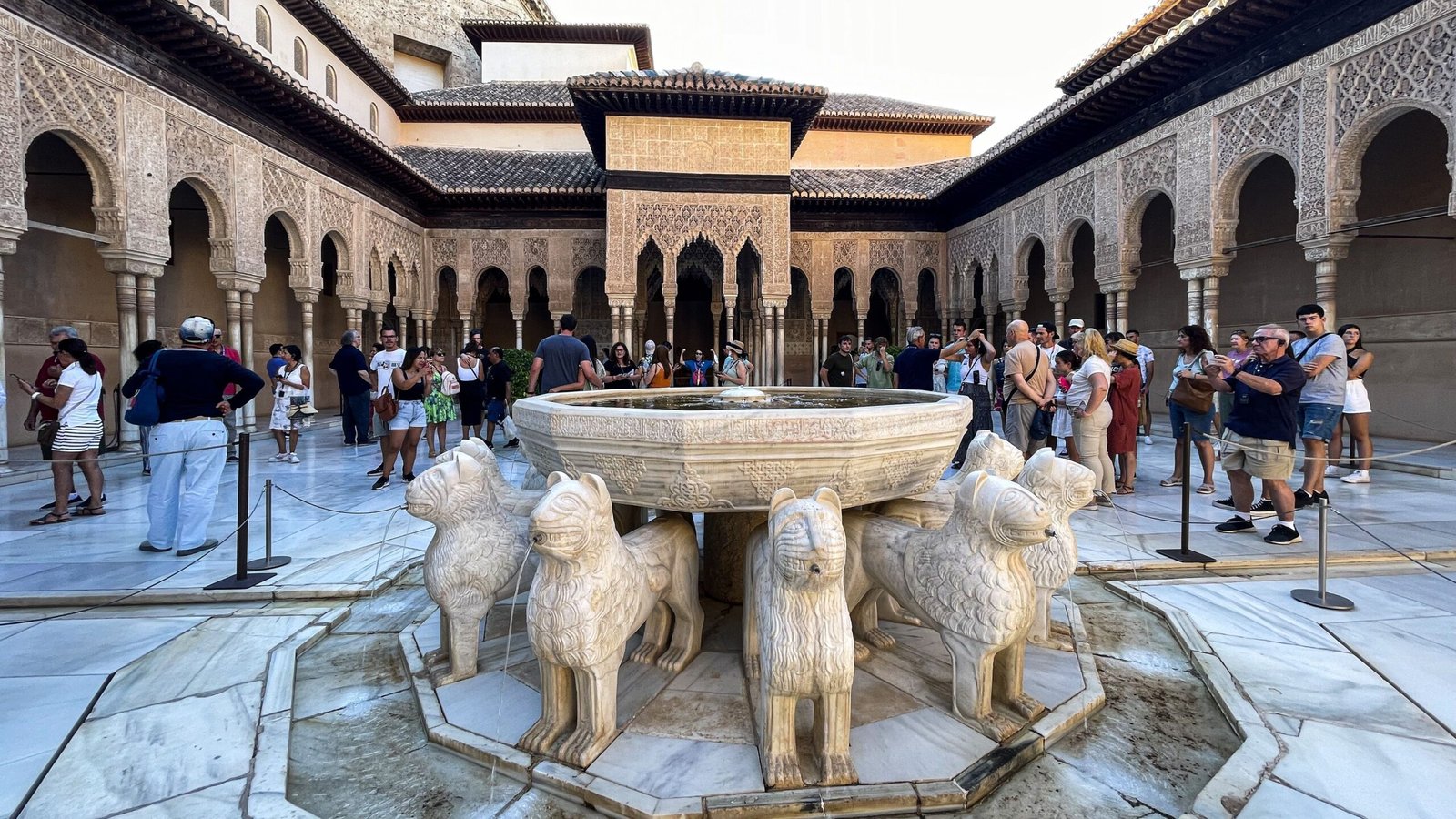
They achieved this by constructing the Acequia Real, a 6-kilometer canal that drew from the Darro River upstream. Using dams (azuds) and waterwheels (na’ura), the water was channeled through a complex network of pools, cisterns, and pipes. This system cooled the rooms, fed the charming public fountains, and irrigated the lush Generalife gardens. The pinnacle of this system is the Fountain of the Lions, where 12 marble beasts spurt water into four channels representing the rivers of paradise. Today, scientists and hydrologists still study these 1,000-year-old systems for insights into sustainable irrigation.
Religious Significance
The Alhambra’s design is heavily steeped in religious symbolism. The Nasrid leaders were committed to creating an earthly representation of the paradise described in the Koran, a vision most explicitly realized in the tranquil, fruit-filled gardens of the Generalife.
The architecture itself acts as a canvas for faith. “Talking architecture” covers the walls, combining Arabic epigraphy with Quranic excerpts. The most ubiquitous inscription is the Nasrid motto, “wa la ghalib illa-llah” (“And there is no victor but God”), a constant reminder of divine supremacy. Following the Christian conquest, the addition of churches, Franciscan monasteries, and the Renaissance-style Charles V Palace symbolized the triumph of Christianity over Islam, turning the complex into a physical timeline of the region’s shifting religious landscape.
UNESCO Status, Tourism, and Economic Impact
Today, the Alhambra is recognized alongside the adjacent Generalife gardens and the medieval Albayzín residential district as a UNESCO World Heritage site. Together, these three components preserve the ancient Arabic quarter’s layout and offer the best illustration of a Hispano-Muslim city in southern Spain.
The site acts as a massive economic engine for Granada, drawing millions of international visitors. However, maintaining a monument of this age and scale requires a delicate balance. The property is strictly managed by the Council of the Alhambra and the Generalife, which utilizes a Direction Plan designed to balance robust tourism with heritage conservation. This includes implementing sustainability strategies, managing building work licenses, and diversifying tourism promotion to reduce physical pressure on the delicate stucco and ancient hydraulic networks.
The Alhambra remains a living testament to Andalusia’s rich, hybridized history—a place where Islamic artistry, Renaissance humanism, and ancient engineering continue to inspire the modern world.