The Hydrological and Demographic Crisis
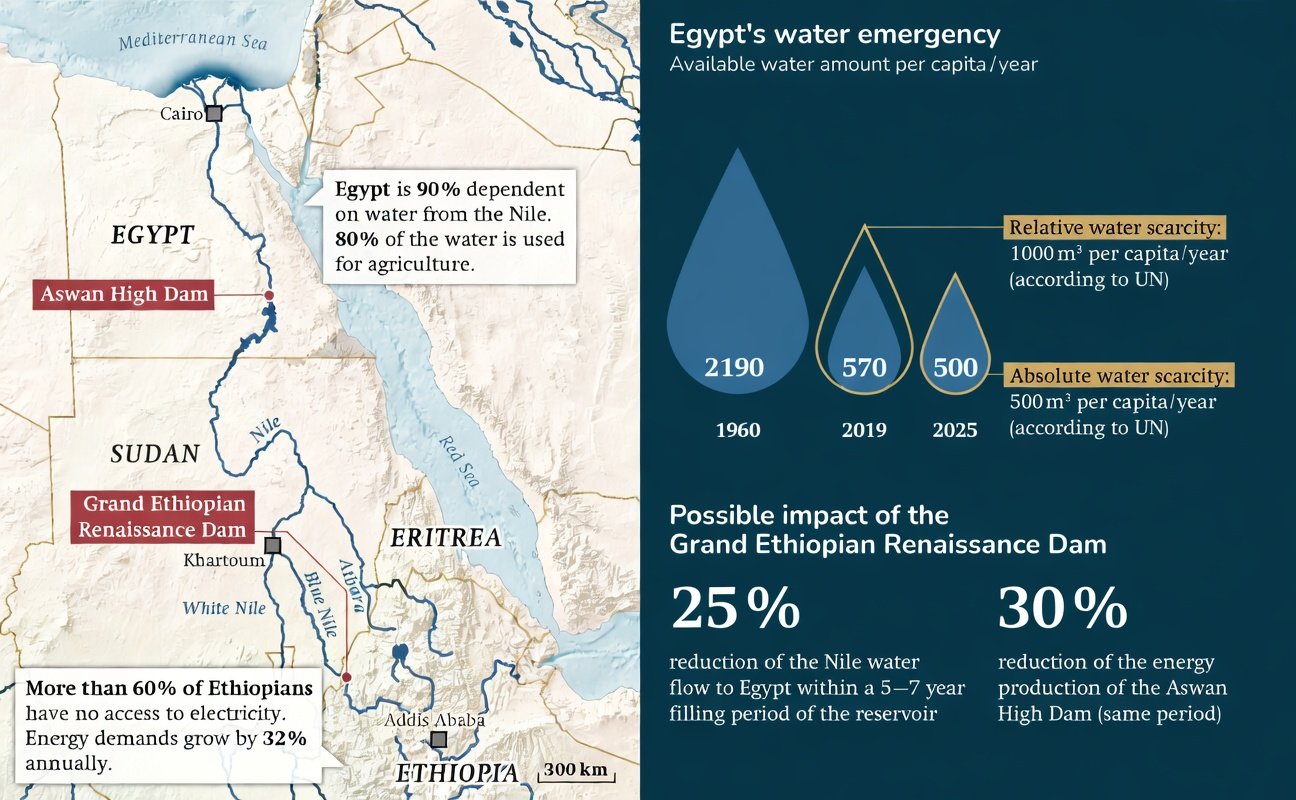
Egypt’s vulnerability to upstream alterations is absolute, as over 90 percent of its freshwater comes from the Nile. The nation’s water demands already exceed its sustainable supplies by 25 percent. As the population is projected to grow from 87 million to 113.6 million by 2030, the strain on resources is accelerating. Historically, average water availability per person stood at almost 1,900 cubic meters in 1959, but it has plummeted to fewer than 600 cubic meters today—well below the United Nations’ water-poverty threshold—and is projected to fall below 500 by 2050.
Compounding this scarcity is the threat of climate change and environmental degradation. High consumption levels mean too little water reaches the Mediterranean Sea to flush out salts, accelerating the salinization of the vital Nile Delta. This stark reality dictates Cairo’s overarching policy: safeguarding the Nile is not merely a matter of resource management, but an existential national security imperative.
The Ethiopian Flashpoint: GERD and the Shift in Power
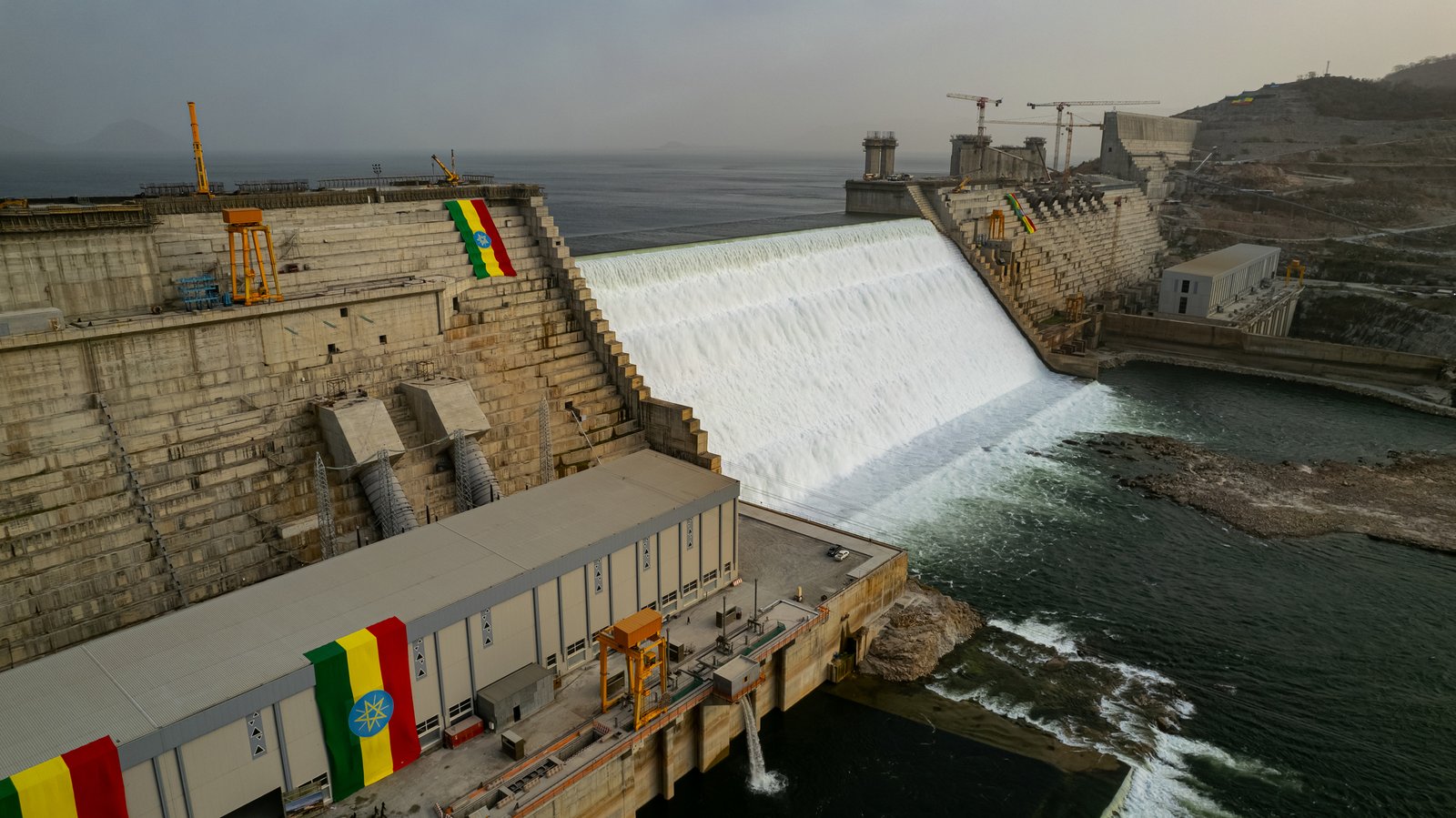
The most critical challenge to Egypt’s water security is Ethiopia’s Grand Ethiopian Renaissance Dam (GERD), an infrastructure project that has effectively ended Egypt’s longstanding protected position over the distribution of Nile waters. Initiated in 2011 and recently inaugurated, the GERD is a cornerstone of Ethiopia’s state-building, designed to double its national power capacity and serve as a symbol of domestic resilience.
For Egypt, however, the unilateral management of the dam represents a profound risk. This was starkly underscored when intense rainfall over the Ethiopian Highlands recently triggered severe flooding in northern Egyptian governorates, including Beheira, Kafr el-Sheikh, and Menoufia. Egypt’s Ministry of Irrigation blamed the flooding on “reckless dam management” by Ethiopia, illustrating how a lack of data transparency and coordinated water releases fuels deep political mistrust.
The diplomatic deadlock is rooted in fundamentally conflicting legal paradigms. Egypt relies on the 1929 and 1959 Nile Water Agreements, which allocated 55.5 billion cubic meters of water to Egypt annually and granted it veto power over upstream projects. Ethiopia rejects these as obsolete, colonial-era treaties that excluded upstream nations from the equitable use of the river.
Expert analyses continue to highlight the depth of this structural divide. In response to the ongoing diplomatic deadlock, Massad Boulos, a senior advisor to US President Donald Trump, recently signaled a notable shift in strategy. He argues that the GERD dispute must be resolved through a “technical, not political” approach, placing a renewed emphasis on data transparency, operational coordination, and joint risk mitigation rather than coercive diplomacy.
Strategic Countermeasures: Development Diplomacy and Alliances
Faced with the shifting balance of power upstream, the Egyptian government under President Abdel Fattah El-Sisi has adopted a robust strategy of “development diplomacy” to re-centralize its influence within the continent. Realizing that it can no longer rely solely on historical vetoes, Egypt has actively courted other Nile Basin states through trade, technical support, and military alliances to secure its strategic interests.
Economically, Egypt’s ties with the Basin are strengthening; in 2019, the value of Egyptian exports to Nile Basin countries reached $1.22 billion, with Sudan and Kenya being the primary importers.
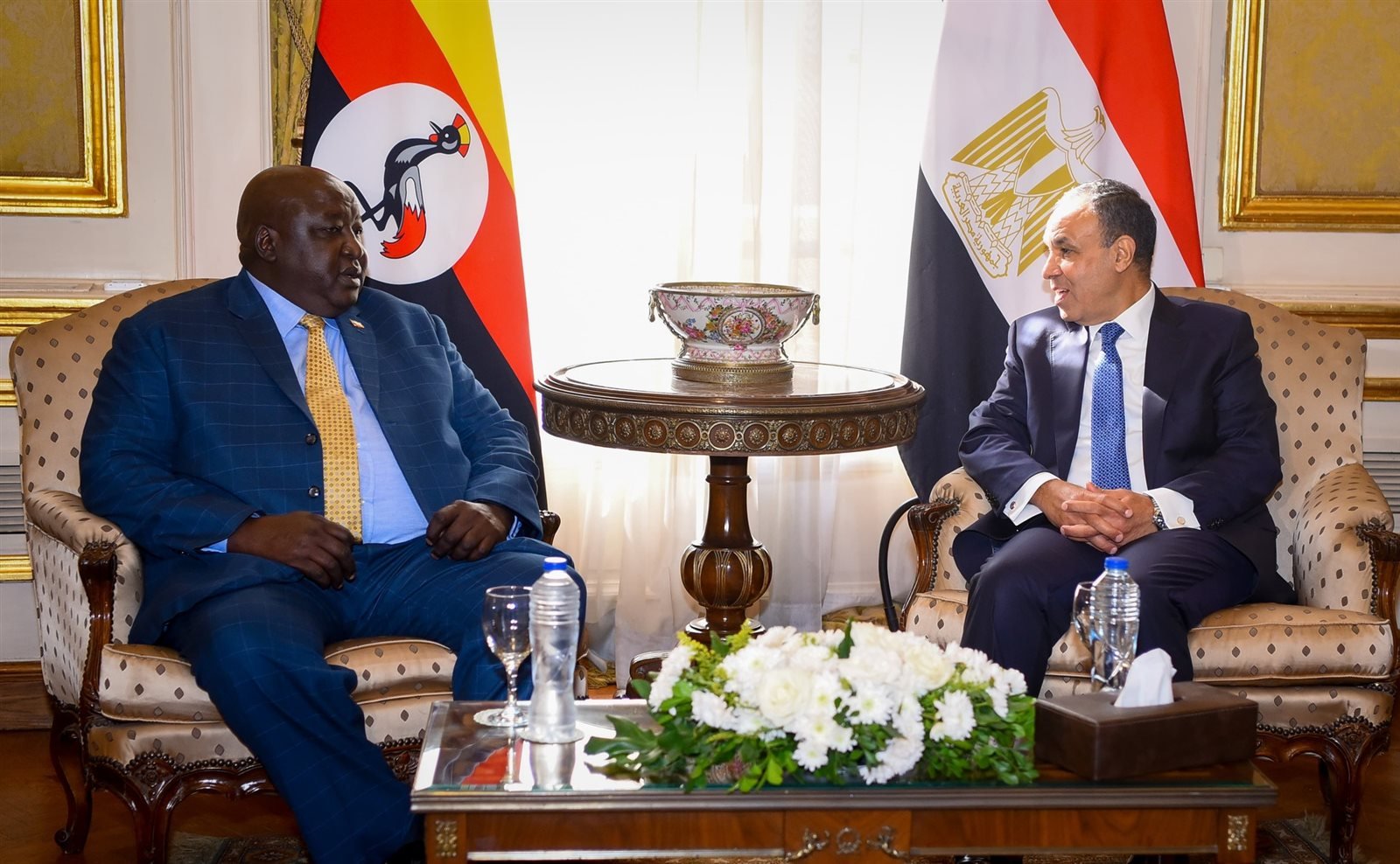
Uganda serves as a prime example of Egypt’s multifaceted regional policy. Egypt and Uganda share a long history of cooperation, dating back to the 1949 agreement to build the Owen Reservoir. Recently, Egypt’s Foreign Minister Badr Abdelatty met with Uganda’s State Minister for Foreign Affairs Henry Okello to expand cooperation in infrastructure, energy, and water resource management. During the meeting, Abdelatty underscored the need for consensus-based approaches and explicitly rejected unilateral measures in the eastern Nile Basin, while commending Uganda’s leadership in the Nile Basin Initiative. On the ground, Egypt has funded the Egyptian-Ugandan Project to Combat Waterweeds and a vital Flood Risk Prevention Project in the Kasese District, utilizing its engineering expertise to build goodwill.
Simultaneously, Egypt has expanded its military and security footprint to protect its water interests. In 2021 alone, Egypt signed military cooperation, defense, and intelligence agreements with Uganda, Burundi, Sudan, and Kenya. These agreements, including joint military exercises with Sudan like “Guardians of the Nile,” serve as a strategic counterbalance to Ethiopia’s growing regional hegemony.
Expert Recommendations and the Path Forward
Experts warn that the Nile Basin currently suffers from a triple deficit: technical (lack of real-time data), operational (absence of drought management rules), and political (mutual distrust). To avert a future of securitized water politics, analysts recommend establishing an independent trilateral technical commission under African Union oversight to analyze hydrological data and develop an integrated early-warning system for floods and droughts.
Ultimately, however, experts note that international diplomacy must be coupled with internal action. Egypt is urged to accelerate its domestic adaptation efforts—such as upgrading drainage infrastructure, investing in desalination, and expanding water efficiency—to enhance its resilience regardless of upstream actions. While technical and diplomatic frameworks remain essential, Egypt’s long-term survival relies on an integrated approach that balances regional bridge-building with aggressive domestic modernization.