
The Historical Roots: Moorish Canals and Agrarian Labor
The foundation of paella rests entirely on the introduction of rice to the Iberian Peninsula. During the 8th to 10th centuries, the Moors brought rice cultivation to the eastern coast of Spain, fundamentally altering the region’s agriculture and diet. This linguistic and cultural legacy endures today, as the Spanish word for rice, arroz, derives from Arabic rather than Latin.
The dish’s birthplace is explicitly linked to the rural wetlands surrounding the Albufera de València lagoon and the 46 square miles of fertile land known as La Huerta (L’Horta). This network of market gardens is still irrigated using the original canal systems constructed by the Moors.
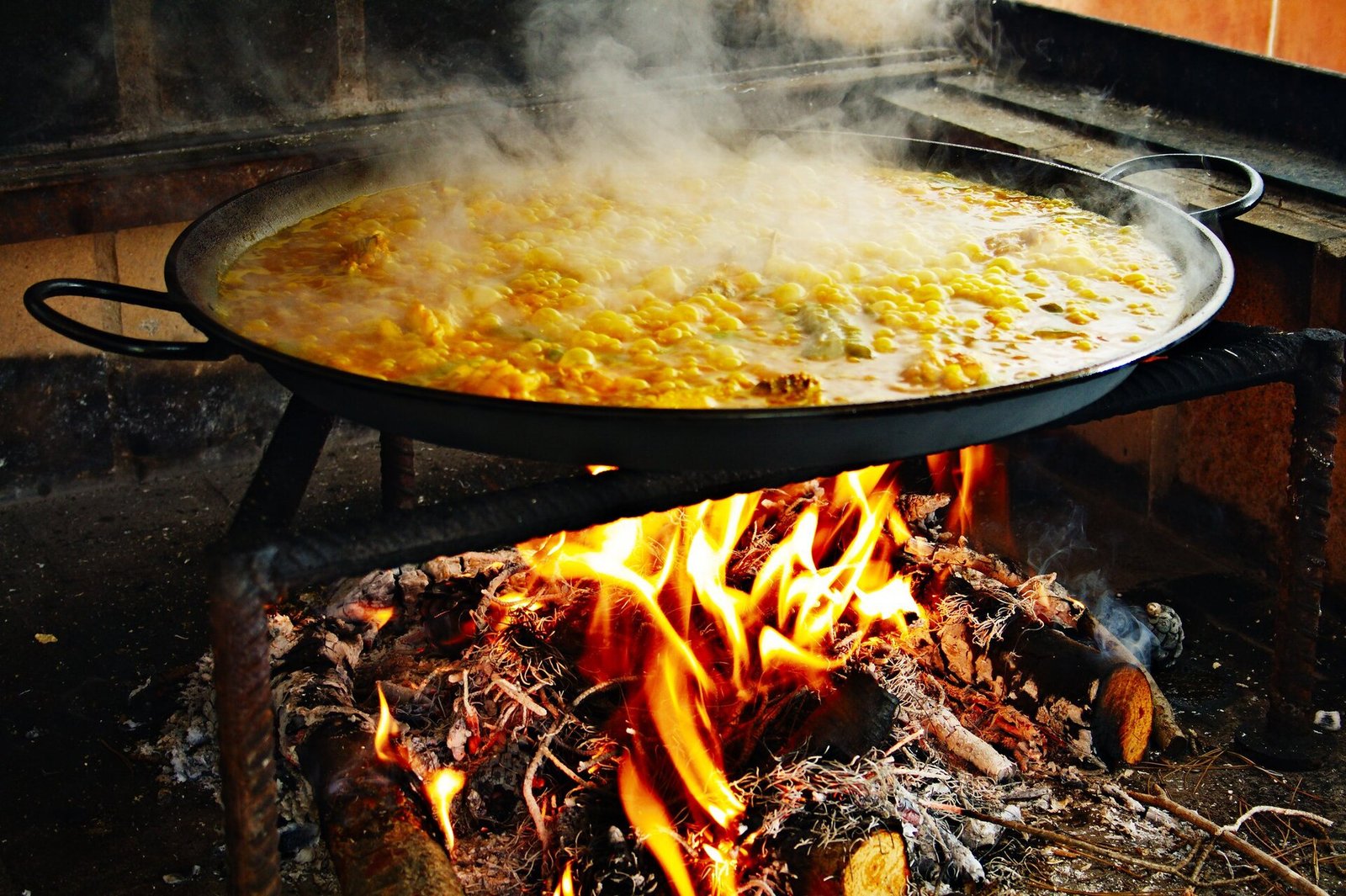
In its earliest form during the 14th and 15th centuries, paella was a utilitarian lunchtime meal cooked by farm laborers over open log fires. Utilizing whatever was immediately available in the fields, early iterations combined rice with water voles, eels, snails, aquatic birds, tomatoes, and beans. As Spanish food historian Lourdes March notes, paella “symbolizes the union and heritage of two important cultures, the Roman, which gives us the utensil and the Arab which brought us the basic food of humanity for centuries: rice”.
Etymology and the Engineering of the Pan
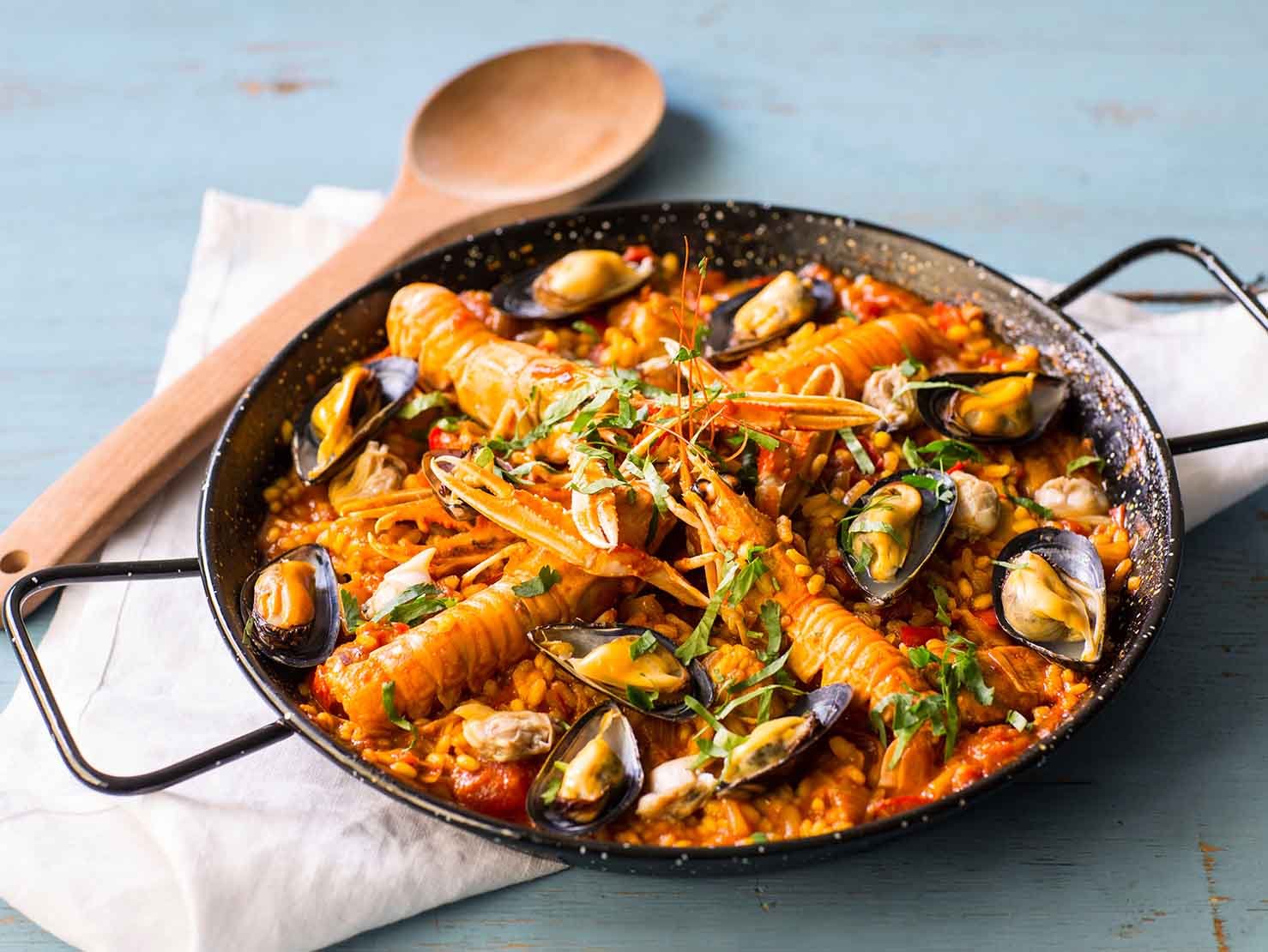
Crucially, the word “paella” refers strictly to the pan itself, not the recipe.
- Linguistic Origins: The term originates from the Old French word paelle (frying pan) and the Latin root patella. While some romantic myths suggest the name is a corruption of the Spanish phrase para ella (“for her”), or the Arabic word baqiyah (meaning “leftovers”), etymologists agree that the Latin patella is the true origin.
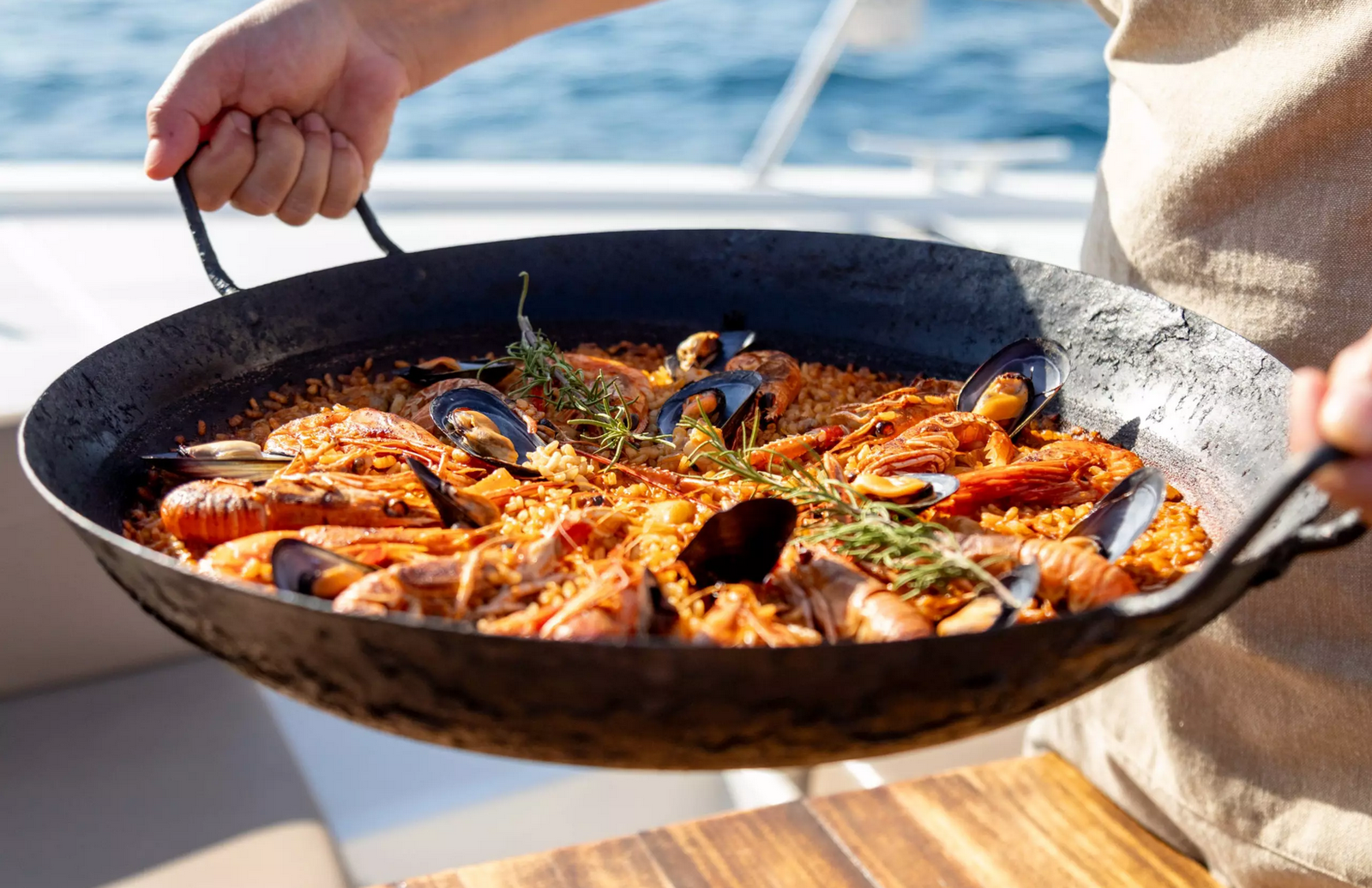
- The Design of the Paellera: The traditional pan is crafted from polished or coated steel and features two side handles and a consistently shallow depth. The bottom of the pan is covered in small dimples; this specific engineering distributes heat evenly across the surface while trapping microscopic amounts of liquid to prevent the rice from drying out entirely.
The Socarrat: The shallow design is vital to maximizing the rice’s exposure to the heat source without requiring stirring. Stirring the dish disrupts the formation of the socarrat—the highly prized, caramelized, and slightly scorched crust of rice at the bottom of the pan that signifies a masterfully cooked paella.
The Anatomy of Authenticity: Rice and Protected Status
As living standards in Spain rose during the late 19th century, the agrarian recipe formalized, replacing water voles with rabbit, chicken, and duck. Today, culinary purists insist that authentic Paella Valenciana contains absolutely no seafood.
To protect this heritage, the Valencian government officially granted Paella Valenciana protected (DOP) status in 2021. By law, a dish claiming this title must contain only these ten traditional ingredients:
- – DOP-certified rice
- – Chicken and rabbit
- – Ferraura beans (a wide green bean) and Garrofón beans (large white lima beans)
- – Tomato, olive oil, and salt
- – Saffron (which gives the dish its signature golden hue) and water
The rice itself is the most critical component. Valencian paella demands highly absorbent, short-grain varieties natively grown in the Albufera region, specifically the Senia, Bomba, Albufera, or Calasparra cultivars. As agronomist Santos Ruiz explains, unlike other cultures that focus on the flavor of the rice grain itself, Valencian cooking relies on the rice’s extreme absorbency to soak up the broths, allowing the diner to effectively “taste the landscape”.
Evolution, Seafood, and Global Variations
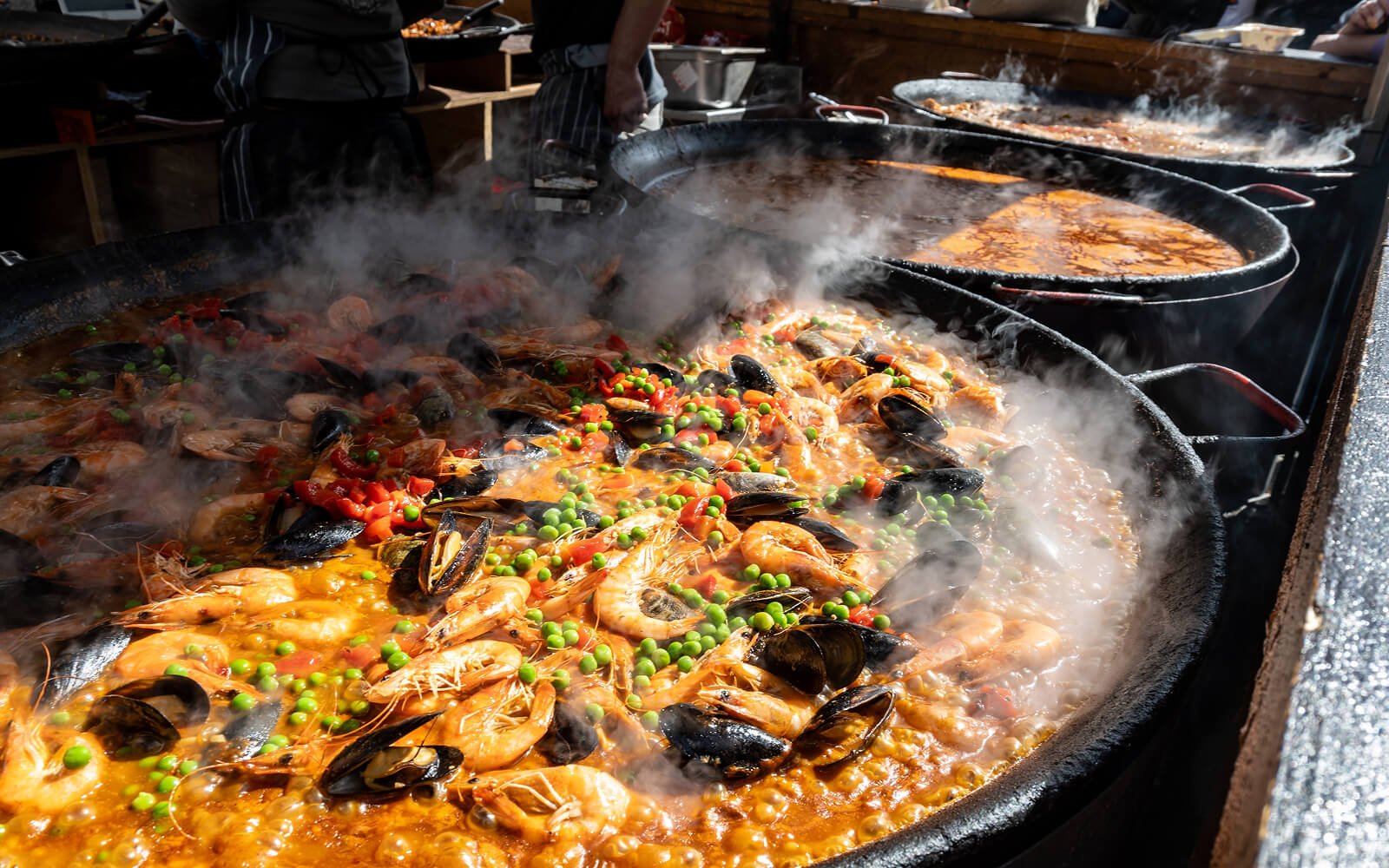
As the dish spread beyond rural Valencia, it inevitably evolved. Coastal fishermen adapted the recipe, swapping land-based meats and beans for locally sourced seafood to create paella de marisco (seafood paella). Later, cooks outside of Valencia combined both livestock meat and seafood, creating the paella mixta (mixed paella). Because of its diverse and plentiful ingredients, this mixed version is sometimes referred to as a preparación barroca (baroque preparation), though strict Valencians refuse to recognize it as authentic.
The dish gained massive international traction in the 20th century. Spain’s tourism boom introduced the dish to foreign travelers, and writer Ernest Hemingway’s glowing reviews of paella after a 1959 visit to Valencia helped catapult it to global fame. Its cultural footprint is now so large that it is regularly cooked in gargantuan pans for Guinness World Records—with one 2001 event feeding 110,000 people—and it even sparked a 2016 internet controversy when Apple was forced to redesign its paella emoji to feature traditional chicken instead of mixed seafood.
Socio-Cultural Identity and Environmental Preservation
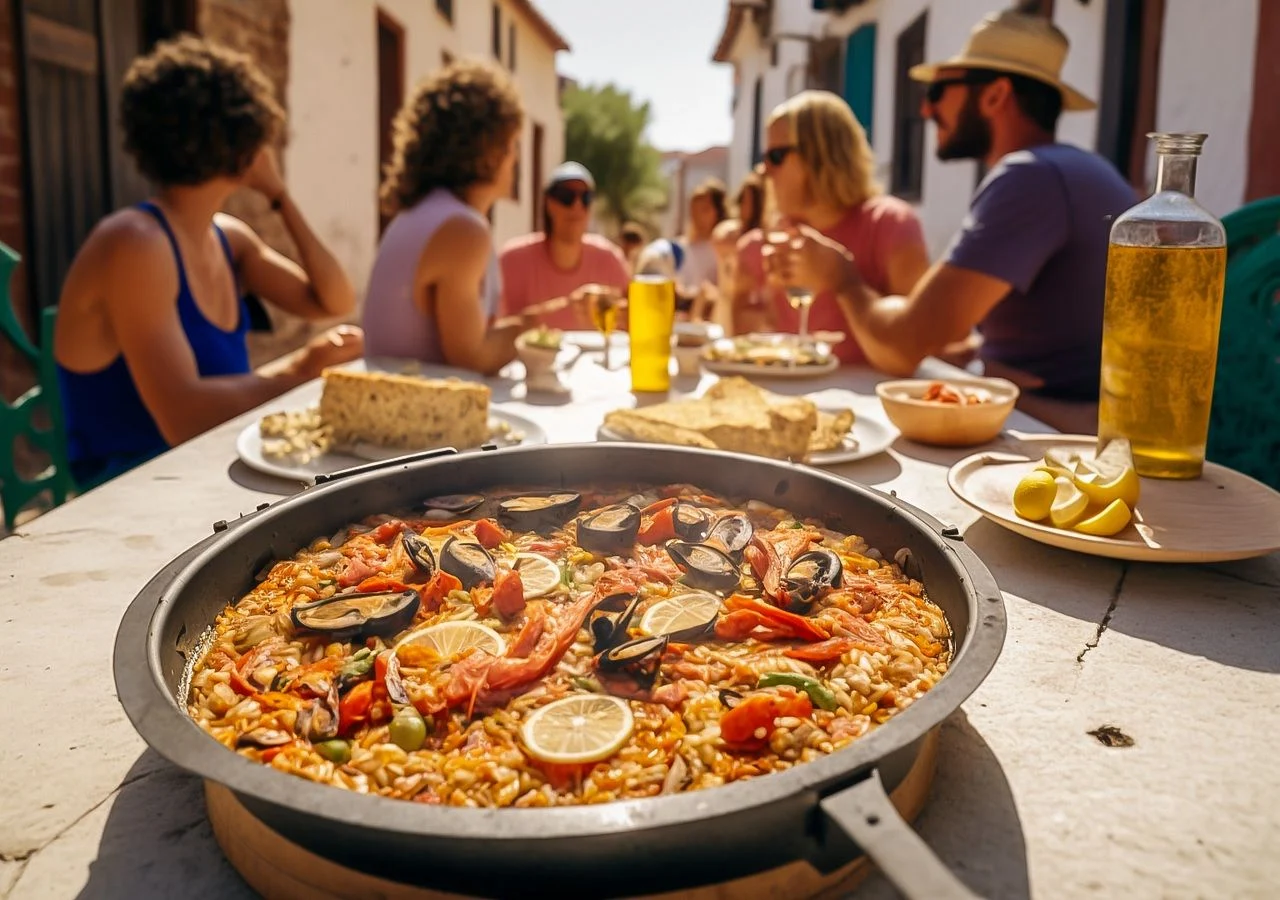
In Spain, paella is fundamentally a social event rather than just a meal. It is traditionally eaten at lunchtime, often on Thursdays or during Sunday family gatherings, and is historically cooked by men. The communal nature of the dish is encapsulated in the Valencian phrase “No comes paella, vas de paella” (“You don’t eat paella, you go to paella”), implying that participating in the cooking process, the debates, and the wood-fire tending is mandatory.
Beyond culture, paella is vital to Spain’s ecology. Albufera Natural Park is a Special Protection Area where 70% of the land is dedicated to rice fields. These paddies sustain up to 300 species of migrating birds annually, including the rare crested coot and white-headed duck; without the rice cultivation, this delicate ecosystem would collapse.
Today, this deeply rooted heritage faces modern threats. The mass importation of cheaper, foreign rice undermines the strict environmental and quality standards of Valencian farmers. Furthermore, fewer young people are learning the traditional wood-fire cooking methods from their parents. In response, organizations like the Escuela de Arroz (School of Rice) have been launched in Valencia to teach younger generations, ensuring that the profound historical link between the Spanish landscape, the artisan farmers, and the communal fire is preserved for the future.