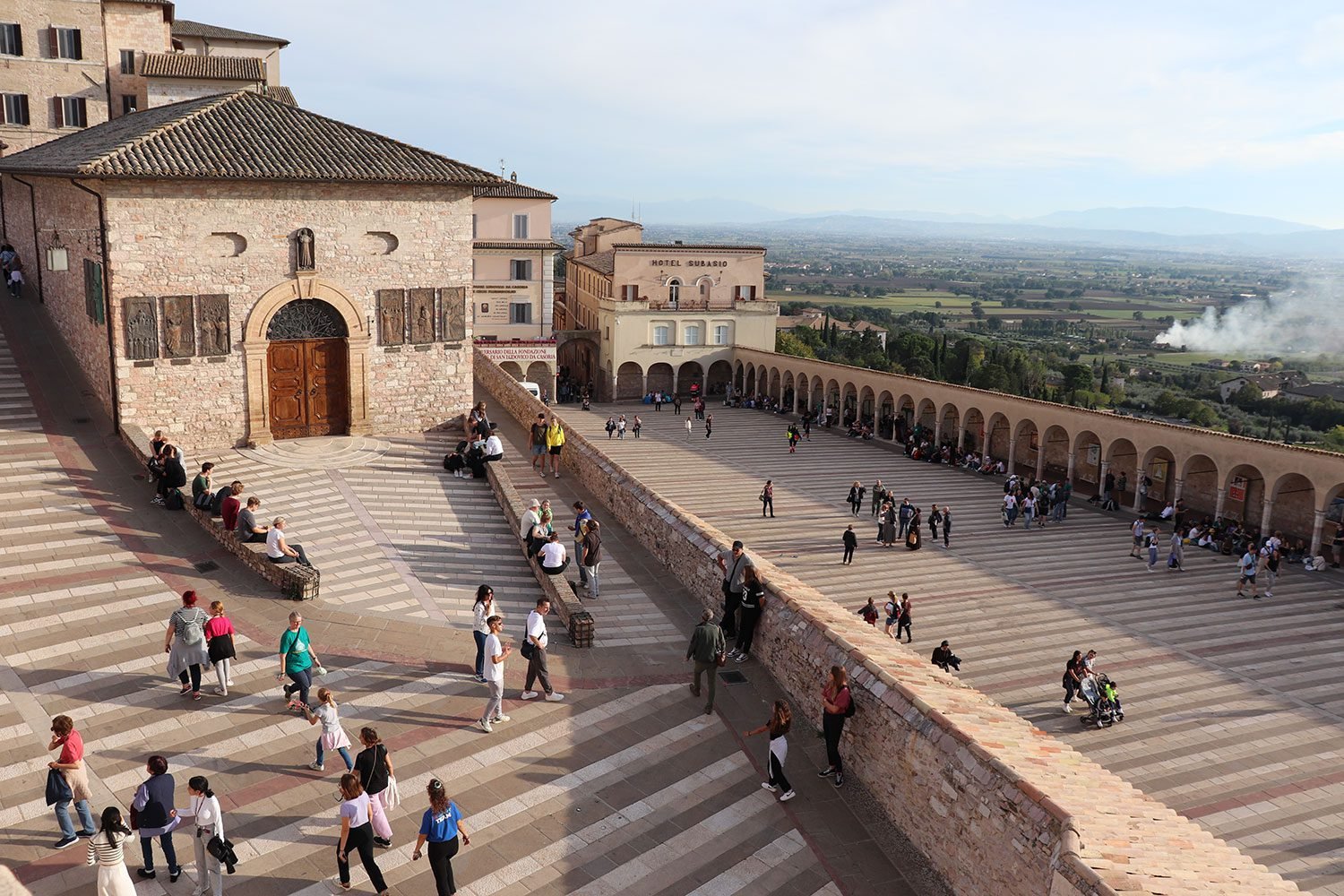

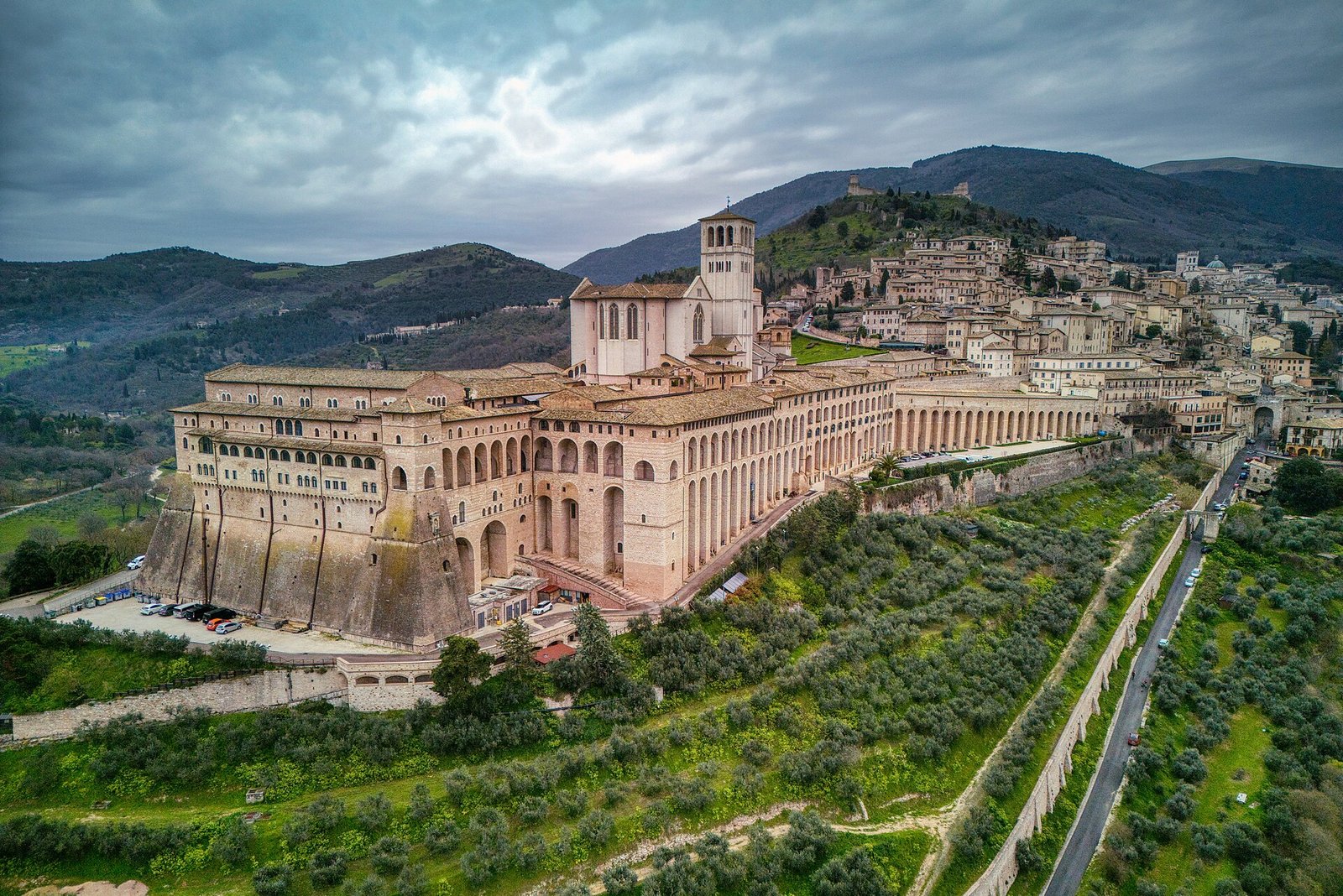
Perched on the western edge of Assisi, the Basilica of Saint Francis is an architectural marvel that has defined the physical and spiritual landscape of central Italy for eight centuries. As the mother church—the Caput et Mater—of the Franciscan Order, the Basilica is far more than a repository for the mortal remains of the “Poverello”. It is a living sanctuary where theology, pioneering art, and regional economics converge, continuing to shape contemporary religious and cultural dialogues.
From the “Hill of Hell” to a World Heritage Site
The historical genesis of the Basilica is rooted in a profound symbolic transformation. Commissioned by Pope Gregory IX on April 29, 1228, just days after the canonization of Saint Francis, the complex was built on a site formerly known as the “Hill of Hell”—a rocky outcrop where local criminals were historically executed. In a deliberate theological statement of redemption, the site was rechristened the “Hill of Paradise”.
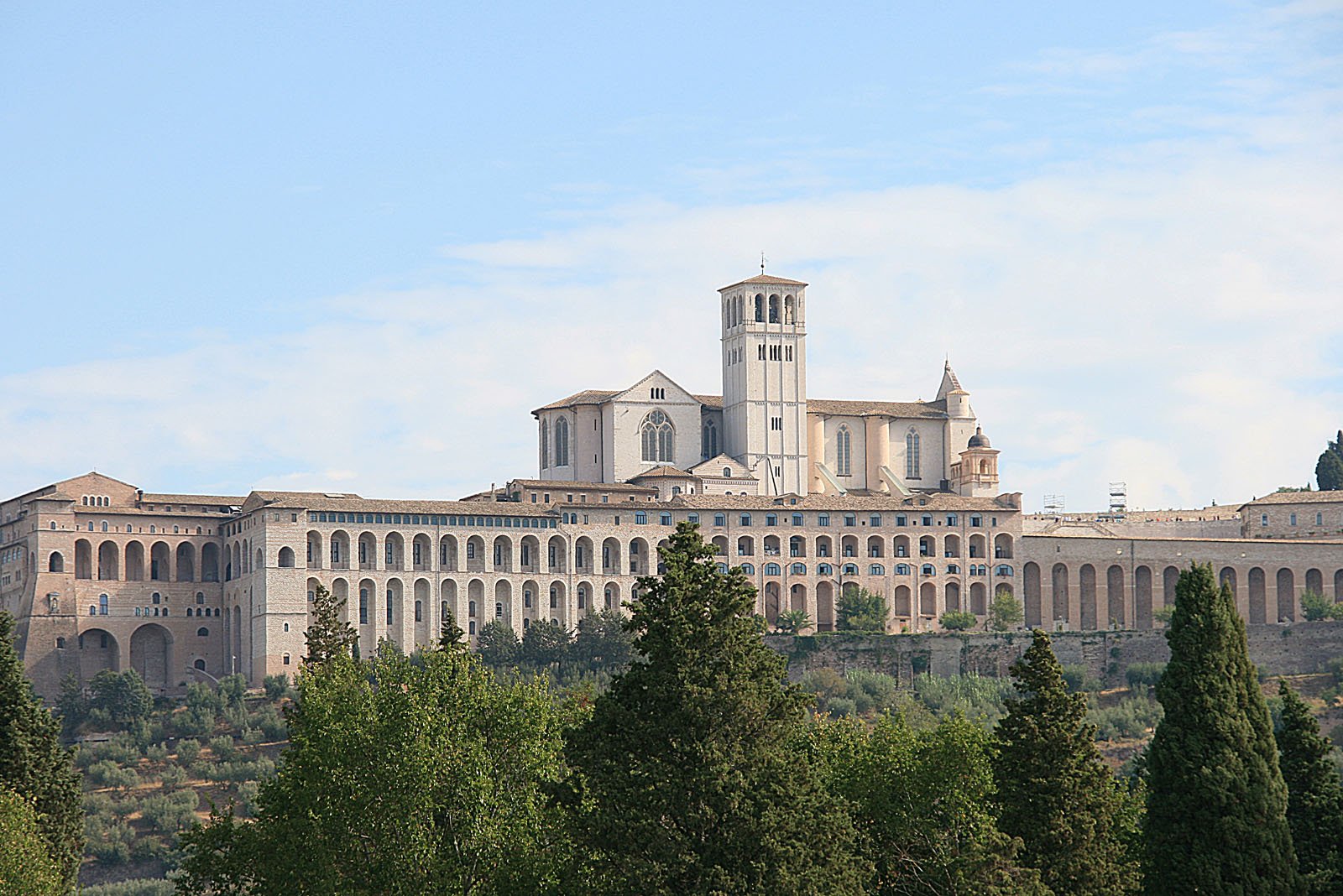
Designed primarily by Maestro Jacopo Tedesco and supervised by Brother Elias of Cortona, the structure was uniquely conceived as a dual-church complex. The sweeping construction of the Basilica and its accompanying friary took over 200 years to fully complete, with major additions continuing between 1474 and 1476 under Pope Sixtus IV. It was raised to the status of a Papal Church in 1288 by Pope Nicholas IV, and in 2000, its universal cultural significance was cemented when it was designated a UNESCO World Heritage Site.
An Architectural and Artistic Revolution
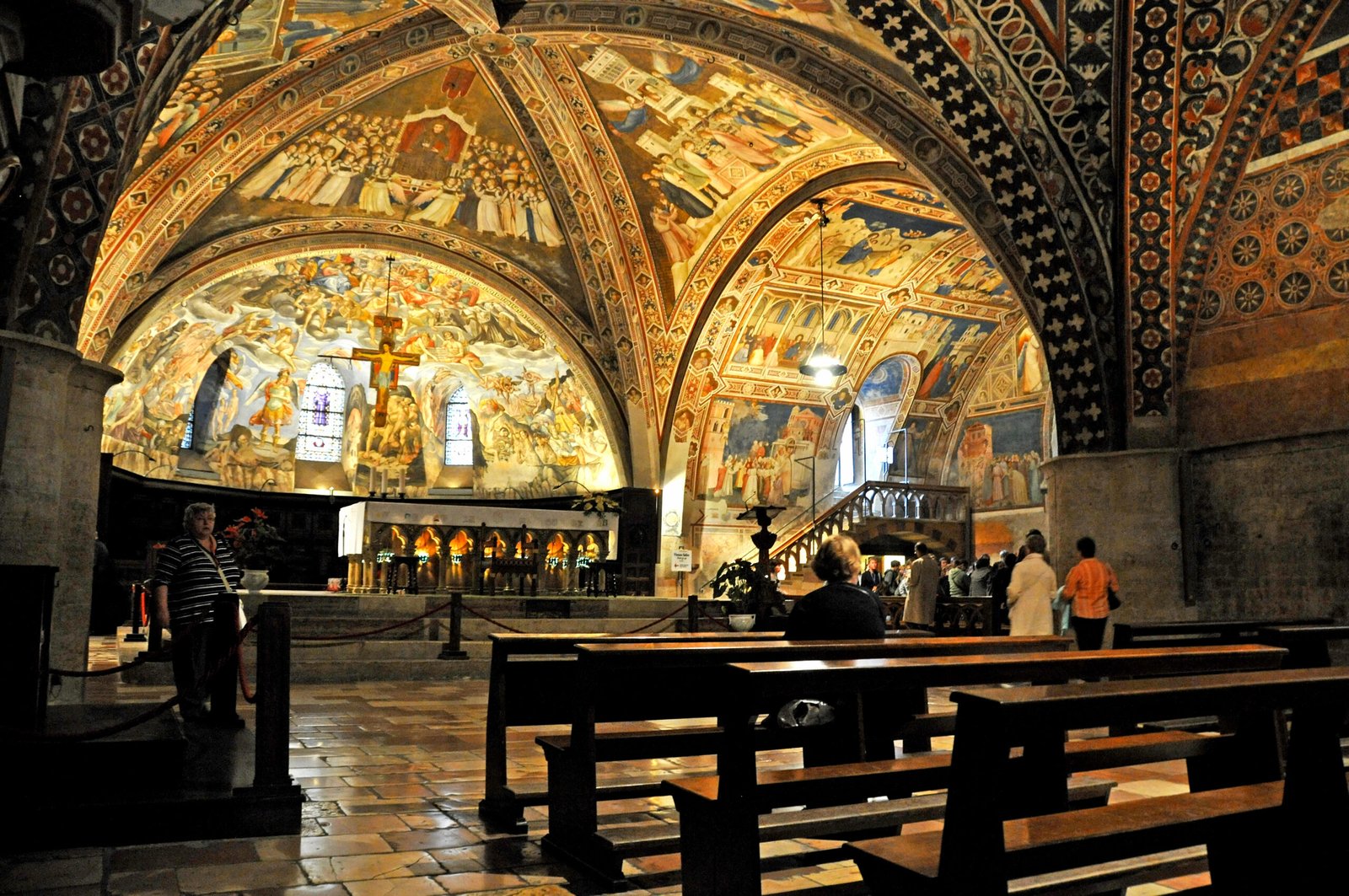
Architecturally, the Basilica embodies a monumental transition in European design, seamlessly blending Romanesque solidity with the soaring verticality of the French Gothic style. The Lower Church, completed in 1230, acts as a massive crypt with semi-circular ribbed cross-vaults that evoke a profound, grounded solemnity. In stark contrast, the Upper Church is a luminous space characterized by tall Gothic windows, intricate geometric tracery, and the most complete collection of medieval stained glass in Italy.
However, the Basilica’s ultimate historical significance lies on its plastered walls. At a time when literacy was sparse, the Basilica served as a visual sermon, bridging the gap between rigid Byzantine traditions and humanistic Renaissance ideals. The interiors boast masterpieces by the greatest late-medieval painters of the Roman and Tuscan schools, including Cimabue, Simone Martini, Pietro Cavallini, and Pietro Lorenzetti. Most famously, the Upper Church features a revolutionary cycle of 28 frescoes attributed to the young Giotto and his workshop. Painted vividly between 1296 and 1304, these naturalistic scenes of the saint’s life depicted real human emotions and perspective, fundamentally altering the trajectory of Western art.
Economic Impact and Touristic Magnetism
As one of the most important places of Christian pilgrimage in Italy, the Basilica functions as the undisputed economic engine of Umbria. Serving as a destination for millions of global visitors annually, this continuous influx of travelers acts as the primary catalyst for the local hospitality, retail, and transportation sectors. This massive touristic draw sustains not only Assisi but also filters through to the nearby provincial capital of Perugia and its international airport. The site’s ability to draw vast crowds has necessitated constant infrastructural adaptation, dating back to the colonnades built in 1474 to shelter arriving masses, proving that the Basilica has historically functioned as both a spiritual and economic hub.
Recent Milestones: The 8th Centenary and the Jubilee Year
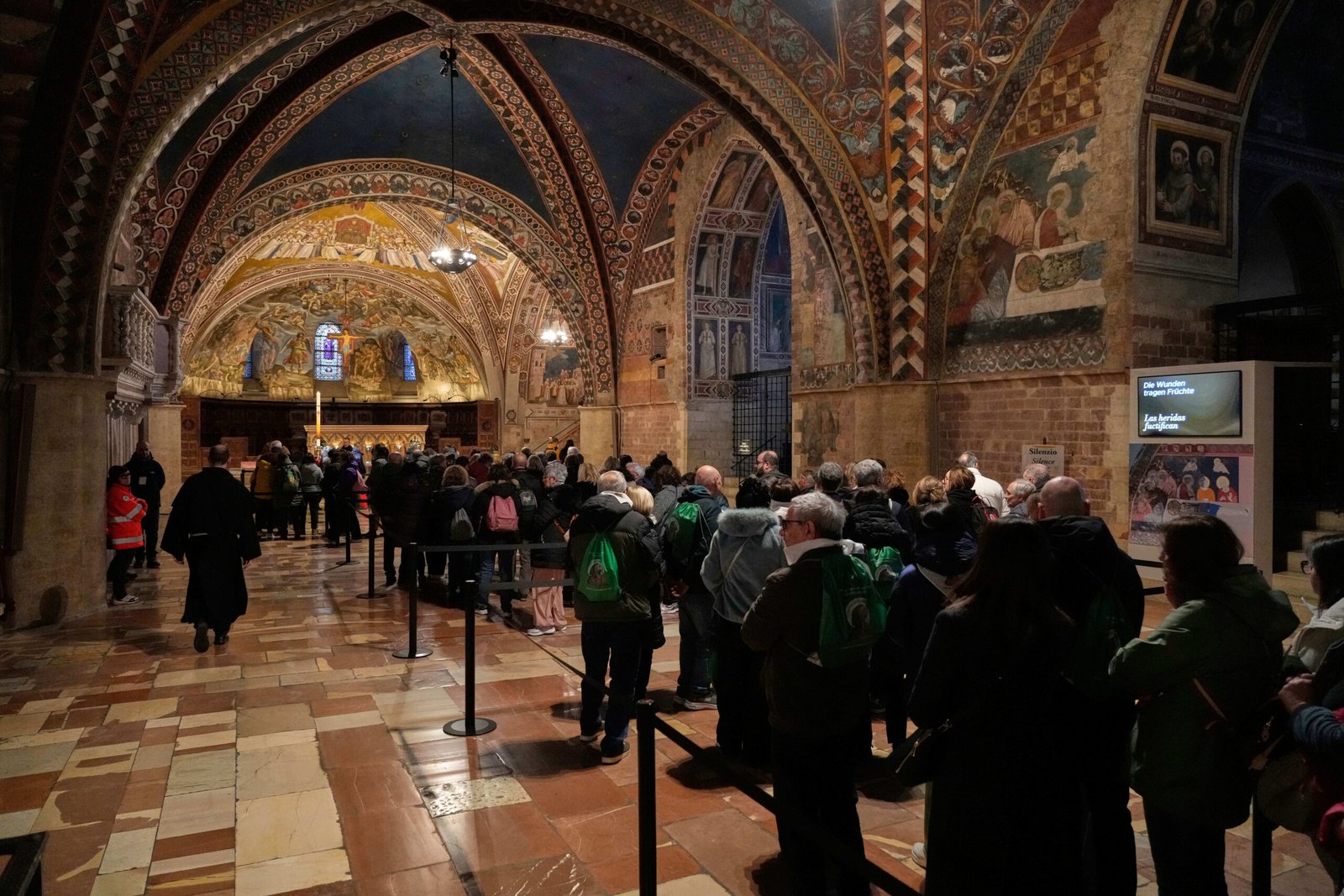
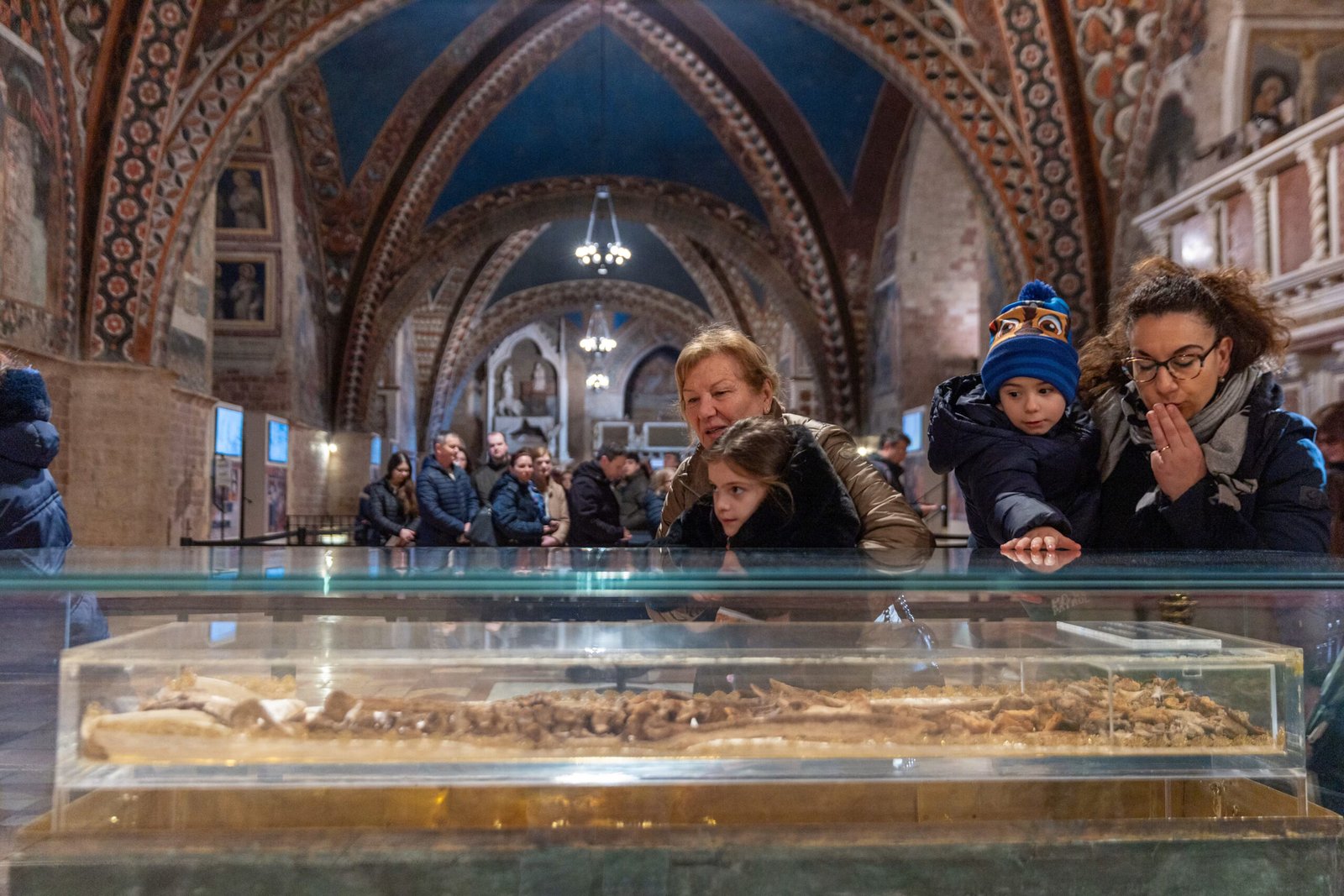
The Basilica remains highly active, continually hosting events of global magnitude. It recently marked a major milestone for the 8th centenary of the death of Saint Francis. To commemorate this anniversary, the Basilica hosted a historic exposition of the saint’s skeletal remains—the first public display since they were originally interred in the crypt in 1230. This unprecedented event, which concluded on March 22, drew massive crowds, with approximately 18,000 pilgrims attending on the very first day alone. Recent records indicate that the month-long exposition attracted more than 370,000 visitors. Beyond this recently completed centenary event, the Basilica continues to serve as a primary focal point for the ongoing Catholic Jubilee Year, which commenced on Christmas Eve 2024, absorbing a sustained, massive influx of international visitors seeking spiritual solace.
Expert Perspectives on the Basilica’s Role
Theological experts and custodians of the site view the Basilica not merely as a museum, but as an active moral compass. Commenting on the current centenary exposition, Franciscan Father Giulio Cesario noted that the Basilica provides an “atmosphere of reflection but also of joy,” where visitors can hear the saint “whisper in their hearts a word of goodness”.
From a broader philosophical standpoint, Cardinal Ángel Fernández Artime, the Pontifical Legate for the Papal Basilicas of Assisi, recently utilized the space to challenge modern societal norms. He emphasized that Saint Francis’s legacy, housed within the Basilica, is a call for freedom from “the logic of the world”—urging society to abandon the pursuit of domination and self-sufficiency in favor of service and obedience.
Resilience and the Future Outlook
The Basilica has proven its structural and spiritual resilience. During the catastrophic 1997 earthquakes, the immense physical impact was felt globally when the collapse of the Upper Church’s vault tragically killed four people—two friars and two art specialists—and shattered 130 square meters of priceless frescoes, including works by Cimabue. Yet, following two years of exhaustive restoration driven by science and devotion, the Basilica reopened, symbolizing an enduring triumph of preservation.
Looking to the future, the Basilica of Saint Francis of Assisi is positioning itself at the vanguard of modern global issues. As global anxiety over climate change intensifies, the Basilica increasingly influences contemporary discussions on environmental stewardship and social justice, ensuring that the teachings of the patron saint of ecology remain profoundly relevant for generations to come.