
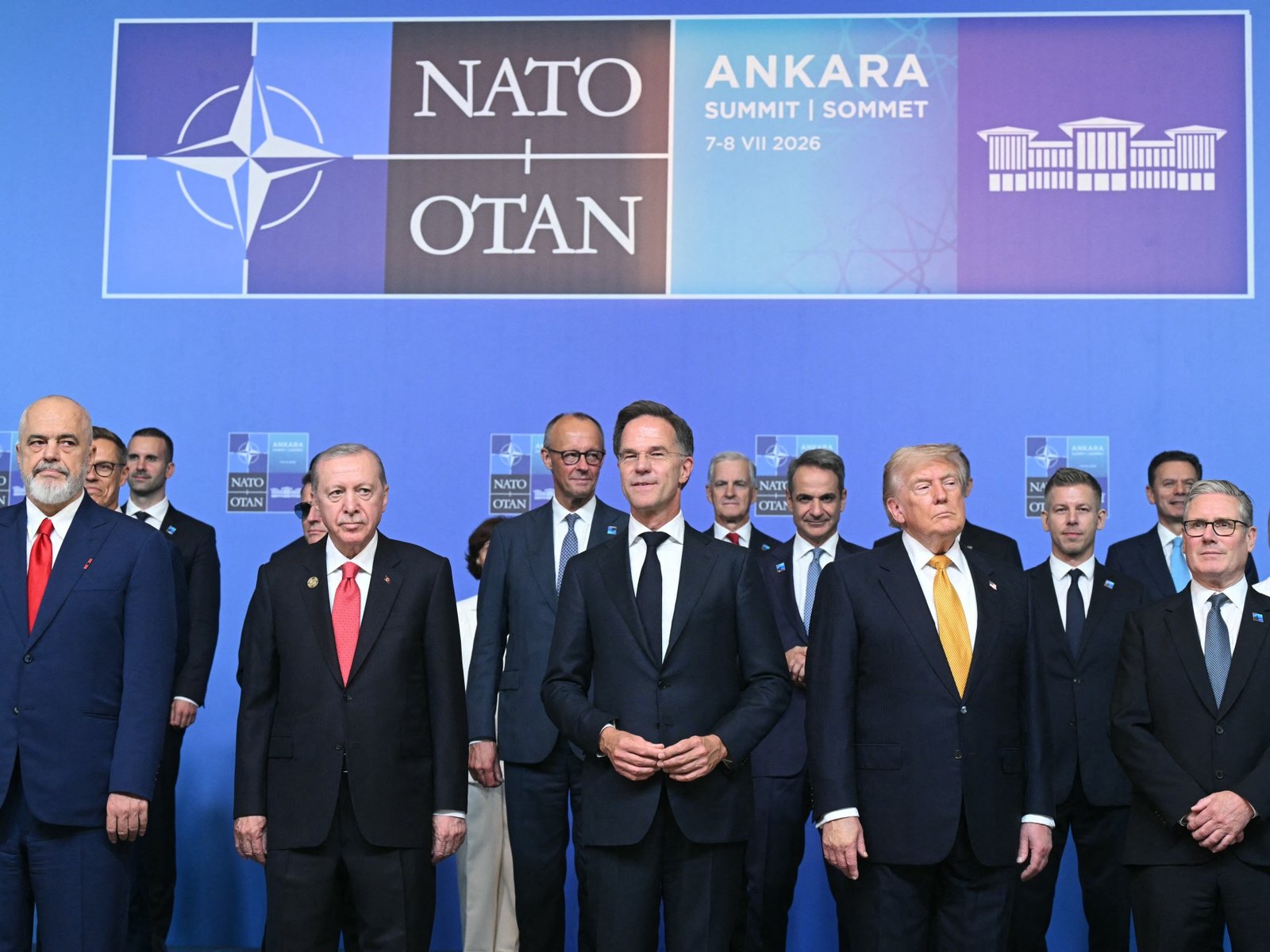
The NATO Heads of State and Government Summit, held in Ankara on July 7 and 8, concluded with starkly contrasting narratives. For NATO Secretary-General Mark Rutte, the gathering was a “tremendous success,” showcasing unprecedented allied investments and defense industrial growth. However, critics have labeled the event a “wasted opportunity,” characterized by a vague one-page, six-paragraph declaration that failed to provide a strategic roadmap for a rapidly shifting transatlantic security architecture.
Ultimately, the Ankara Summit was defined by a careful management of U.S. President Donald Trump, tangible financial pledges, and the uncomfortable reality that Europe must prepare for an era of American retrenchment.
The “Trump Trillion” and Burden Shifting
A central theme of the summit was the rapid acceleration of European defense spending, an initiative heavily promoted by Rutte to placate Washington.
- Financial Pledges: European allies and Canada are expected to inject an additional $258 billion into core defense spending across 2025 and 2026. Rutte framed this influx—catalyzed since Trump’s first term—as the “Trump trillion”.
- The 5% Target: The investments mark progress toward the ambitious goal set at the 2025 Hague summit, where allies committed to spending 5% of their GDP on defense by 2035. However, distribution remains uneven; while Baltic states are nearing the 5% mark, larger economies like Spain, Italy, France, and the U.K. face steeper fiscal climbs.
- A Historic Acknowledgment: The summit declaration explicitly recognized, for the first time, that European allies and Canada are assuming a larger share of the alliance’s conventional defense burden.
The “Made in NATO” Industrial Push
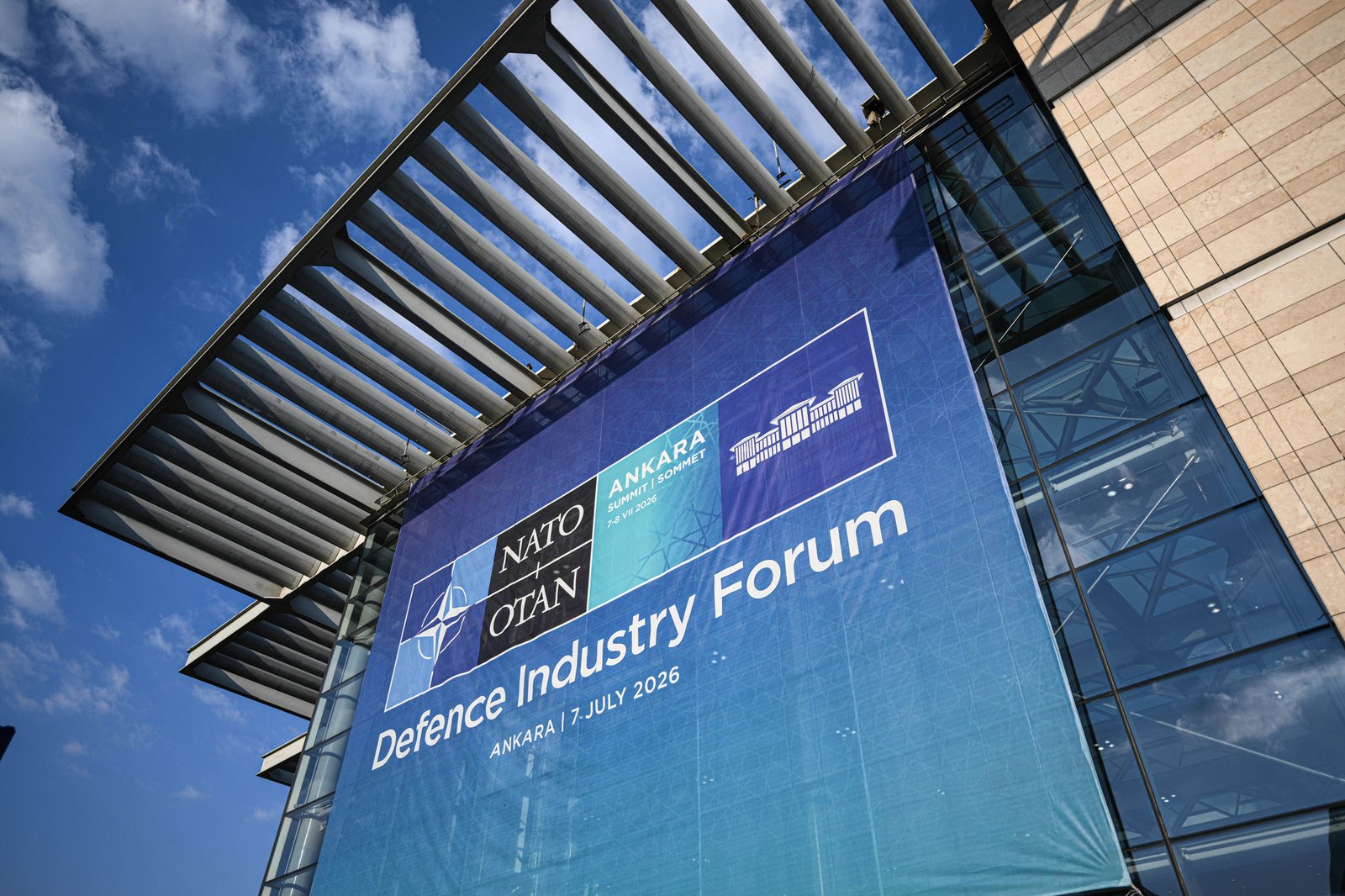
To translate money into military might, allies announced a staggering $50 billion in new defense contracts on the summit’s opening day. Key industrial agreements included:
- A $5 billion agreement among 11 allies to acquire Saab airborne early warning and control aircraft. A $2.7 billion commitment for Triton surveillance aircraft from Northrop Grumman. Over $40 billion earmarked for counter-drone capabilities over the next five years.
Rutte championed these deals under a “Made in NATO” banner to reduce trade barriers and accelerate joint procurement. However, experts point out the friction between this approach and the EU’s “Buy European” strategy, supported by the Security Action for Europe (SAFE) loan program. Juraj Majcin, a policy analyst at the European Policy Centre, noted that the “Made in NATO” label is largely symbolic and unlikely to fundamentally reshape procurement rules. Ultimately, NATO officials admit the primary constraint is not demand, but the sheer lack of industrial capacity on both sides of the Atlantic.
Trump’s Dual Realities: Public Theatrics vs. Private Diplomacy
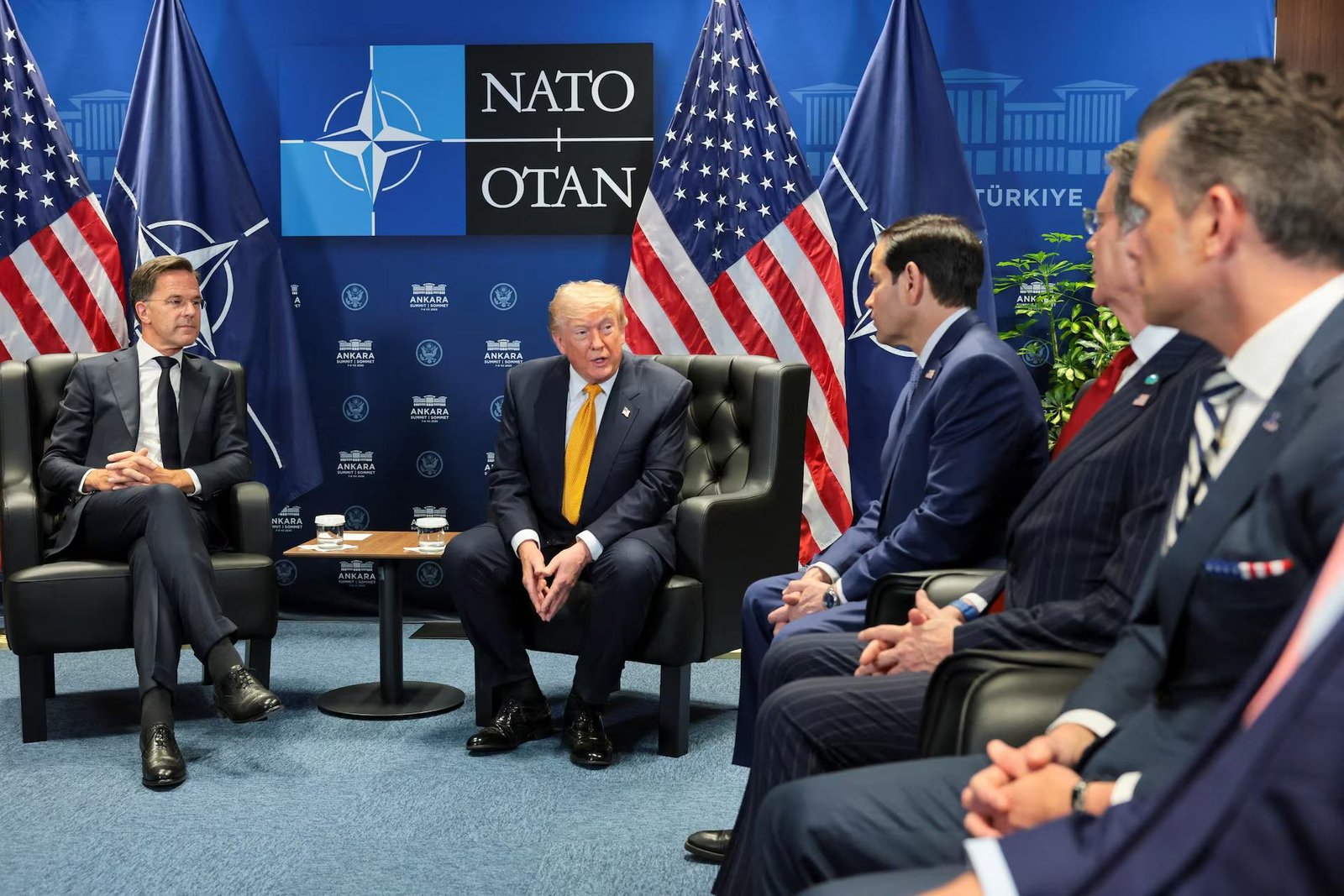
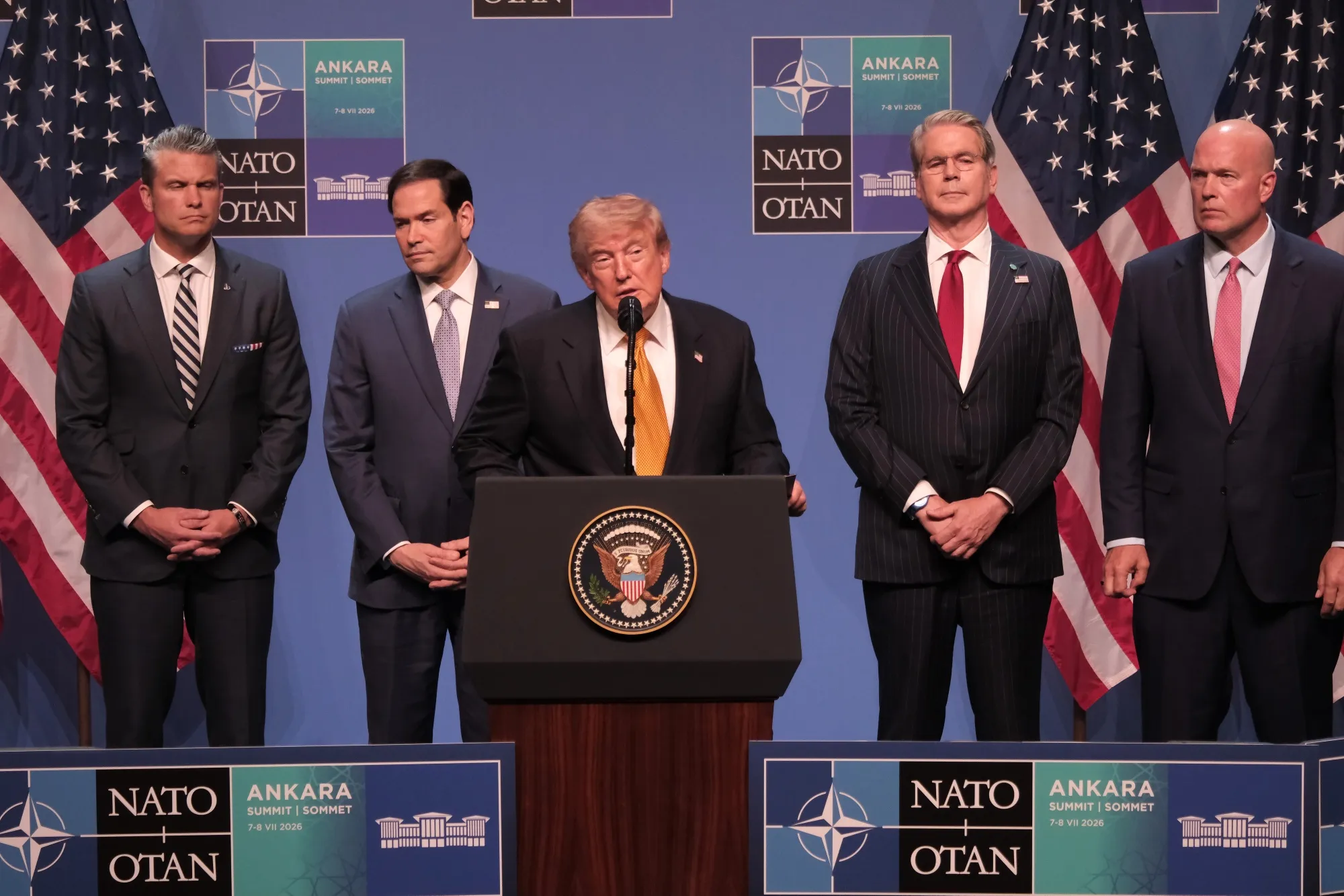
The summit’s atmosphere was heavily dictated by President Trump’s volatile diplomacy. Publicly, he unleashed a barrage of complaints: scolding allies for their lack of support during the U.S. conflict with Iran, halting trade with Spain (labeling its people “hopeless”), and reviving threats to annex Greenland.
However, behind closed doors, his tone reportedly softened. He ultimately endorsed the summit’s declaration, which notably reaffirmed the “ironclad” Article 5 mutual defense commitment. Expert MEP Nicolás Pascual de la Parte contextualized this behavior: “Trump speaks to his own electorate, not to us. He knows he can’t do things like cutting trade ties with Spain, but it will make the headlines”.
Geopolitical Winners and Losers
The summit resulted in several major geopolitical shifts beyond European defense spending:
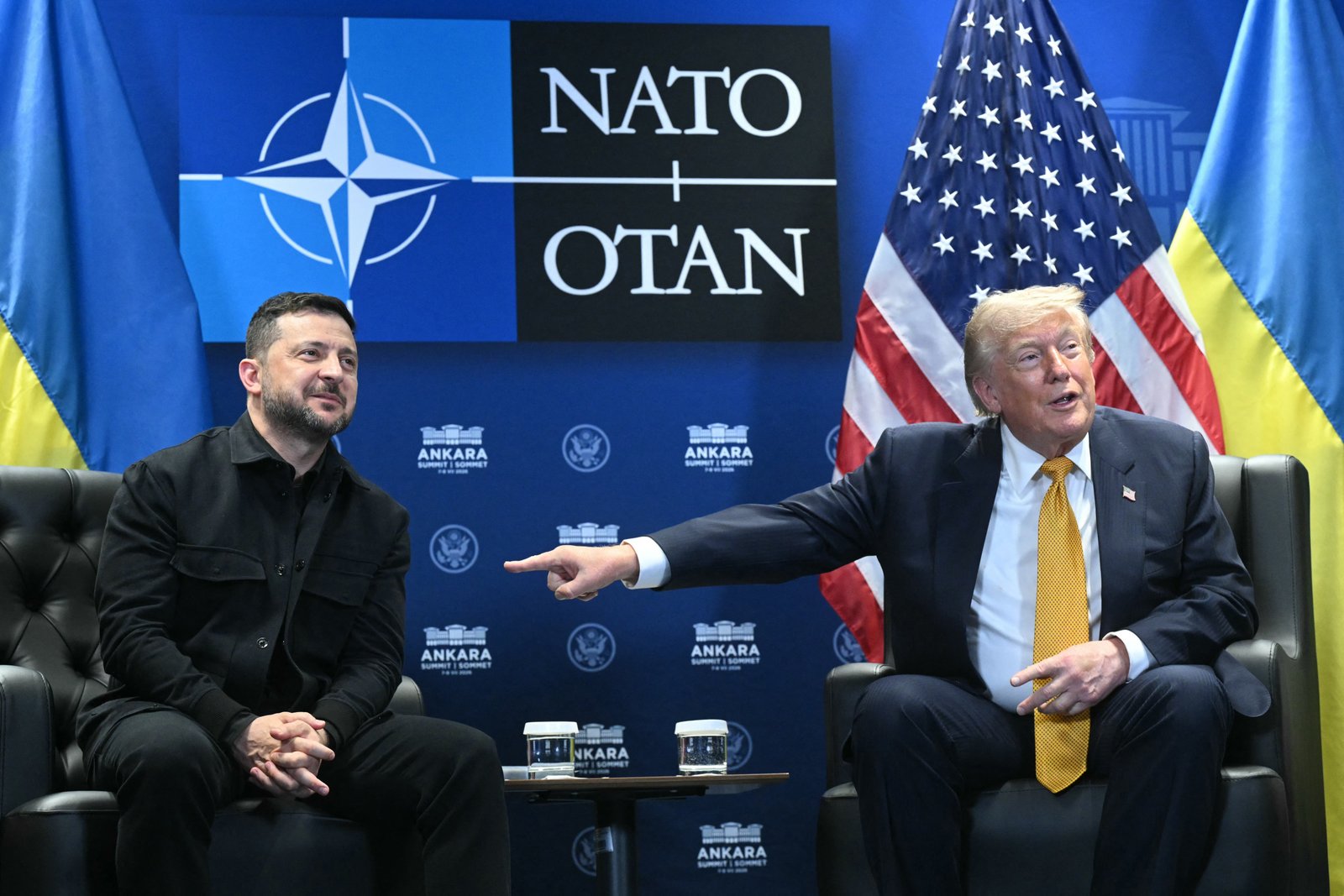
- Ukraine’s Major Wins: Ukrainian President Volodymyr Zelenskyy emerged highly successful. NATO pledged at least $70 billion in support for Ukraine this year. More crucially, Trump agreed to license Ukraine to build Patriot interceptors—addressing Kyiv’s critical vulnerability to Russian ballistic missiles—and signaled readiness to advance drone co-production.
- Middle East Policy Shifts: Trump announced the end of the U.S.-Iran ceasefire and moved to remove Syria from the U.S. list of state sponsors of terrorism, fundamentally altering Washington’s Middle Eastern posture.
- Turkey’s F-35 Hopes: Trump signaled strong consideration for selling F-35 fighter jets to Turkey, though legislative blocks regarding Turkey’s S-400 missile systems remain a hurdle.
- The Indo-Pacific Sidelined: The summit saw weakened language regarding the threat posed by China, and a noticeable drop in leader-level attendance from NATO’s Indo-Pacific partners (IP4).
A Missed Strategic Roadmap
Despite the financial wins, many view the summit as a missed opportunity to transition the alliance. Rather than establishing a concrete roadmap for Europe to absorb core responsibilities—such as filling intelligence gaps or replacing U.S. command structures ahead of anticipated American troop withdrawals—leaders focused entirely on placating Washington.
Demonstrating a growing fatigue with the diplomatic strain, allies quietly agreed to put the annual summit schedule on hold; a promised 2027 summit in Albania has been delayed indefinitely.
The Parting Shot: Erdogan’s Revolvers
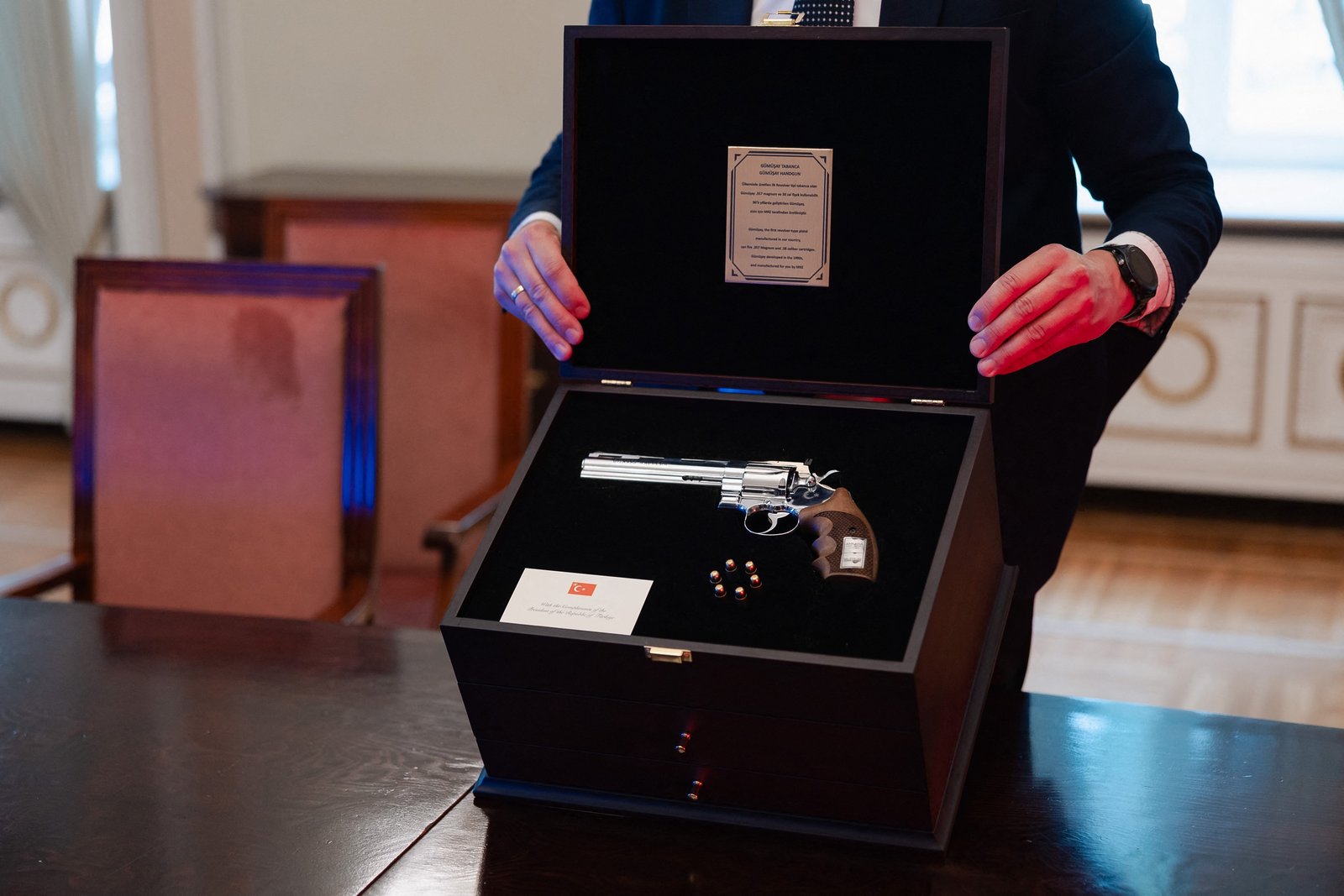
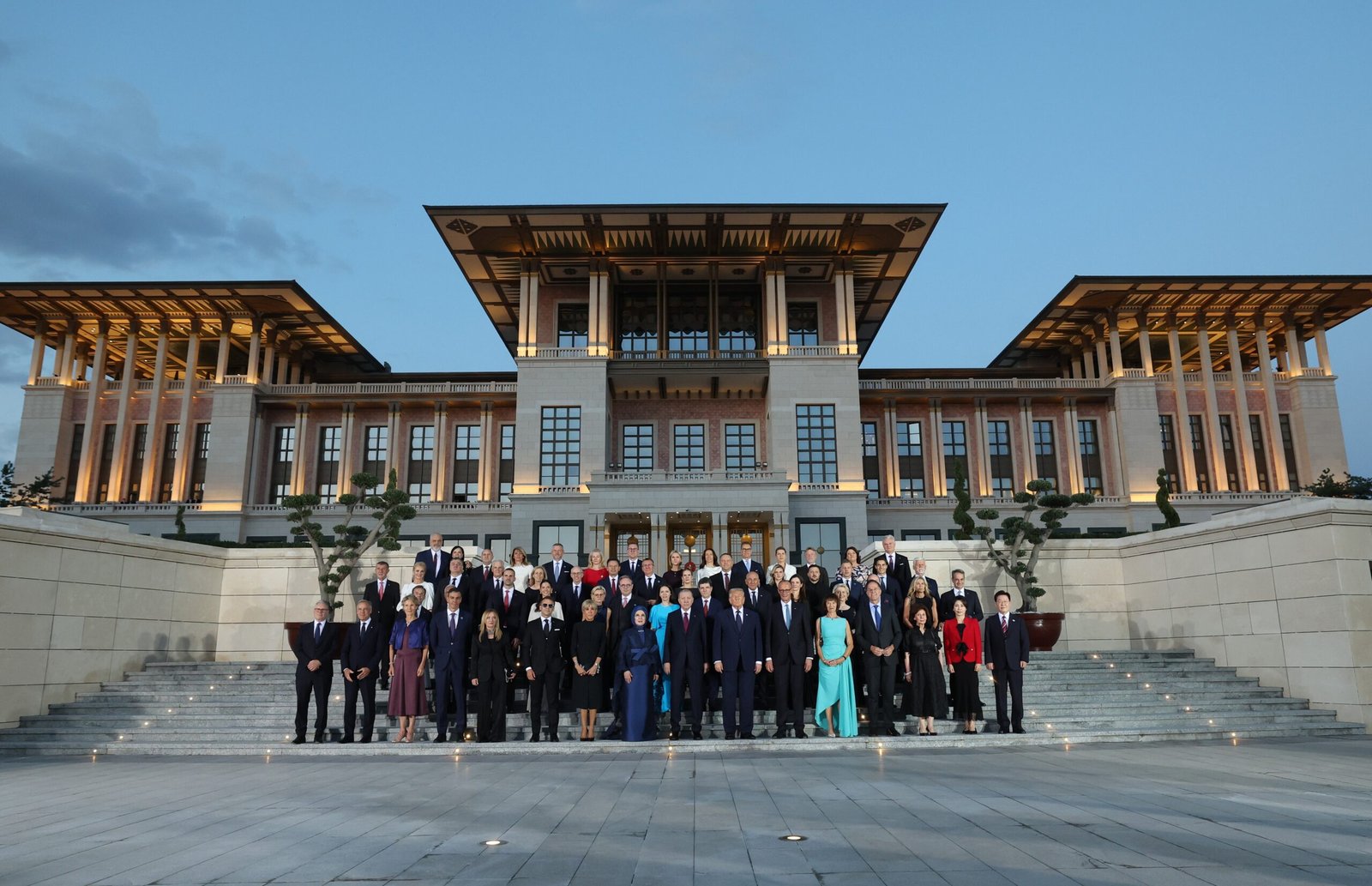
In a bizarre conclusion to the meetings, Turkish President Recep Tayyip Erdogan presented each world leader with an unusual gift: a personalized, vintage Gumusay .357 Magnum revolver accompanied by live ammunition. Intended to showcase Turkey’s booming defense industry—now the world’s third-largest exporter of small arms—the gift created immediate logistical and security chaos.
Leaders scrambled to secure the weapons; the Belgian Prime Minister handed his to airport police, the UK Prime Minister’s weapon was left in Ankara, and EU Commission President Ursula von der Leyen planned to donate hers to a military museum.
Ultimately, the Ankara Summit did not resolve the underlying existential tension between American retrenchment and European capability; it merely bought the alliance time. As Europe faces an upcoming U.S. military footprint review, the true test of Ankara’s success will be how quickly the continent can convert its new cash pledges into authentic strategic autonomy.