
Historical and Archaeological Value
The Acacus Mountains were continuously occupied by hunter-gatherer societies throughout the Holocene epoch, surviving extreme climatic fluctuations during the African Humid Period. Archaeological evidence divides this human occupation into three distinct eras:
The Early Acacus (c. 9810 – 8880 BP): A highly humid phase where small, mobile groups lived along lowland lakes and valleys.
The Late Acacus (c. 8870 – 7400 BP): As the climate dried, populations became more sedentary, living in larger groups and relying heavily on the intensive processing and storage of wild grains using grinding stones and pottery.
The Pastoral Neolithic: A return to a more humid environment spurred increased mobility and the widespread domestication of animals.
Modern scientific exploration of the region surged between 1955 and 1964, led by Fabrizio Mori, who utilized absolute dating methods such as radiocarbon dating. Mori’s most famous discovery occurred in 1959 at the Uan Muhuggiag cave, where he uncovered the mummy of a two-and-a-half-year-old child wrapped in goat leather, dating back to 3446 BC. Furthermore, the region has provided groundbreaking agricultural insights, yielding the earliest known evidence of processed milk lipids on ceramics, radiocarbon-dated to 7,500 BP.
Cultural and Intangible Significance
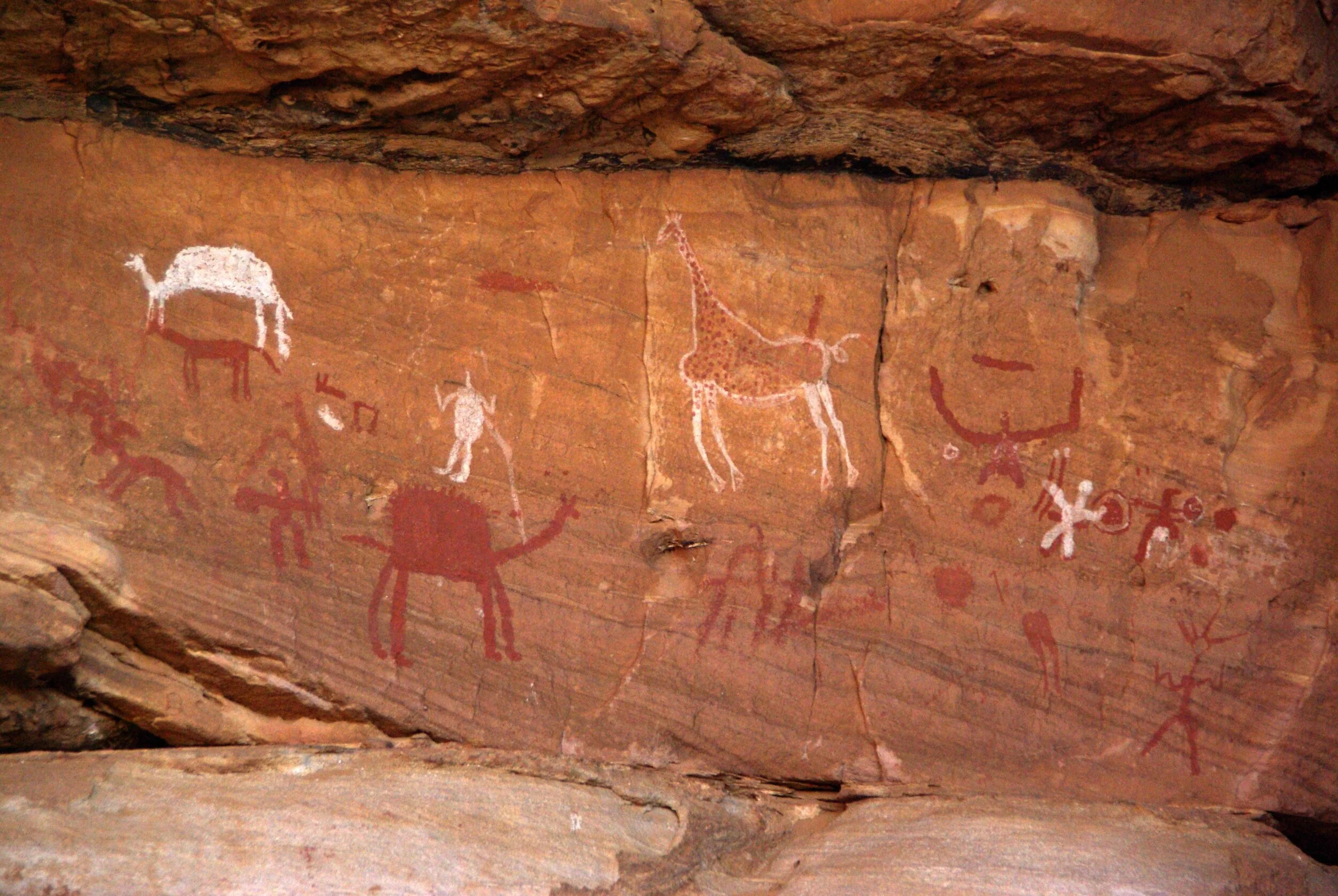
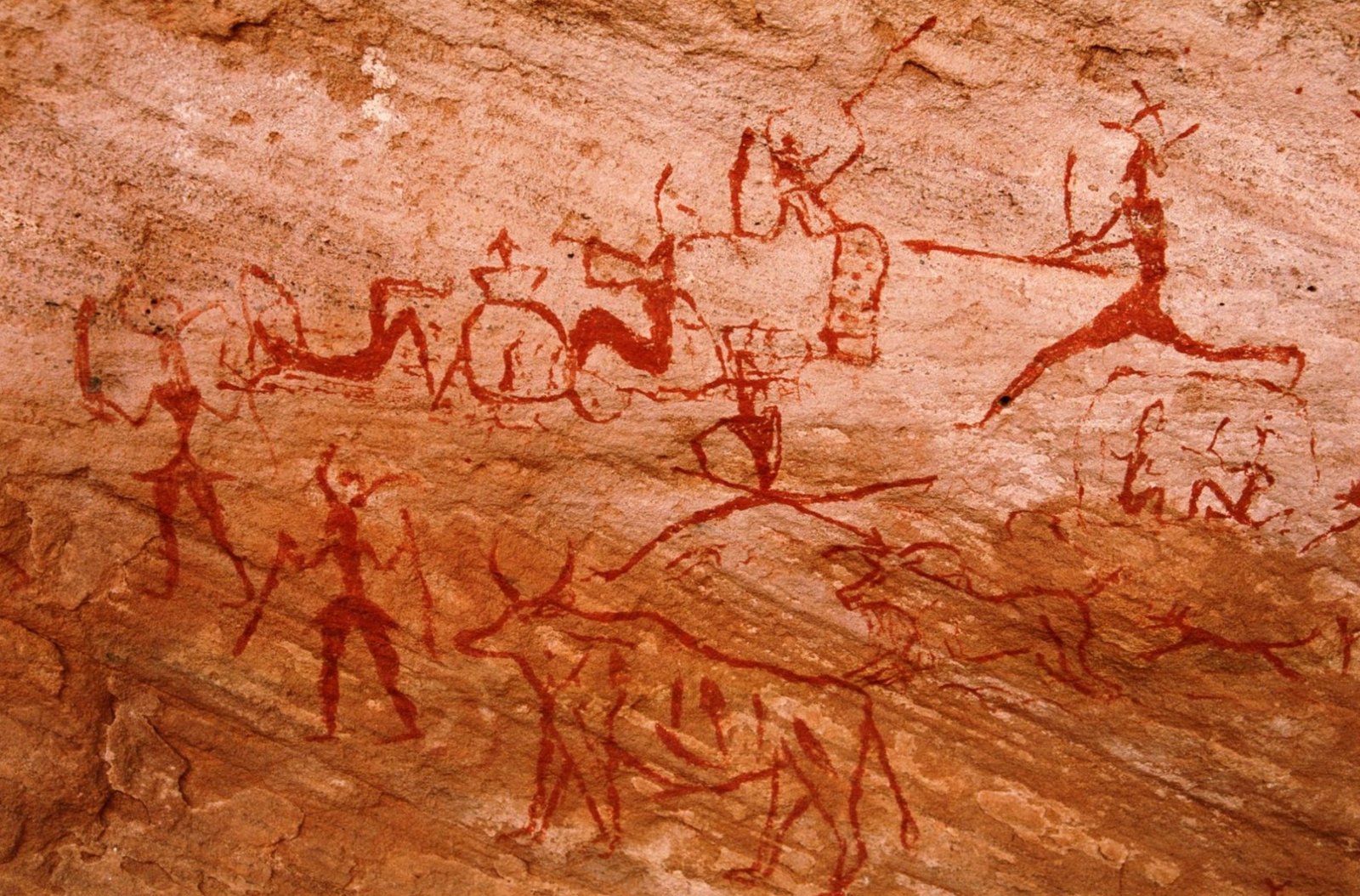
The rock art of Tadrart Acacus spans a massive chronological timeline, dating from 12,000 BC to 100 AD. This unbroken artistic tradition visually documents the transformation of the Sahara from a sprawling, green savannah teeming with wildlife to the arid expanse it is today.
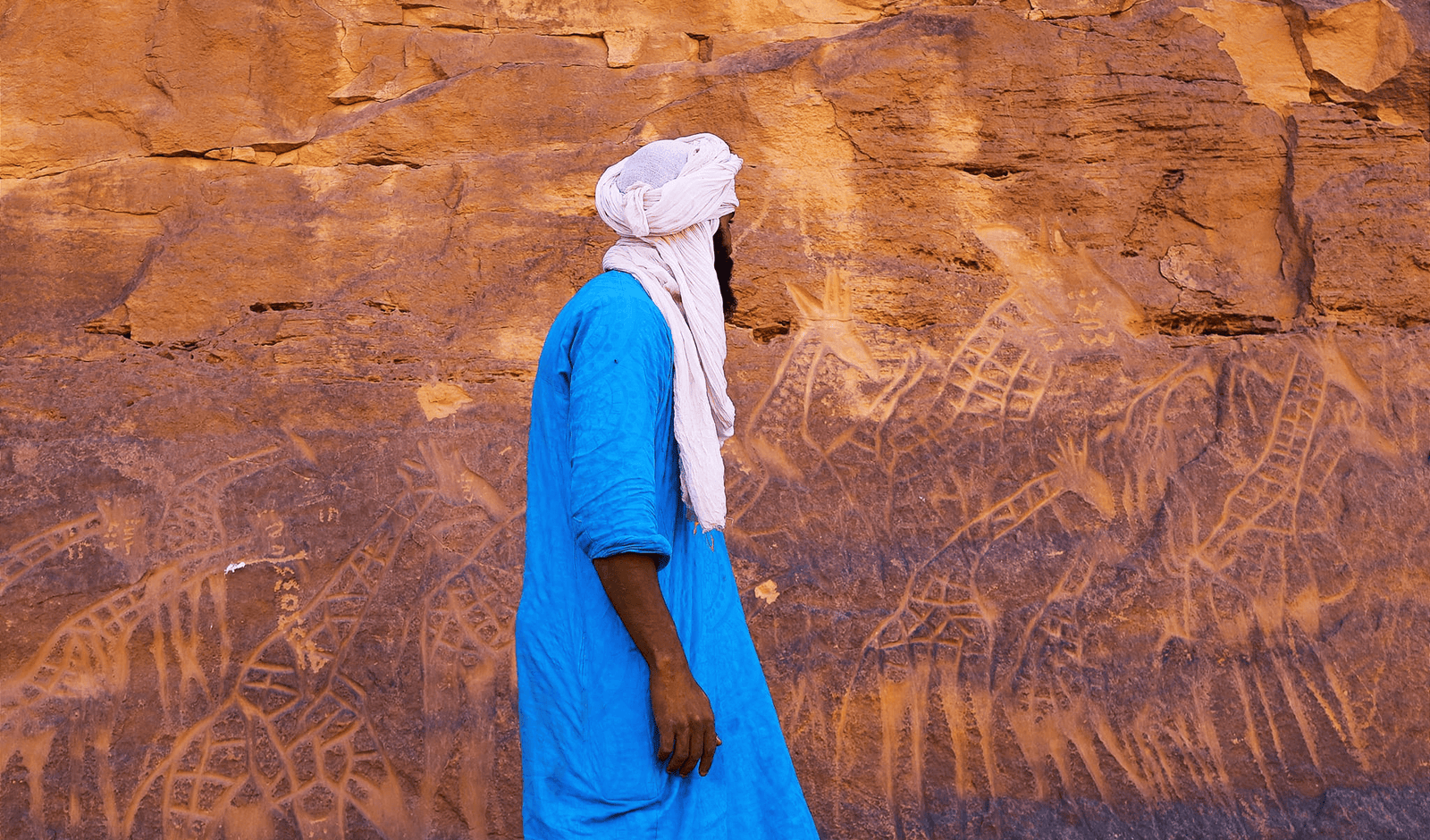
The imagery is categorized into five major stylistic periods: wild animals, round head, pastoralist, horse, and camel. Artists painted and carved diverse scenes of daily life, including figures making music, dancing, and hunting with bows and arrows. The local fauna was extensively documented, with vibrant depictions of giraffes, elephants, ostriches, and crocodiles.
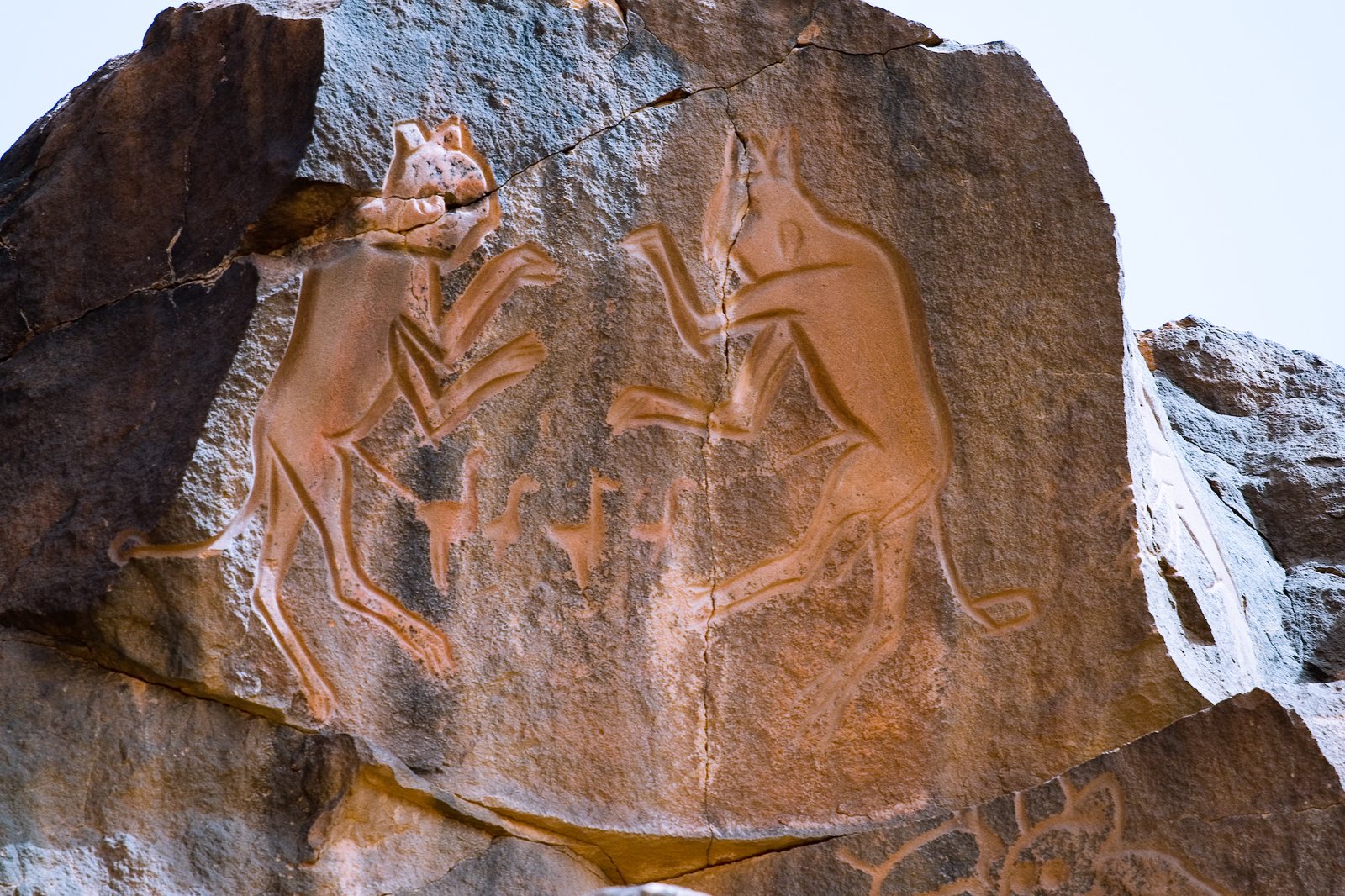
Beyond mere historical record-keeping, the art holds immense intangible and spiritual value. Researchers argue that many of the paintings possess deep religious implications tied to shamanism and the spiritual beliefs of hunter-gatherer societies. These rock art sites likely acted as sacred channels for communication with the divine, utilizing symbolism to seek rain, fertility, and connection with the spirit world. The complexity of this cultural imagination is further evidenced by engravings like the “Fighting Cats” in the nearby Messak Settafet plateau, which feature highly polished, mythical therianthropic beings that likely served as spiritual landmarks for ancient travelers.
Aesthetic and Geographical Splendor
The natural canvas of Tadrart Acacus is as spectacular as the art it holds. Covering over 250 square kilometers, the landscape is defined by bizarre basalt monoliths, towering granite peaks reaching 1,506 meters, and an intricate network of deep ravines (wadis). The corrosive forces of water and wind have sculpted the sandstone into a surreal morphology of petrified arches, isolated rock towers, and mushroom-shaped formations. Key geographical landmarks include:
Wadi Tashwinat: Often considered the “Capital of Acacus,” this 60-kilometer wadi features high cliffs and a vast network of caves that sheltered prehistoric populations for thousands of years.
Forzhaga Arch and Tin Khilqa: Giant, natural, multi-columned rock arches formed from soft sandstone.
Wan Kaza: A stunning north-south chain of multi-colored sand dunes running along the eastern edge of the mountains.

UNESCO Status, Tourism, and the Economy
Recognizing its unparalleled historical archive, UNESCO inscribed the Rock-Art Sites of Tadrart Acacus on the World Heritage List in 1985 under criterion III—as an exceptional testimony to disappeared civilizations. Modern heritage advocates, including the Med-O-Med organization, argue that its classification should be expanded to a “Cultural Landscape” to fully reflect its combined geological, aesthetic, and cultural magnitude.
While the site holds immense potential for cultural tourism and economic development, its recent history has been marred by tragedy. During the decades of Muammar Gaddafi’s rule, the management of antiquities was severely neglected. Since 2005, the aggressive search for underground petroleum has placed the ancient rocks at physical risk, with seismic hammers sending damaging shock waves through the region.
Following the outbreak of civil war in 2011, the site suffered catastrophic vandalism. Looting reached crisis levels, and vandals began systematically defacing the art. Reports from 2009, 2013, and 2014 detailed the horrifying use of spray paint, chemical products, and even sledgehammers to destroy irreplaceable 12,000-year-old paintings.
In response, a $2.26 million UNESCO project was initiated in 2012, in collaboration with the Libyan and Italian governments, to train local staff and establish a protective framework. Yet, the ambiguity of property boundaries and a lack of local awareness regarding the site’s cultural value continue to hinder preservation efforts. Until stability and rigorous conservation can be guaranteed, the economic and touristic potential of Tadrart Acacus remains unrealized, leaving one of humanity’s greatest prehistoric galleries tragically exposed.