






The Collapse in Zenica: Tactical and Psychological Fragility
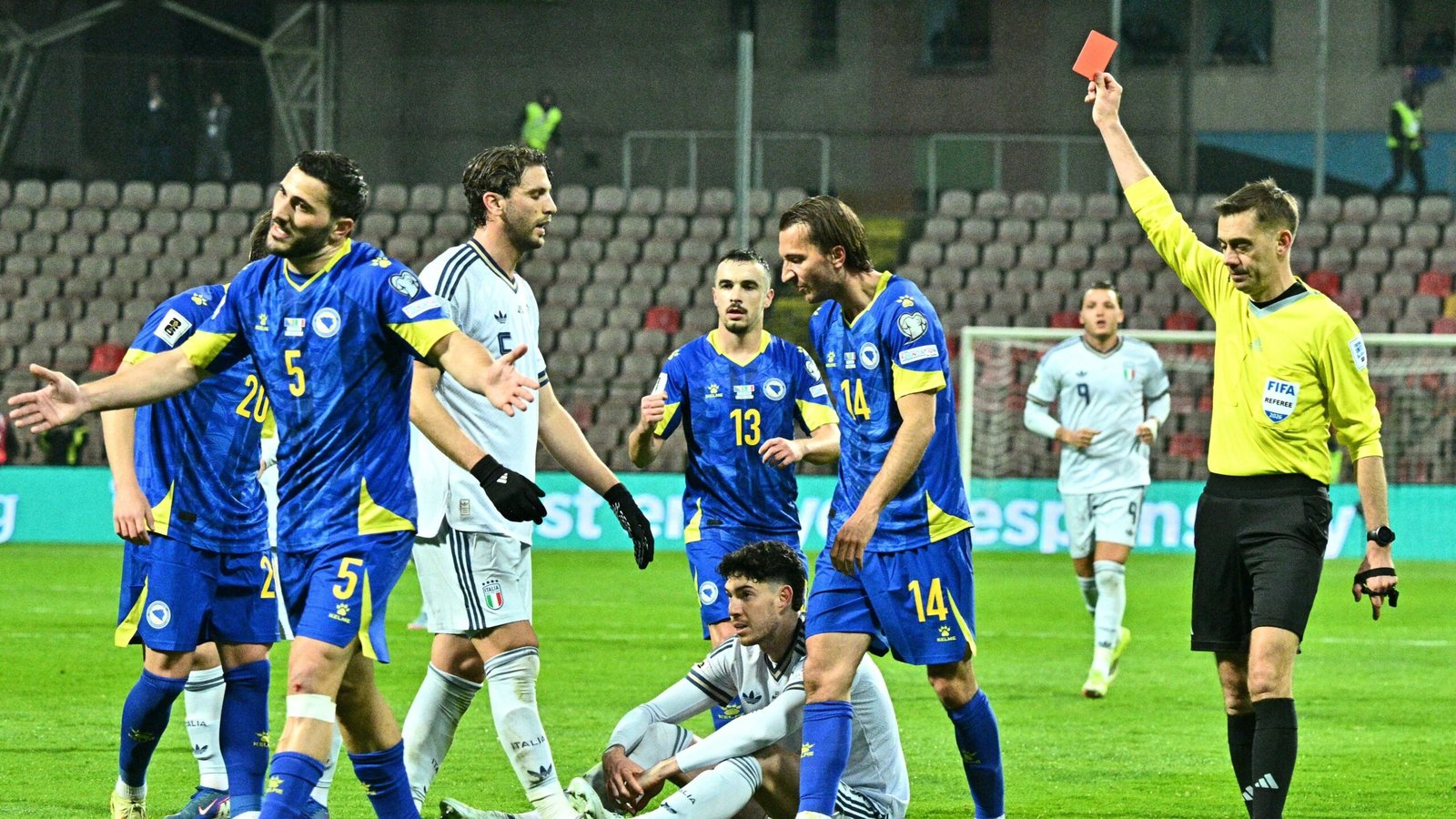
Italy’s decisive play-off match in Zenica encapsulated the broader narrative of their recent struggles. The match ended in a 1-1 draw before Bosnia triumphed 4-1 in a penalty shootout. The collapse was triggered by several critical moments:
- Discipline and Control: The turning point occurred just before half-time when Alessandro Bastoni, one of the world’s premier centre-backs, received a red card for a wild challenge. Playing with ten men entirely disrupted Italy’s defensive structure.
- Attacking Inefficiency: Despite Moise Kean scoring early, he missed a crucial chance to make it 2-0, highlighting a recurring inability to convert opportunities in the final third.
- Statistical Inferiority: Bosnia dominated key metrics, including possession and chances, proving that Italy was outplayed rather than simply unlucky.
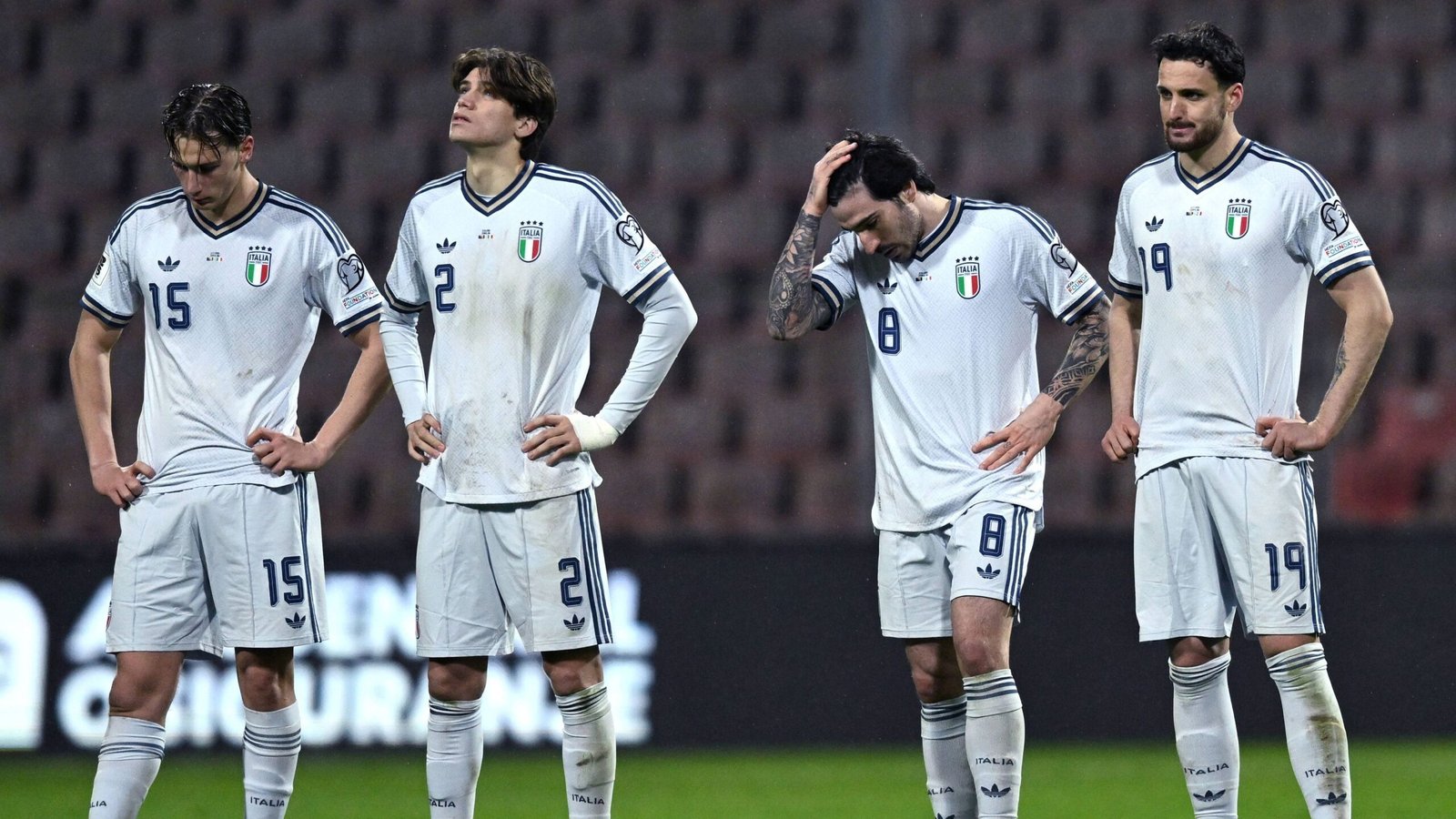
- Shootout Woes: The psychological fragility of the team was exposed during the penalties, where young starlet Pio Esposito and veteran Bryan Cristante both missed their spot-kicks.
Systemic Rot: The Reasons Behind the Decline
Italy’s elimination is not an isolated incident of bad luck, but rather the symptom of deep-rooted structural and domestic issues.
Firstly, Serie A is suffering from a prolonged financial and developmental decline. Currently, two-thirds of the players in Italy’s top flight are foreign, severely limiting the pool of elite domestic talent available to the national team. Furthermore, the league’s reduced financial pulling power has forced top homegrown players to seek lucrative paydays abroad; for example, Lorenzo Insigne left for Major League Soccer at 31, and Mateo Retegui departed for the Saudi Pro League, losing his competitive sharpness in the process.
The nation has also completely lost its legendary conveyor belt of world-class playmakers. The era of creative “No. 10s” like Roberto Baggio, Francesco Totti, and Alessandro Del Piero has ended, leaving the current squad less than the sum of its parts.
At the grassroots and cultural level, the passion for football appears to be waning among the youth. Observers note that fewer children are playing football in the streets, with public interest shifting toward other sports, bolstered by the recent global successes of Italian tennis stars like Jannik Sinner.
Political Fury and the Refusal to Resign
The fallout from the disaster has transcended sport, sparking intense fury within the Italian parliament. The failure was the first item on the parliamentary agenda the morning after the defeat.
Sports Minister Andrea Abodi and Galeazzo Bignami, a prominent MP from the ruling Brothers of Italy party, demanded the immediate resignation of the national football federation (FIGC) chief, Gabriele Gravina.
Former Prime Minister Matteo Renzi articulated the national grief, stating, “Football isn’t just entertainment in our country; it’s part of our culture and national identity”.
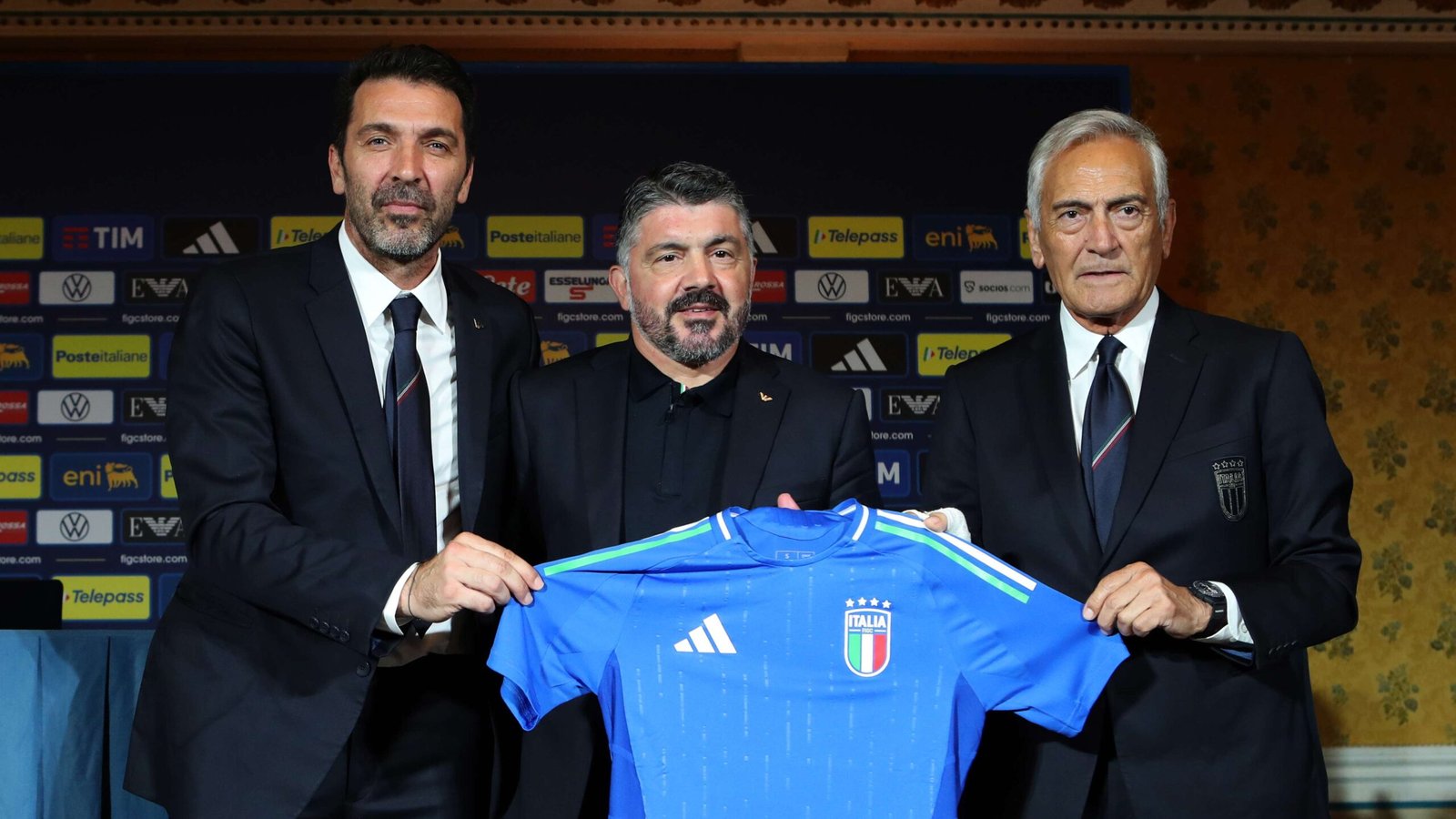
Despite the immense pressure and a hostile media environment, Gravina has refused to step down, while delegation chief Gianluigi Buffon has defended the decision to retain manager Gennaro Gattuso.
The Long Road to Recovery
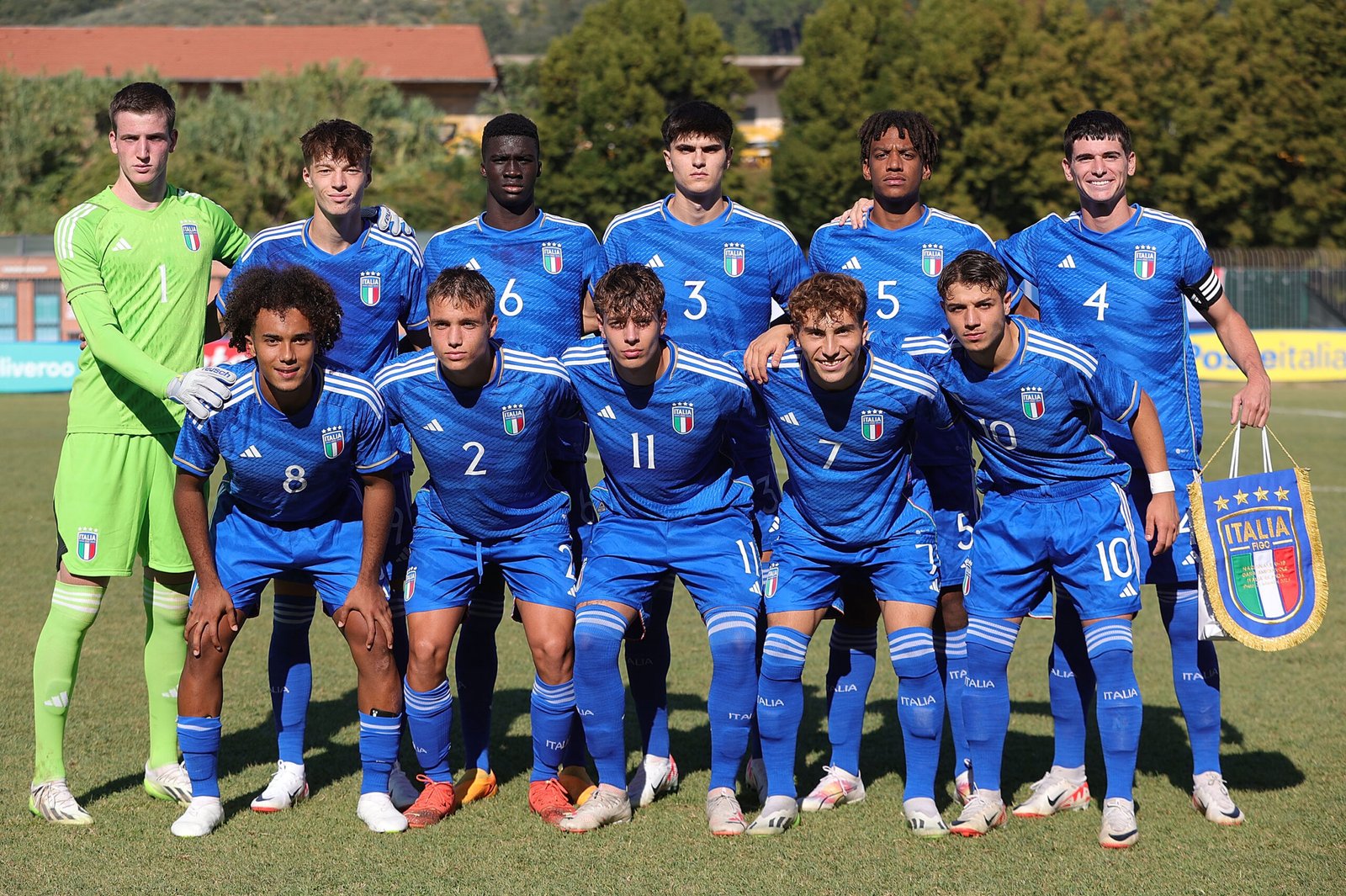
There are faint glimmers of hope for Italy’s future. The introduction of Serie A “B teams” has begun to bear fruit, culminating in recent victories at the Under-17 and Under-19 European Championships. Furthermore, infrastructure is slowly improving as the country prepares to co-host Euro 2032.
However, as veteran defender Leonardo Spinazzola tearfully summarized, the present reality for the senior squad remains an absolute “nightmare”. Until the systemic issues in governance, domestic league structure, and talent development are resolved, Italy’s footballing tragedy risks becoming a permanent reality.
A New Era for Mediterranean Football
While Italy flounders, the 2026 World Cup qualifiers have highlighted a shifting landscape across the rest of the Mediterranean. Traditional powerhouses like France and Spain have comfortably maintained their elite status, utilizing deep squads and tactical continuity to secure qualification. Croatia, relying on an aging but experienced golden generation, also successfully navigated the qualifiers. The expanded 48-team format greatly benefited emerging, resilient nations; Turkey secured its spot through the UEFA play-offs, while Bosnia and Herzegovina achieved a standout success by eliminating Italy. In North Africa, Morocco continues to build on its historic 2022 run as a regional powerhouse, while Algeria and Tunisia remain highly competitive despite the tight structures of CAF qualifying.