






Historical and Touristic Significance
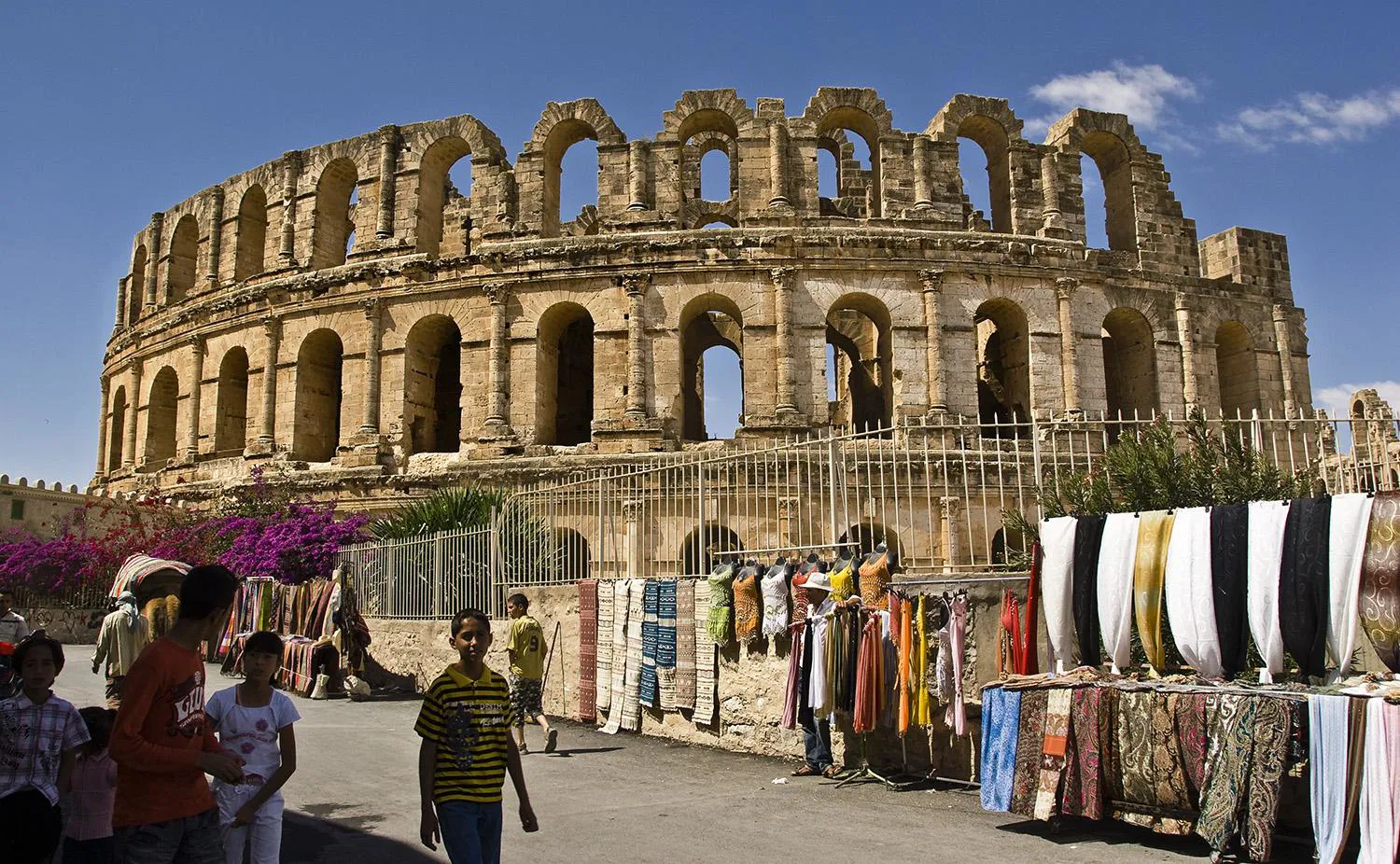
Constructed around 238 AD during the reign of Emperor Gordian, the amphitheater was born out of the immense agricultural prosperity of Roman North Africa. Thysdrus was a highly lucrative center for olive oil and corn production, and its wealthy landed elite helped finance this colossal structure.
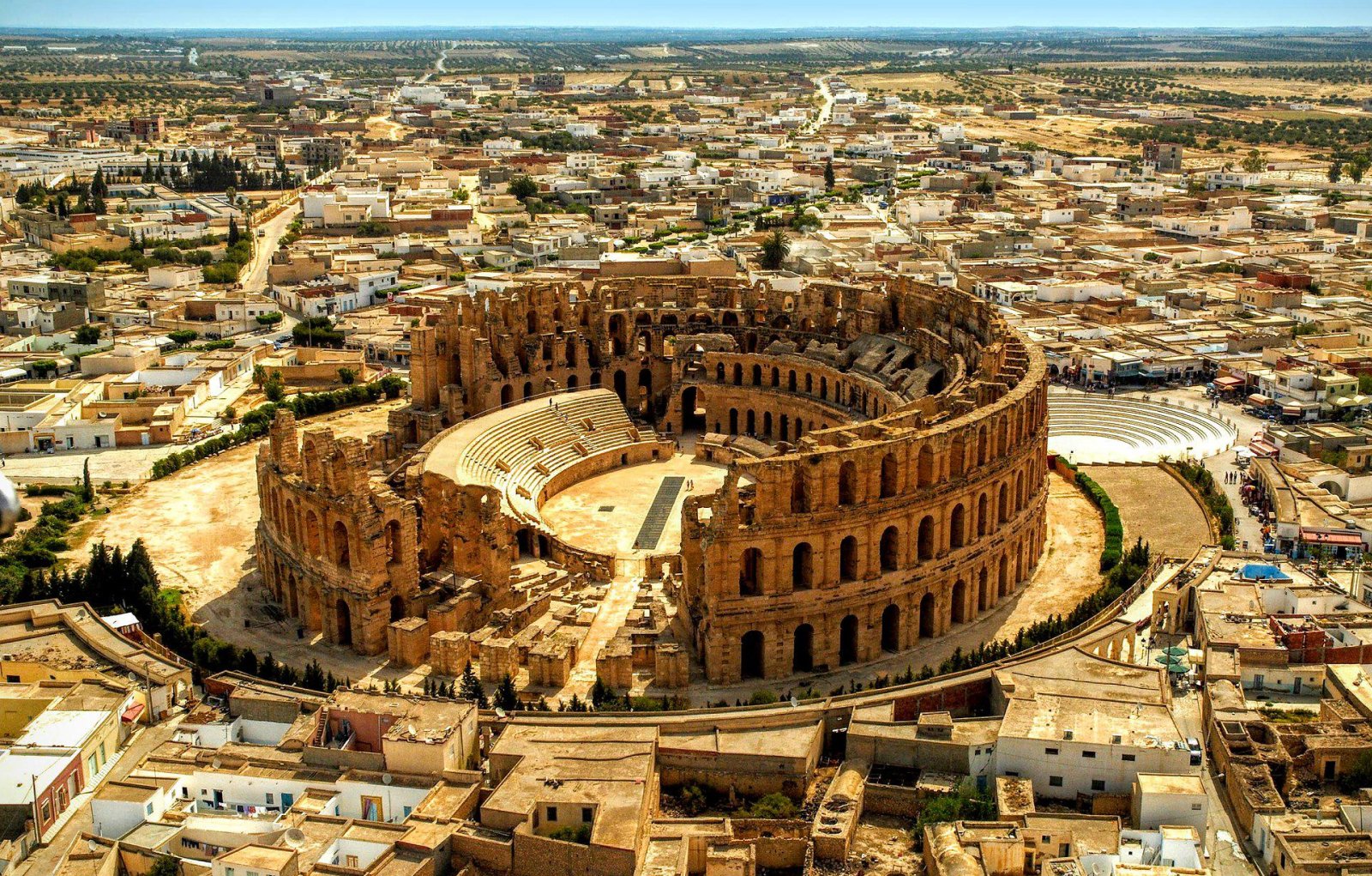
Designed to be the largest amphitheater in North Africa, it could accommodate up to 35,000 spectators. Its architectural execution was exceptionally innovative. Unlike many ancient amphitheaters that relied on hillsides for support, El Jem is entirely freestanding, built on flat ground without deep foundations. Furthermore, it was constructed entirely from massive, dressed stone blocks, setting it apart from other arenas that relied on mixed materials.
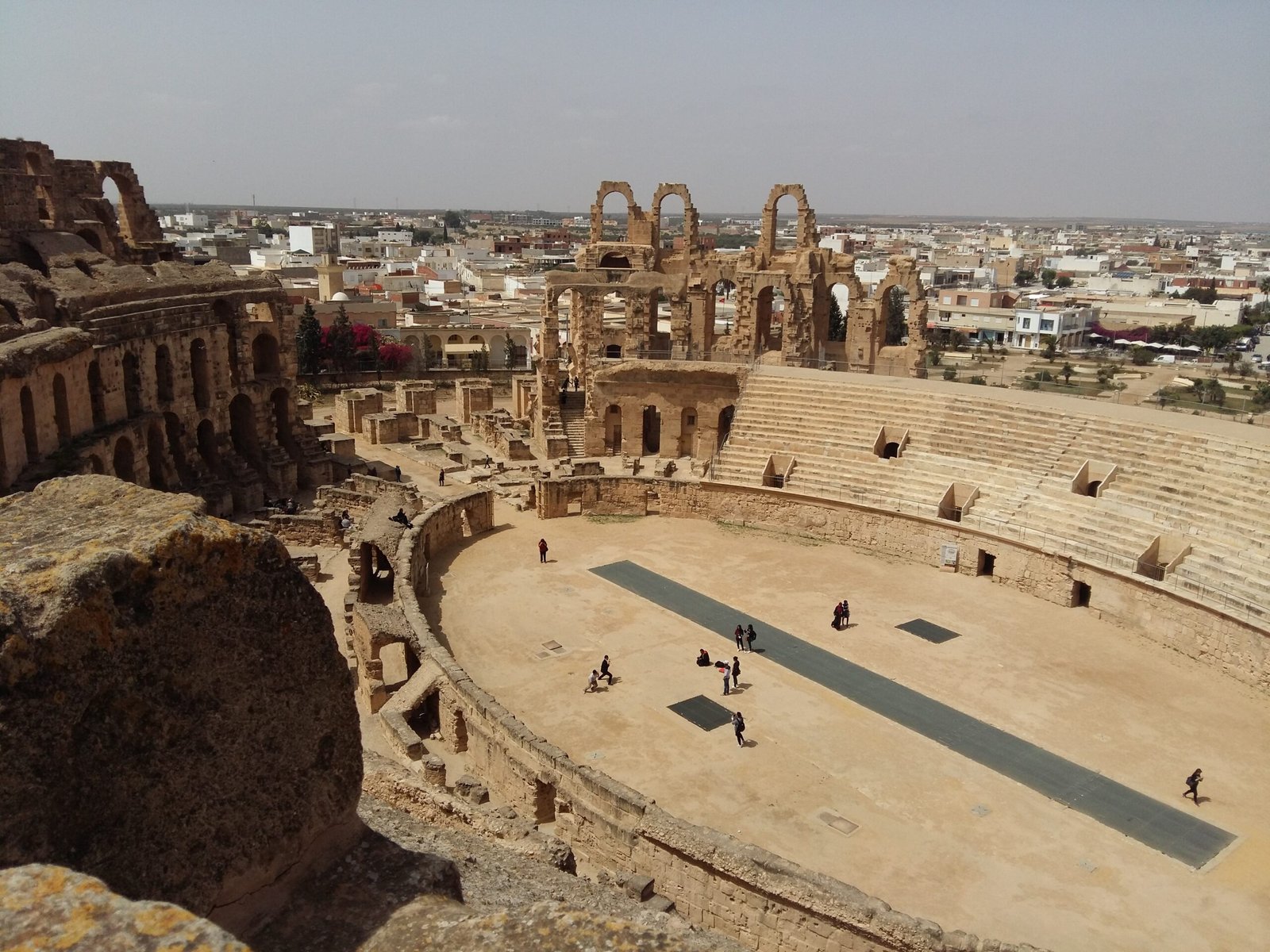
In antiquity, the amphitheater served as an instrument of social control, hosting violent hunts, public executions, and gladiatorial combat. As the Roman Empire fractured, the massive stone structure was repurposed as a fortress, providing shelter and defense for Berber queens, Byzantine forces, and local nomadic tribes over the centuries.
Expert Interpretations
The Amphitheatre of El Jem commands immense respect from historians, archaeologists, and heritage professionals who view it through several distinct analytical lenses.
Tunisian archaeologist Nejib Ben Lazreg highlights its unparalleled regional supremacy, stating: “The amphitheatre is one of the oldest and biggest ruins in North Africa. In Egypt we have the pharaonic pyramids but the biggest and most impressive one of all amphitheatres in North African region is that of El Djem. It is also one of the largest amphitheatres of the Roman empire after that of Rome”.
From a geopolitical perspective, UNESCO evaluates the monument as a profound display of imperial reach. The organization notes that the construction of such a sophisticated building in a far-off province is “characteristic of imperial Roman propaganda,” designed to project Rome’s cultural dominance to the very edges of its empire. Similarly, architectural historians consider El Jem a masterpiece of “peripheral monumentality,” proving that provincial cities could rival metropolitan Rome in scale and ambition.
Economic Contribution and Visitor Data
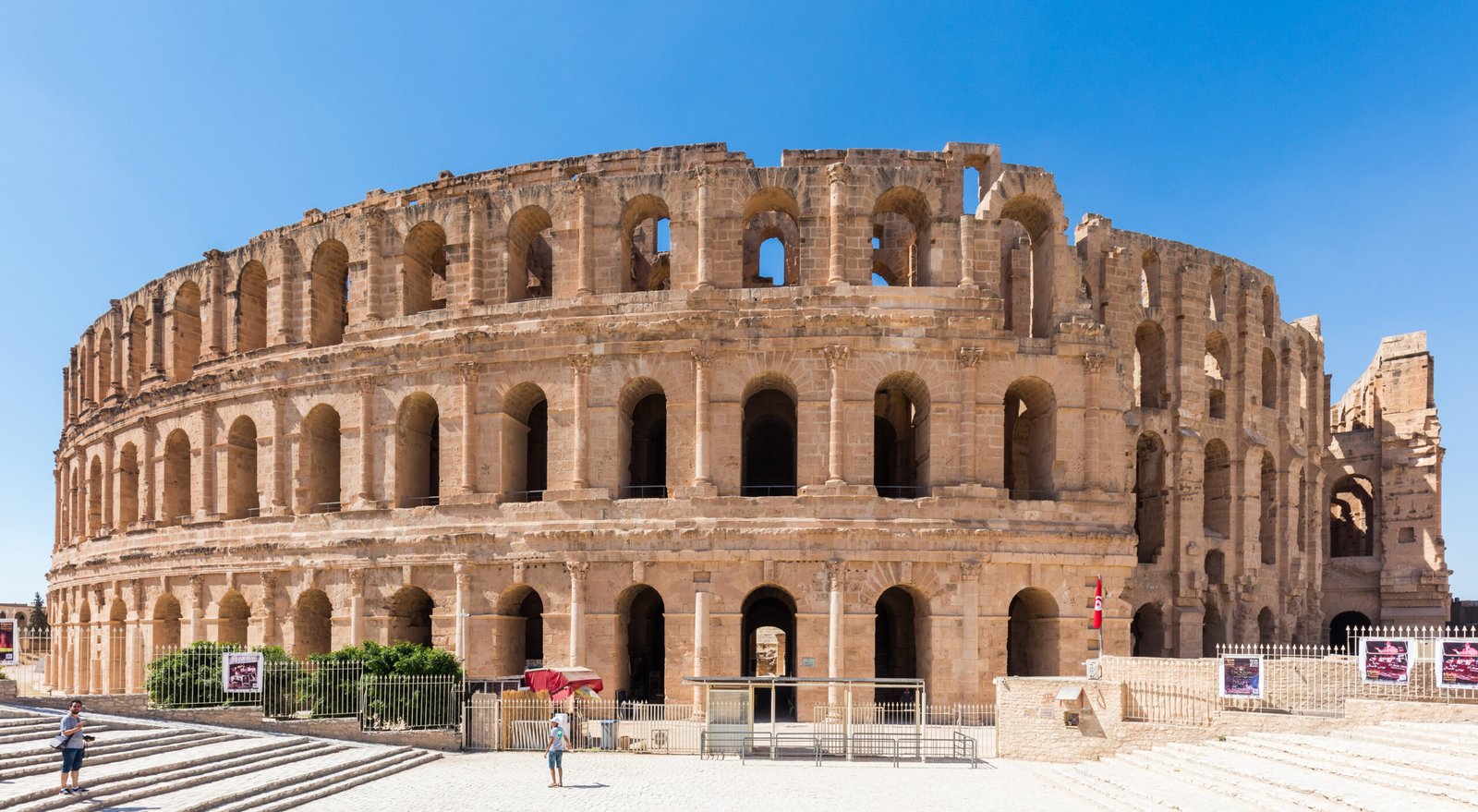
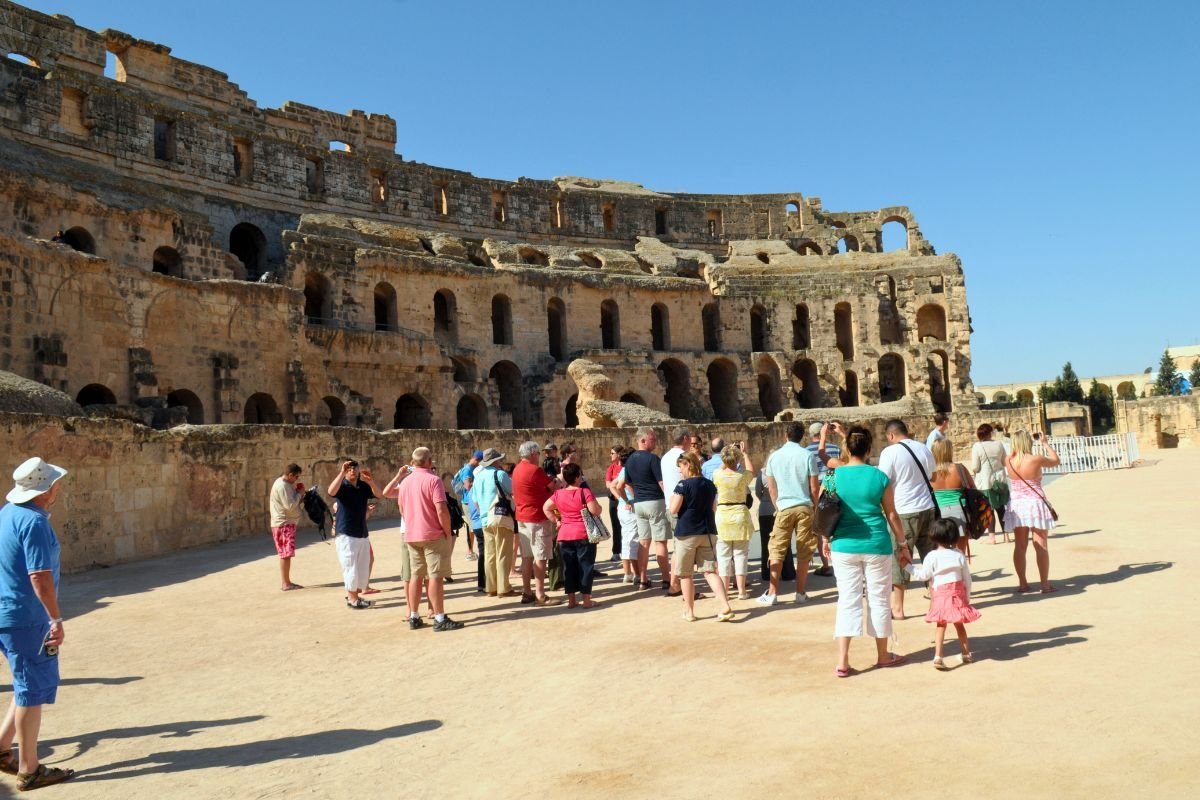
Designated a UNESCO World Heritage site in 1979, the amphitheater is a vital economic engine for Tunisia. Today, the site draws over 1 million visitors annually, making it one of the most frequented historical landmarks on the African continent.
With standard entrance fees priced at 10 Tunisian Dinars (TND), the site generates upwards of 10 million TND in direct ticketing revenue alone each year. However, its true economic contribution lies in its massive multiplier effect. The influx of a million tourists sustains local employment in heritage management, hospitality, and guided services. It directly stimulates regional infrastructure and small businesses, effectively rebranding Tunisia as a premier destination for cultural tourism and diversifying the national economy away from a strict reliance on coastal resorts.
In Popular Culture: Films, Commercials, and Events
The “immersive authenticity” of El Jem—featuring intact underground tunnels and towering stone arches—has made it a highly sought-after location for global media and artistic showcases.
- Films and Television: The monument’s dramatic, raw aesthetic made it a famous filming location for Monty Python’s legendary 1979 comedy film, Life of Brian. It was also featured in the popular television travel series Long Way Down. Furthermore, its immense gladiatorial architecture and trapdoors serve as a major touchstone for fans of Ridley Scott’s epic Gladiator, with the site frequently featured in tourism circuits dedicated to the cinematic history of the Roman arena.
- Commercials: The amphitheater served as the striking backdrop for Nike’s iconic 1996 “Good vs Evil” television commercial. In the globally broadcast ad, legendary football players like Eric Cantona, Ronaldo, and Paolo Maldini defend “the beautiful game” in a gladiatorial soccer match against a team of demonic warriors inside the ancient walls of El Jem.
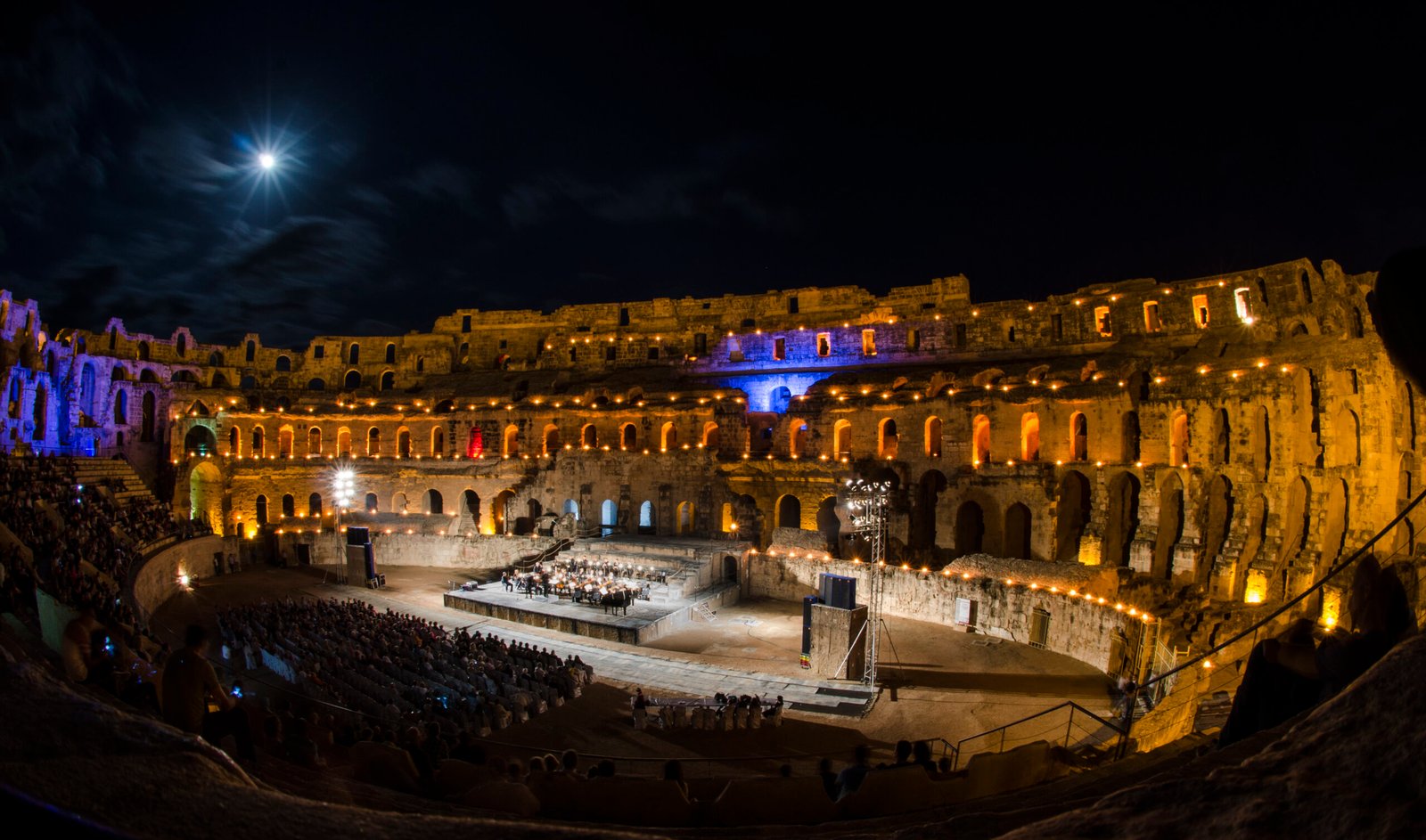
- Cultural and Artistic Events: Today, the amphitheater has replaced the bloodshed of its past with high culture. It is the proud host of the prestigious International Festival of Symphonic Music. Held every summer, this event brings world-renowned orchestras to fill the ancient stone arena with the sounds of violins and pianos, offering an acoustic experience that merges classical music with ancient history.
Challenges and Future Prospects
Despite its enduring strength, the Amphitheatre of El Jem faces significant modern pressures. Material degradation from weathering requires continuous, expensive conservation. Furthermore, urban expansion threatens the visual integrity of the site. To protect its authenticity, local decrees currently restrict the height of surrounding buildings within a 300-meter radius, and buffer zones are being studied to prevent further encroachment.
Looking to the future, experts advocate for treating El Jem as a “living heritage” model. By integrating digital tools like 3D virtual reconstructions, expanding sustainable tourism circuits, and continuing its rich cultural programming, Tunisia can ensure that this colossus of the steppe remains an active, vibrant part of contemporary life for generations to come.