





The Luminosity of the Basin
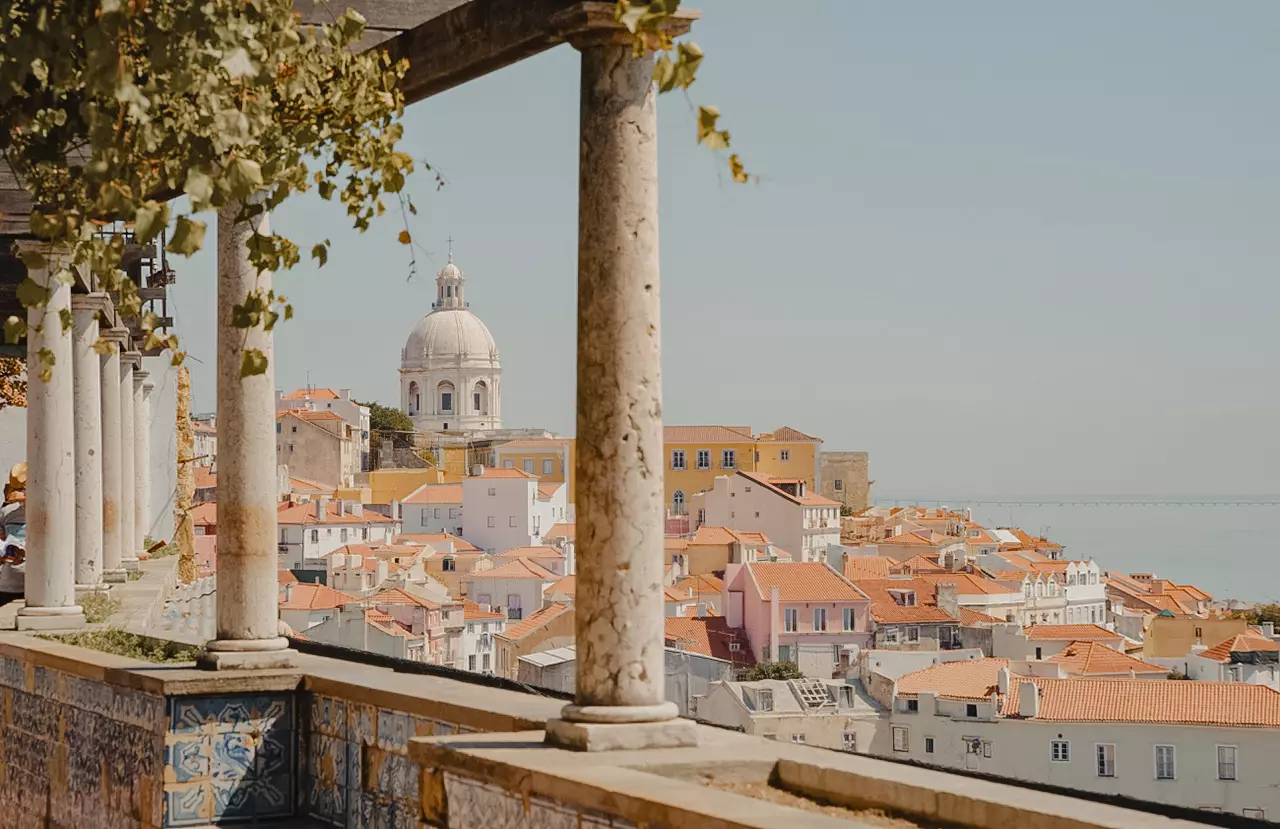
If one were to strip away the centuries of political borders and linguistic shifts, the Mediterranean would still be instantly recognizable by two things: its light and its stone. The artistic heritage of this region is not merely a collection of objects in museums; it is a direct response to a unique physical environment. The relentless, high-contrast sunlight of the Mediterranean has shaped the way its people see the world and, consequently, how they build and paint within it. From the blinding white cycladic cubic houses of the Aegean to the golden limestone of Maltese cathedrals and the warm terracotta of Tuscan villas, the architecture of the Mediterranean is a dialogue with the sun.
This shared luminosity has fostered a distinct artistic clarity. Unlike the misty, ethereal landscapes of Northern Europe, the Mediterranean world is one of sharp edges, deep shadows, and vibrant saturation. This environmental reality birthed the classical pursuit of form and proportion in ancient Greece, inspired the intricate geometric shadows of Islamic lattice work, and centuries later, drew modernist painters like Matisse and Picasso to the Côte d’Azur. To understand the art of this region, one must first understand that it is a celebration of visibility, an attempt to capture the divine brilliance of the sky and the sea.
The Classical Foundations: A Shared Visual Language
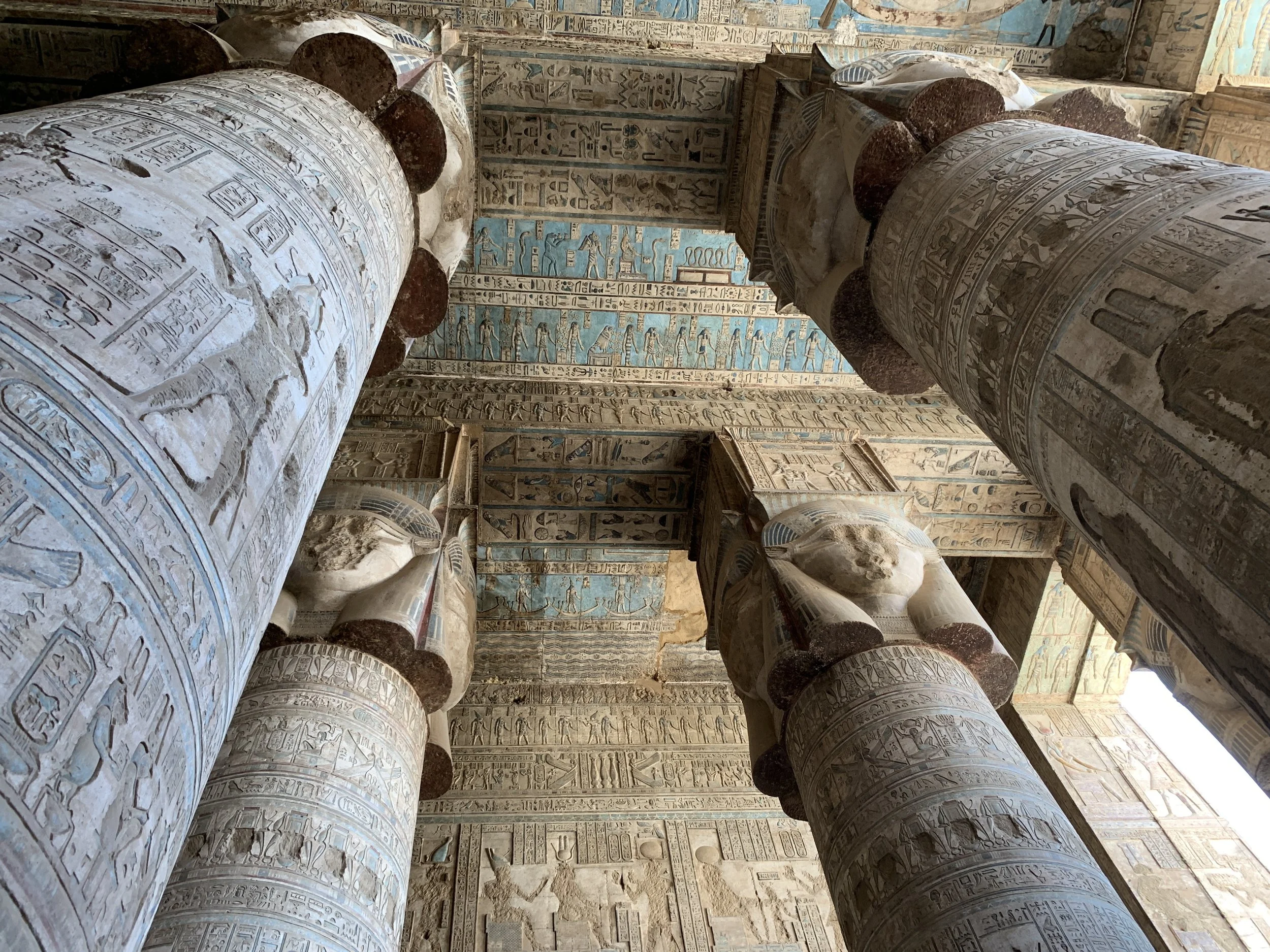
The bedrock of Western artistic tradition lies in the northern and eastern shores of this sea, but it was never a purely European endeavor. The classical world was a vast interconnected web where motifs traveled as freely as grain. The Egyptians mastered the monumental scale, creating temples of stone that defied eternity. This monumentalism drifted across the sea to Crete and mainland Greece, where it was refined into the human-centric proportions of the Classical era.
The Romans, the great engineers of the ancient world, acted as the supreme synthesizers. They took the Greek column and the Etruscan arch and spread a unified architectural vocabulary from the sands of Libya to the forests of Gaul. A citizen walking through a Roman forum in Leptis Magna (modern-day Libya) would see the same Corinthian capitals, the same mosaic patterns, and the same amphitheater designs as a citizen in Ephesus (modern-day Turkey) or Tarraco (modern-day Spain). This era established a “visual esperanto”—a common architectural language of colonnades, domes, and mosaics that remains embedded in the region’s subconscious. Even today, the ruins that dot the coastlines serve as reminders of a time when the Mediterranean was politically and artistically one.
The Spiritual Geometry: Byzantium and Islam
As antiquity gave way to the Middle Ages, the artistic focus shifted from the realistic depiction of the human body to the expression of the divine spirit. This transition created two distinct yet deeply intertwined artistic lineages: the Byzantine and the Islamic. While they are often studied separately, in the Mediterranean context, they are siblings constantly borrowing from one another’s wardrobes.
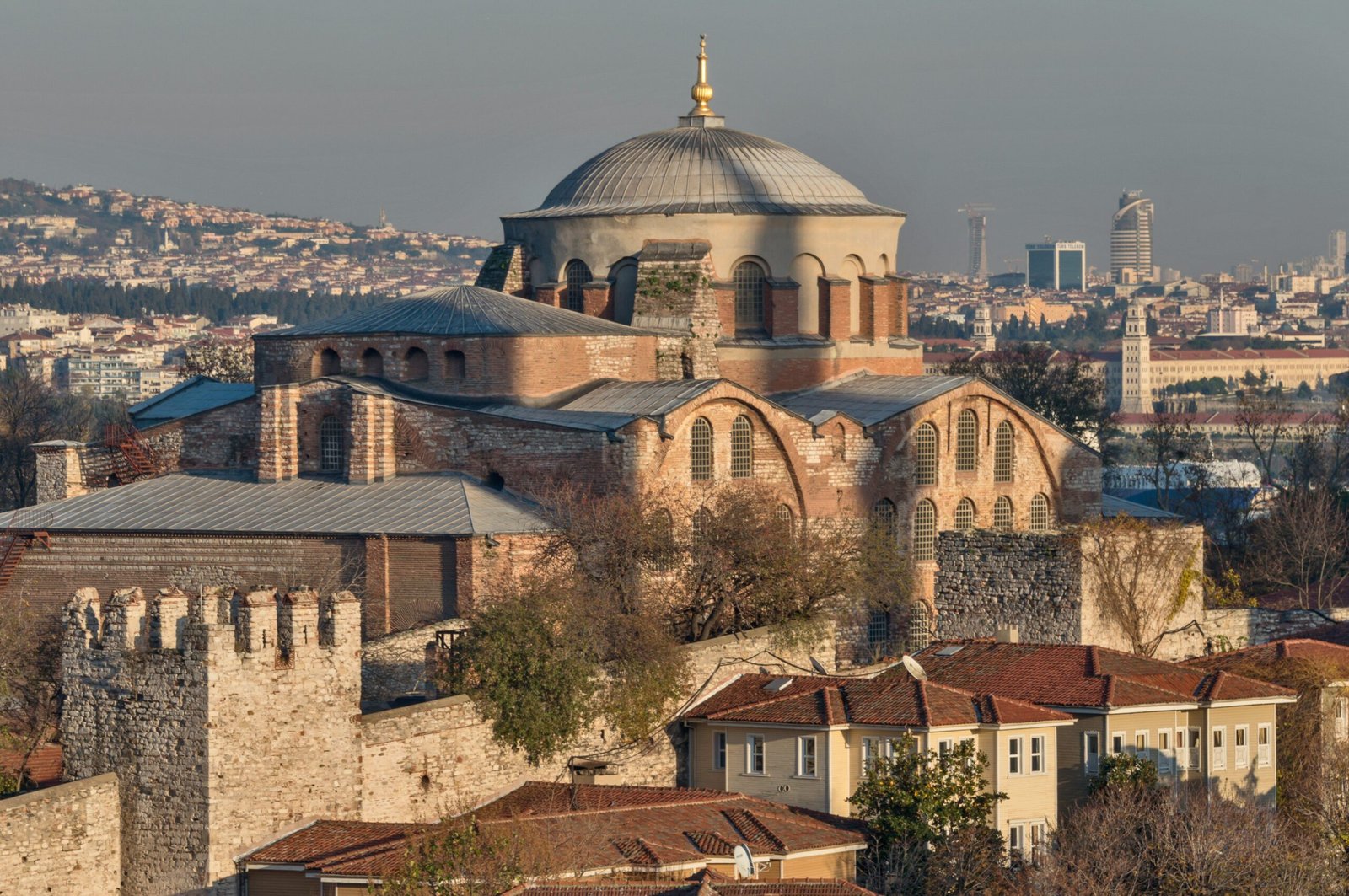
In the East, the Byzantine Empire transformed the Roman basilica into a space of mystical transcendence. The Hagia Sophia in Constantinople, with its cascading domes and shimmering gold mosaics, was designed to dematerialize the solid walls, making the stone appear to float in light. This aesthetic influenced Venetian architecture profoundly; St. Mark’s Basilica in Venice is, in essence, a Byzantine monument on Italian soil, proving that the artistic boundaries of the Mediterranean were always porous.
Simultaneously, the rise of Islam brought a revolutionary aesthetic to the southern and eastern shores. Prohibited from using figural representation in religious contexts, artists channeled their genius into geometry and calligraphy. They turned the stone itself into lace. The Great Mosque of Córdoba in Spain stands as the ultimate testament to this cross-pollination. Its famous forest of red-and-white double arches is structurally indebted to Roman aqueducts, yet the space they create—infinite, rhythmic, and abstract—is distinctly Islamic. This era proved that art in the Mediterranean does not replace what came before; it builds upon it, creating a “palimpsest” where Phoenician foundations support Roman walls, which in turn hold up Arab arches and Christian bell towers.
The Vernacular Genius: Architecture Without Architects
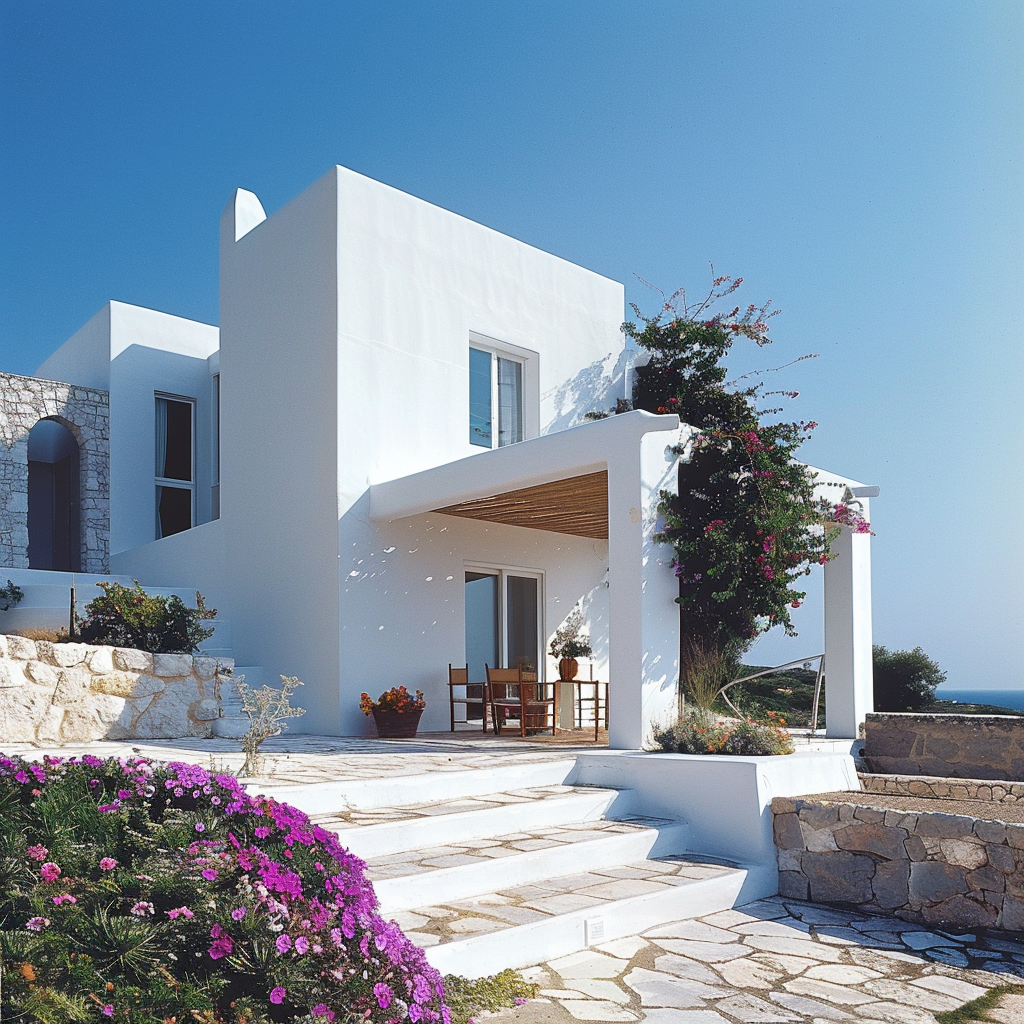
While temples and palaces dominate history books, the true “Mediterranean identity” is perhaps best preserved in the humble, everyday architecture of the common people. Whether in the Cyclades of Greece, the coast of Puglia in Italy, or the cliff-top villages of Tunisia like Sidi Bou Said, there is a striking uniformity in vernacular housing. This is “architecture without architects,” evolved over millennia to survive the climate.
The shared solution to the scorching summer heat is the “introverted” house. From the outside, Mediterranean homes are often unassuming, with thick stone or stucco walls to provide thermal mass, and small windows to keep out the harsh glare. The life of the house turns inward, focusing on the courtyard, patio, or atrium. This open-air room, often centered around a fountain or a cistern, acts as a thermal regulator, cooling the house at night. This architectural form traces a direct line from the Roman domus to the Arab riad and the Spanish patio. It reflects a shared cultural value: the sanctity of the private family sphere protected from the public street, yet open to the sky.
Furthermore, the widespread use of whitewash—lime wash—across the region is not merely an aesthetic choice. It is a practical hygienic measure (lime is antibacterial) and a thermal one (white reflects the sun). When a traveler sees a blindingly white village cascading down a hillside against the blue sea, they could be in Spain, Greece, or North Africa. It is a unifying visual marker of the Mediterranean way of life.
The Renaissance and the Chromatic Bridge
As the Middle Ages waned, the Italian Renaissance sparked a rebirth of classical humanism, yet it would be a mistake to view this as a purely European phenomenon isolated from the sea. Venice, the great merchant republic, acted as the hinge between East and West. Venetian painters like Titian and Tintoretto utilized vibrant, costly pigments—lapis lazuli and vermilion—that were imported from the East. Their obsession with light and color was directly influenced by the Byzantine mosaics and the atmospheric light of the lagoon.
This artistic exchange continued well into the modern era. The “Orientalist” movement, though often romanticized, revealed a deep fascination among European artists with the light, patterns, and textiles of North Africa and the Levant. Later, the pioneers of Modernism—Matisse, Picasso, Dalí—found that the grey skies of Paris could not sustain their revolutionary visions. They migrated south, returning to the Mediterranean coast. In the deconstructed forms of Cubism and the vibrant colors of Fauvism, one can see the fractured geometry of the Mediterranean landscape and the relentless intensity of its sun. They were not inventing something new so much as rediscovering the ancient, primal energy of the region.
A Living Museum
Today, the art and architecture of the Mediterranean serve as a massive, open-air museum, but one that is still lived in and used. The continuity is staggering. A modern lawyer in Rome may work in a building built on medieval foundations with a Renaissance facade; a family in Fez lives in a house design that has remained virtually unchanged for five centuries; a theatergoer in Athens sits on stone benches carved by ancestors two and a half thousand years ago.
This layering of history creates a unique cultural psyche. To live in the Mediterranean is to live in the presence of the past, not as a burden, but as a foundation. The art and architecture of the region remind us that while empires, religions, and languages may shift like the tides, the fundamental human response to this specific landscape—the desire to capture its light, to build cool sanctuaries against its heat, and to beautify the spaces where people gather—remains a timeless, unifying endeavor.