





Historical Origins and the Architect’s Vision
The project’s inception in 1882 was driven not by Gaudí, but by Josep Maria Bocabella, a local bookseller who founded the Spiritual Association of Devotees of St. Joseph. The initial design was assigned to architect Francisco de Paula del Villar, who planned to build a standard Gothic revival church. However, following fundamental disagreements with the promoters, Villar resigned just a year into construction.
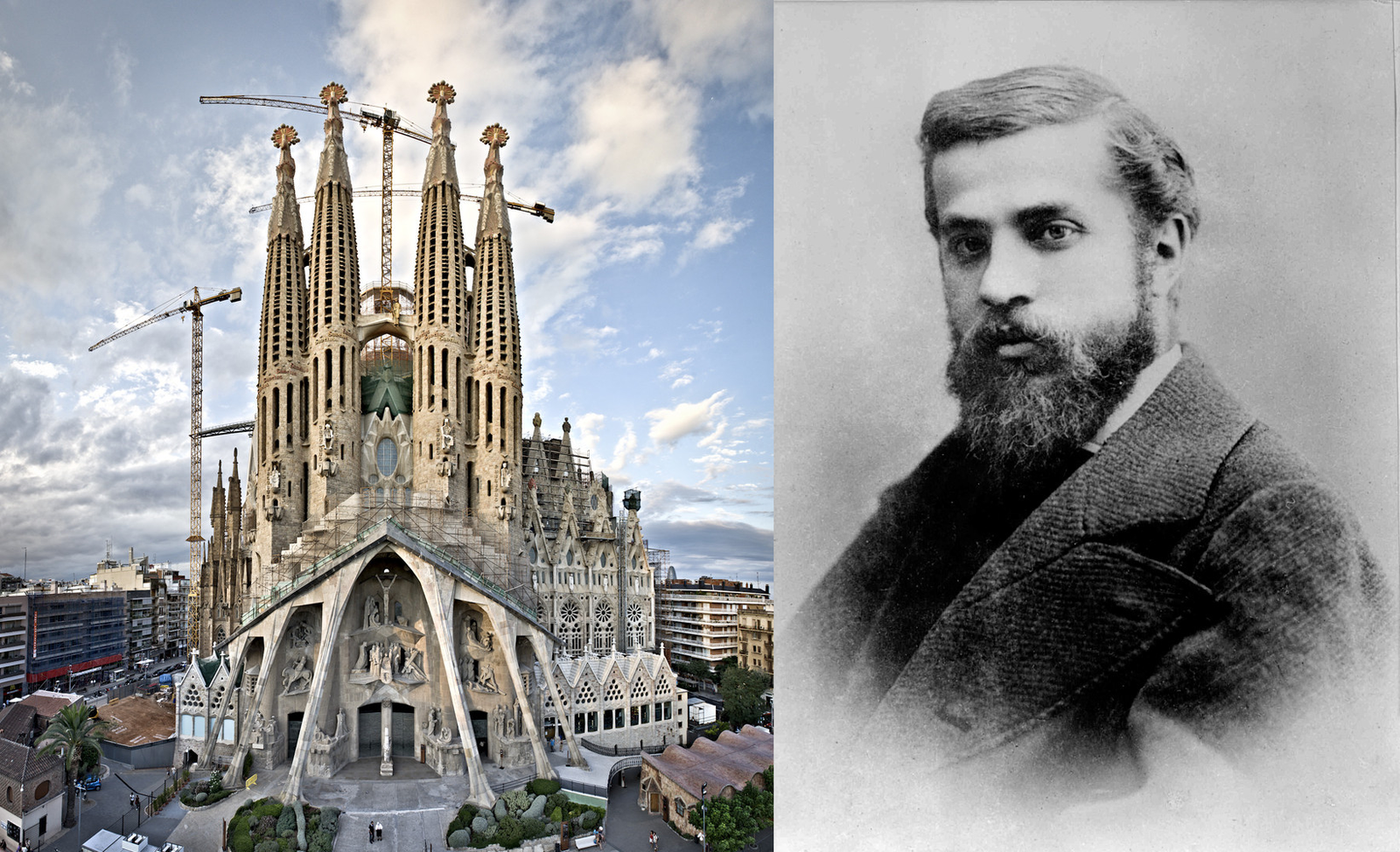
In 1883, the young Antoni Gaudí took over, fundamentally transforming the original blueprints into an awe-inspiring, revolutionary proposal. Gaudí, a deeply religious man, believed that nature was the work of God, and that architecture should express the divine by mimicking the natural world. By 1914, he abandoned all his other professional commissions to dedicate his life exclusively to the temple, viewing it as his personal mission.
When Gaudí tragically died in 1926 after being struck by a tram, the construction was far from finished. At the time of his death, only the crypt, the apse walls, one portal, and a single bell tower of the Nativity Facade were complete, representing just one of the 18 planned towers.
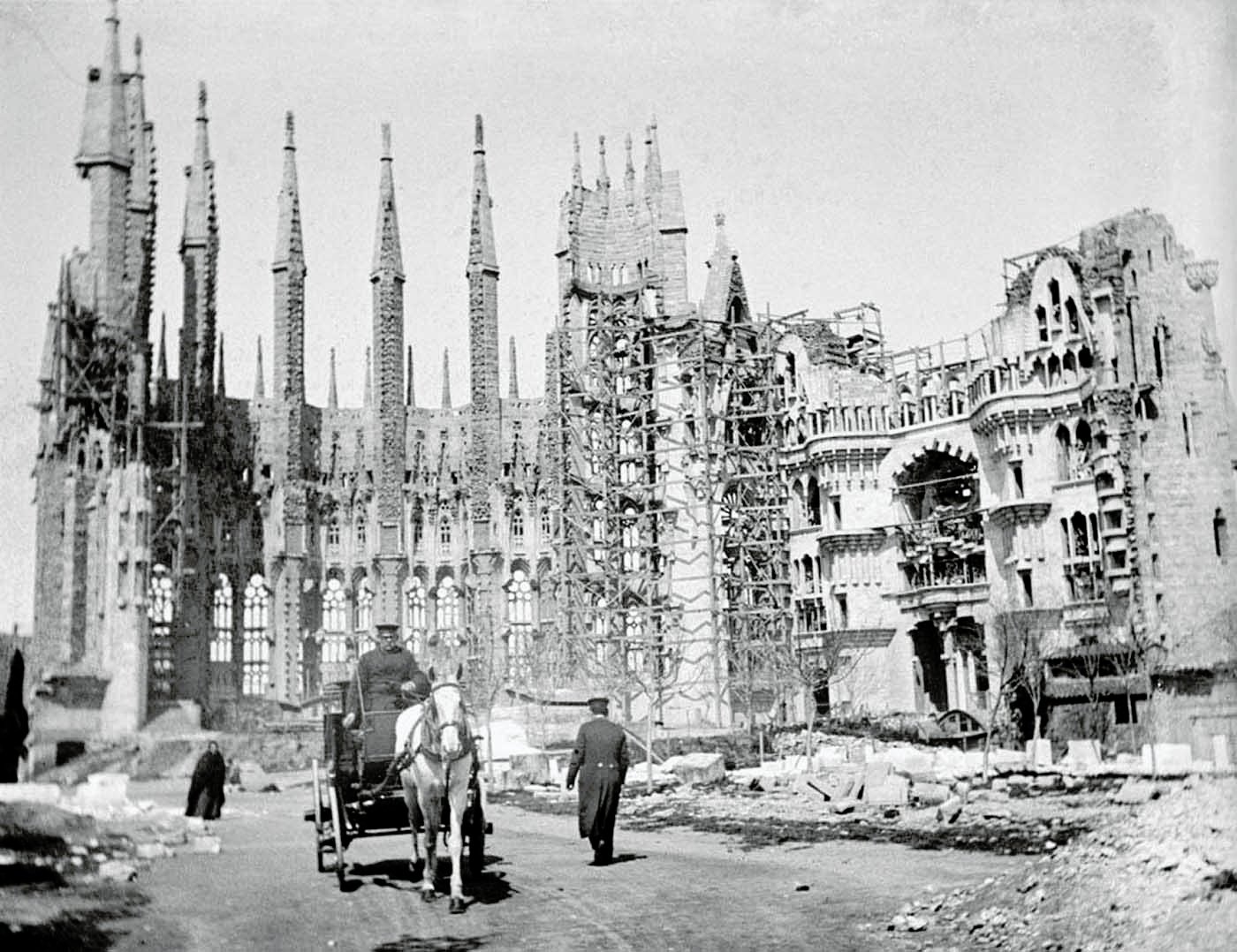
Architectural Philosophy: A Forest of Light and Stone
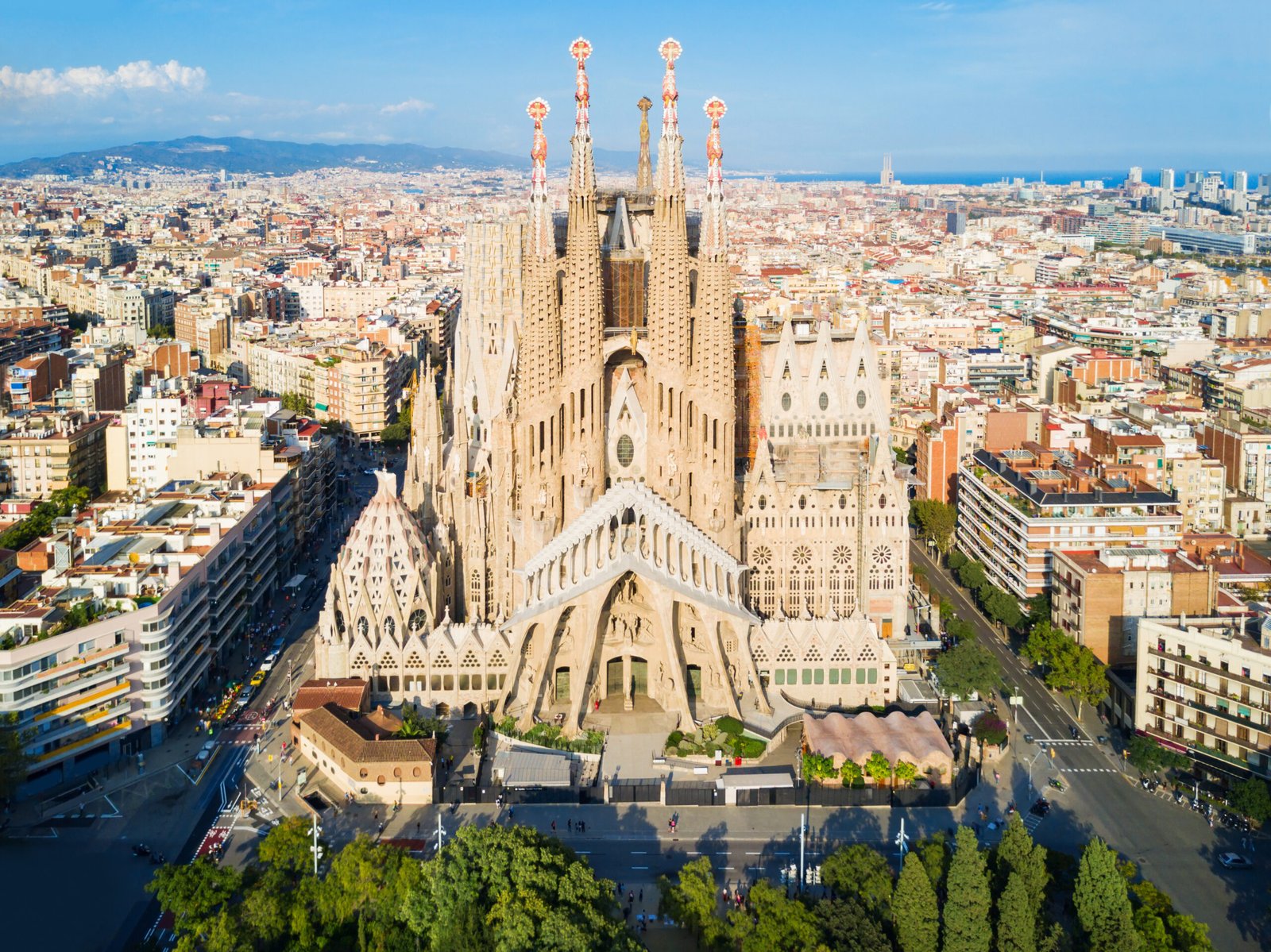
The Sagrada Família defies traditional architectural categorization, relying heavily on organic shapes, curving lines, and unparalleled use of light.
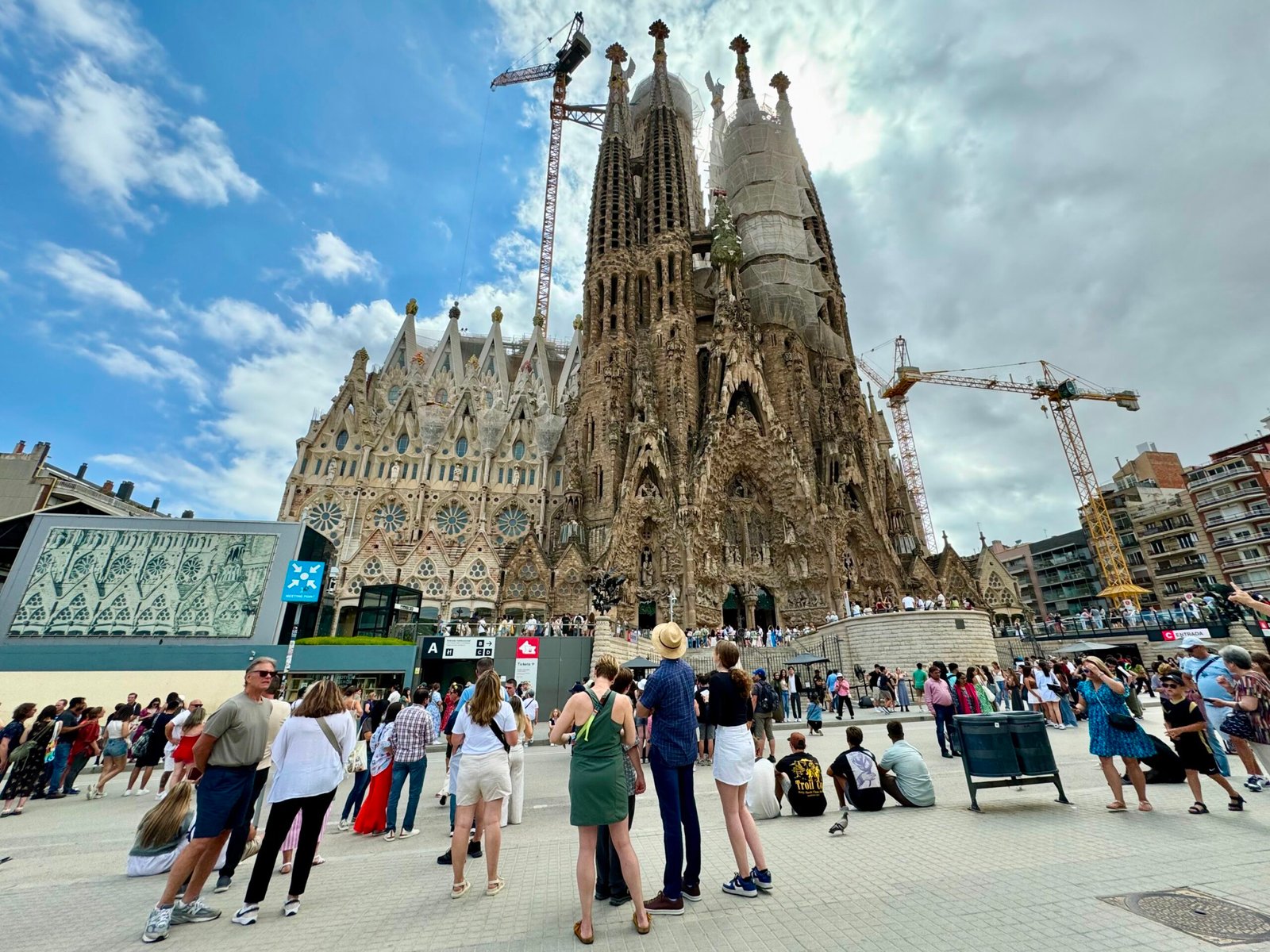
- The Facades: The exterior is defined by three monumental facades, each representing a crucial phase of Jesus Christ’s life. The Nativity Facade depicts Christ’s birth with joyful, intricate carvings of animals, angels, and plant life. In stark contrast, the Passion Facade represents his crucifixion and suffering through skeletal, stark, and angular sculptures. The largest, the Glory Facade, is currently under construction and will represent eternal glory, Heaven, Hell, and Purgatory.
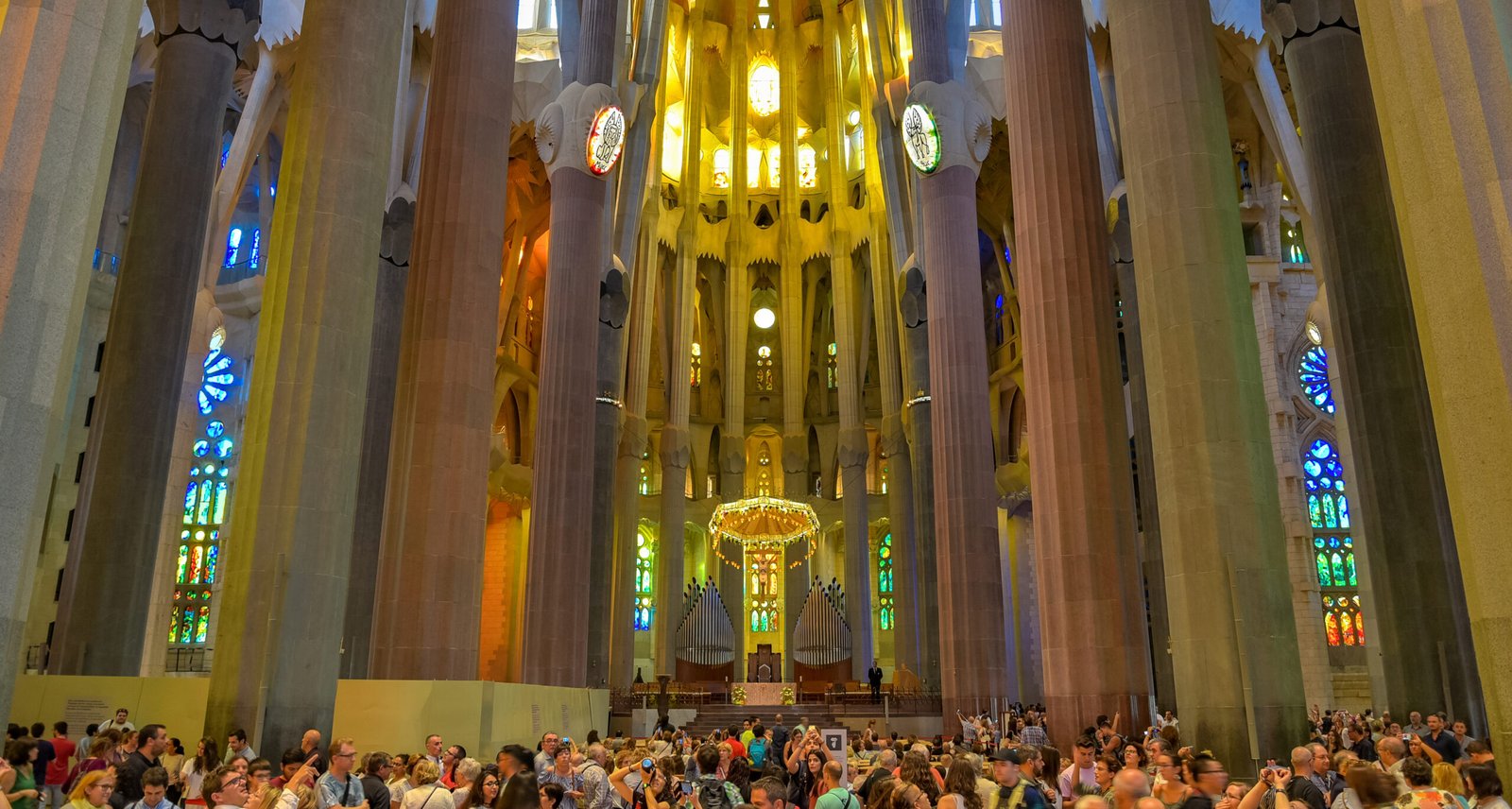
- The Interior Forest: Gaudí designed the basilica’s interior to feel like a spiritual forest. He invented a unique system of branching columns that resemble tree trunks, supporting the massive vault without the need for traditional exterior flying buttresses.
- A Tapestry of Light: The stained glass windows are meticulously arranged to act as a sundial of colors; eastern windows capture the cool blues and greens of the morning, while western windows bathe the nave in warm reds and oranges during the evening.
Trials, Tourism, and Global Significance
The basilica’s nearly 150-year construction has faced significant roadblocks. During the Spanish Civil War in 1936, Catalan anarchists set fire to the crypt and destroyed Gaudí’s workshop, which housed the vital 3D plaster models and plans he used instead of traditional blueprints. Successive generations of architects spent decades painstakingly reconstructing his vision from the surviving fragments and photographs. More recently, the COVID-19 pandemic halted construction due to a severe drop in tourism.
Tourism is the lifeblood of the Sagrada Família. As an expiatory temple, its construction is funded entirely by private donors, alms, and the entrance tickets of millions of global visitors. Every visitor effectively acts as a patron, directly contributing to the building’s realization. This influx of visitors makes the monument a primary economic engine for Barcelona, driving the hospitality and retail sectors in the surrounding Eixample neighborhood.
Culturally and religiously, the monument is a titan. It is an active place of worship that was consecrated as a minor basilica by Pope Benedict XVI in 2010. Furthermore, the specific parts of the building constructed under Gaudí’s direct supervision have been recognized as a UNESCO World Heritage site since 2005.
Reaching the Sky: Milestones and The Future
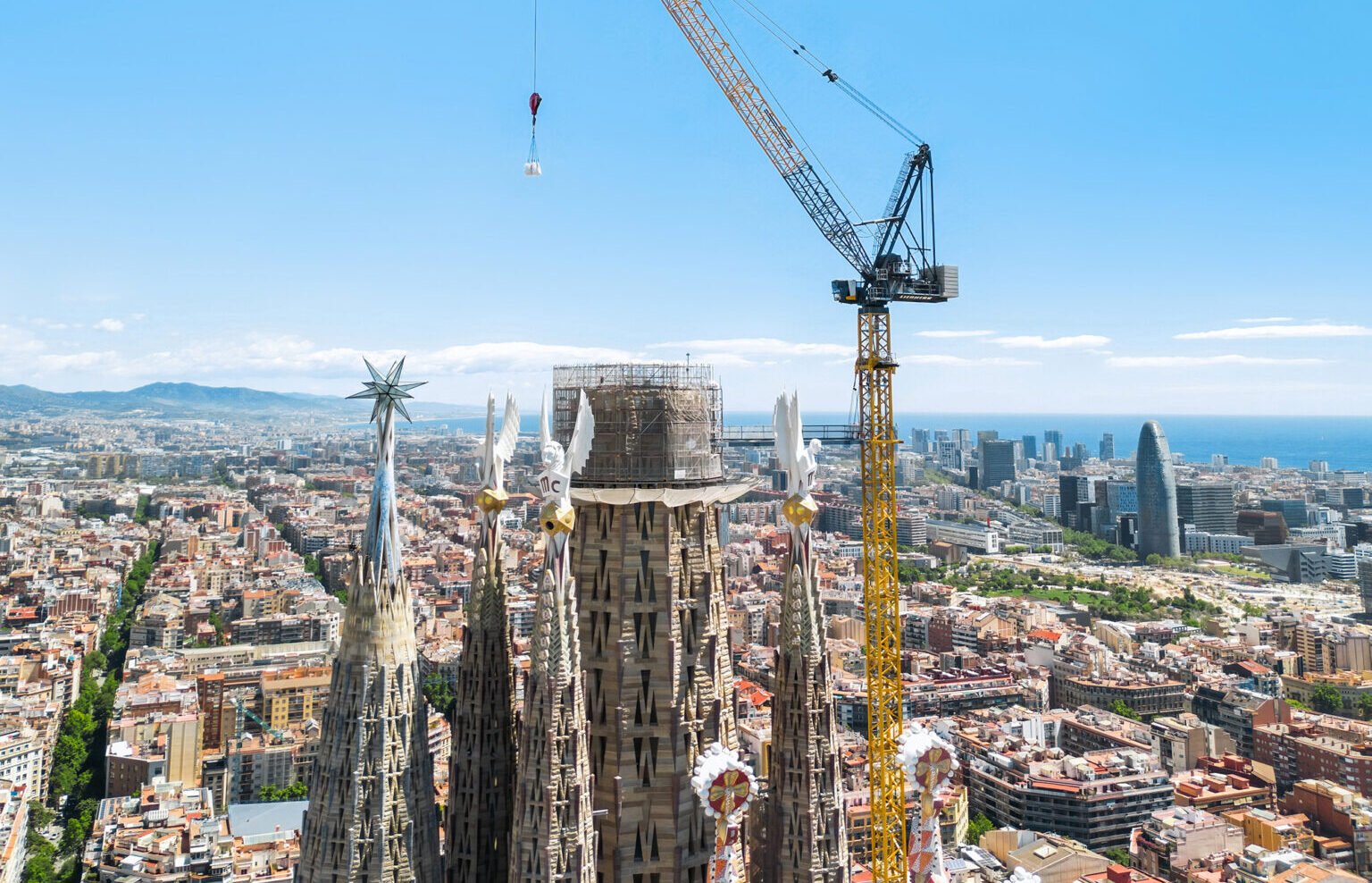
The Sagrada Família is rapidly approaching its zenith, utilizing modern techniques and technology to bring Gaudí’s vision to life. Recently, after workers placed the first part of a cross at the top of its central tower, the basilica reached 162.91 meters tall. This officially made it the tallest church in the world, stripping the record from Germany’s Ulm Minster, which had held the title since 1890.
The final design encompasses 18 towers: 12 representing the Apostles, four for the Evangelists, one for the Virgin Mary, and the central tower for Jesus Christ. The completion of the Evangelist towers and the Tower of the Virgin Mary—crowned with a massive illuminated star—were major recent milestones. Over the next few months, the addition of the rest of the cross will bring the Tower of Jesus Christ to its final height of 172 or 172.5 meters. Gaudí intentionally designed this central tower to be exactly one meter shorter than Barcelona’s Montjuïc hill, famously stating that the work of man should not surpass the work of God.
While the General Director of the Sagrada Família, Xavier Martínez, stated that the Tower of Jesus Christ is targeted for completion in 2026 to coincide with the centenary of Gaudí’s death, the entire complex will not be finished at that time. Work on the basilica’s intricate decorative details, sculptures, and a controversial stairway leading to the main entrance on the Glory Facade is expected to continue over the next decade. As the world watches its final acts of construction, the Sagrada Família endures as a timeless masterpiece, harmonizing the artistry of the past with the innovation of the future.