






The Dual-Government Structure and Parties Involved
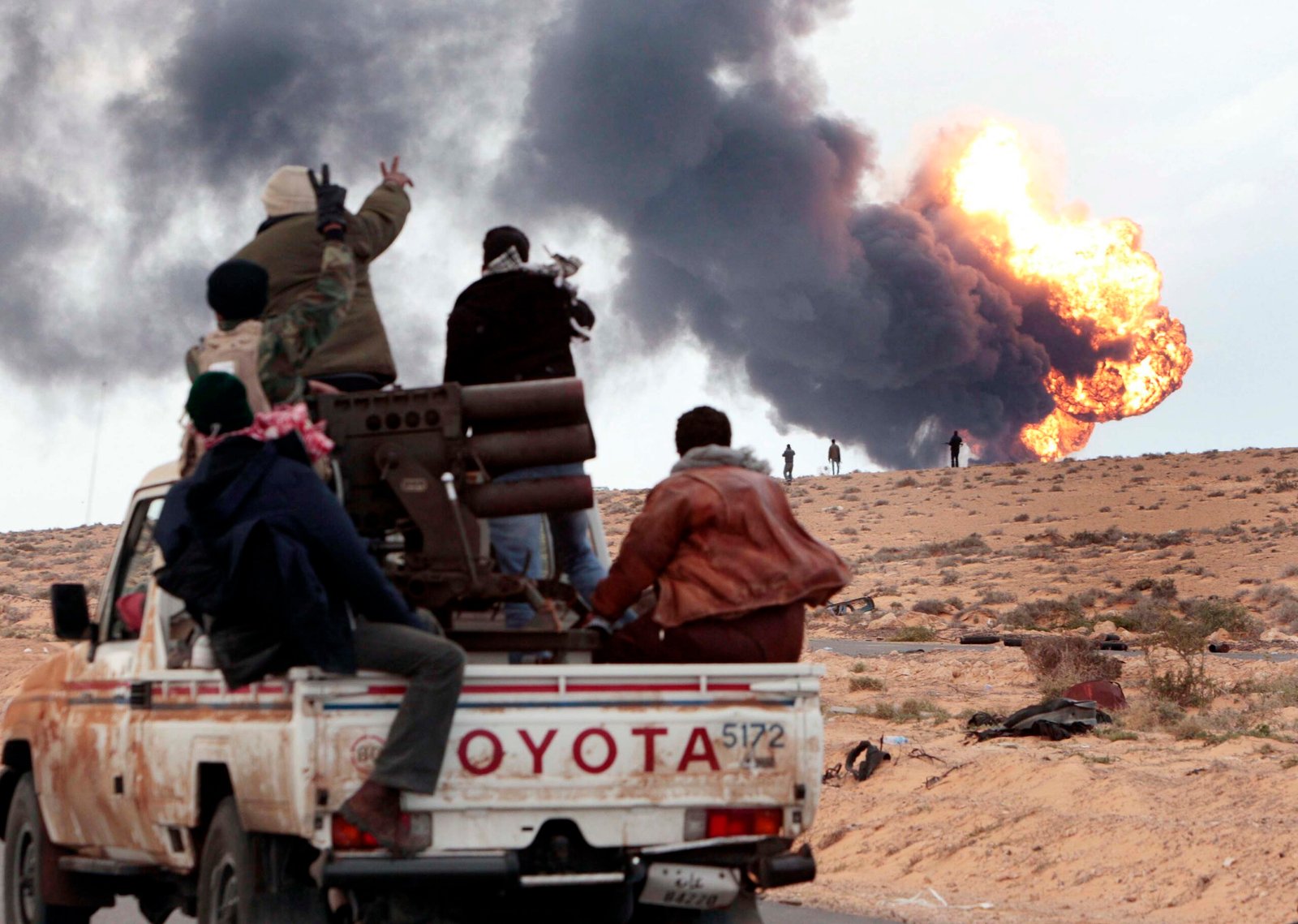
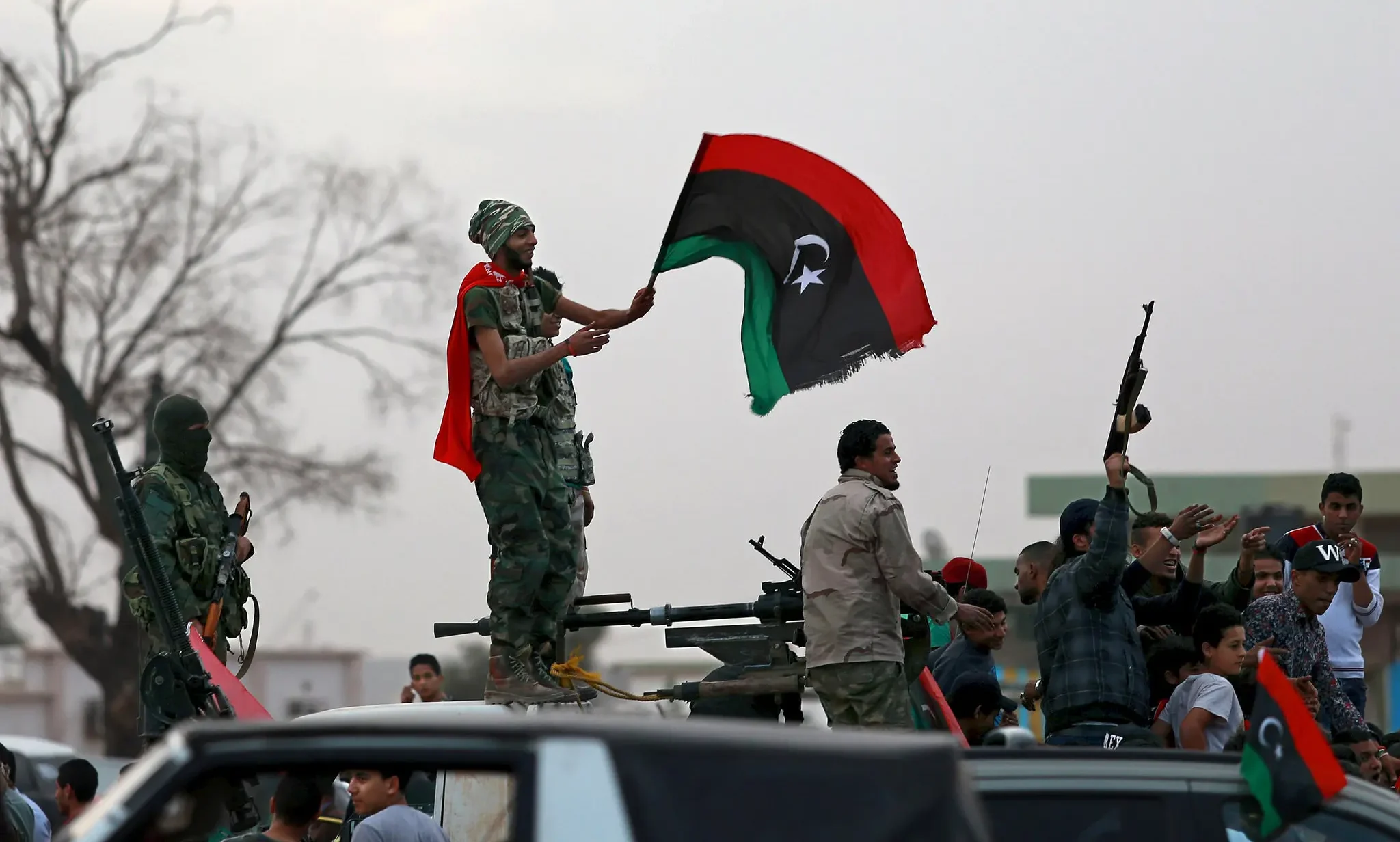
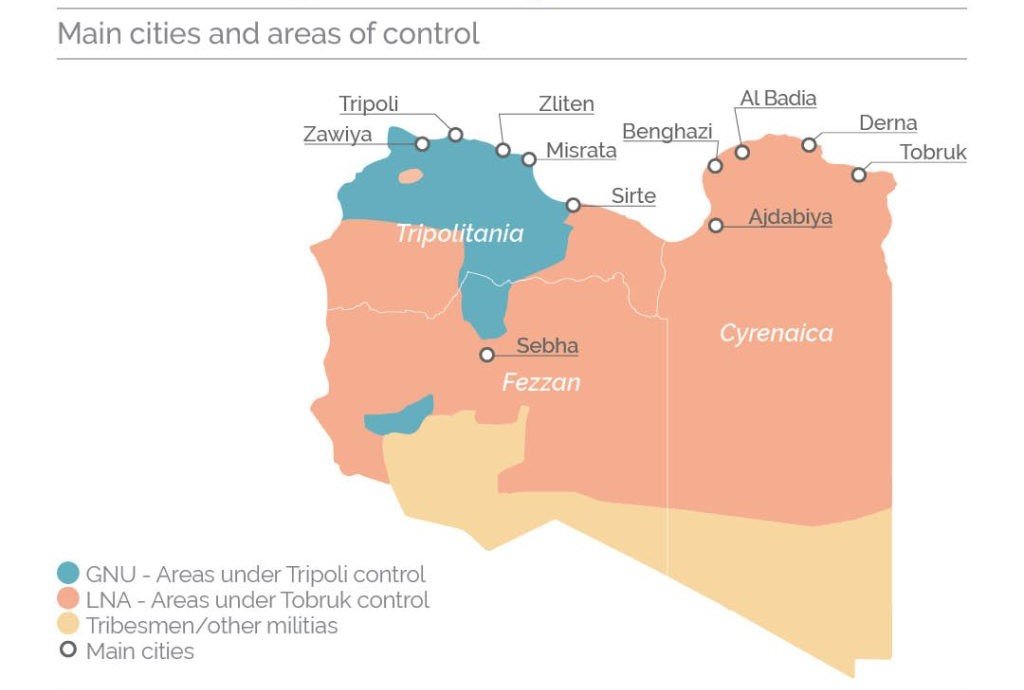
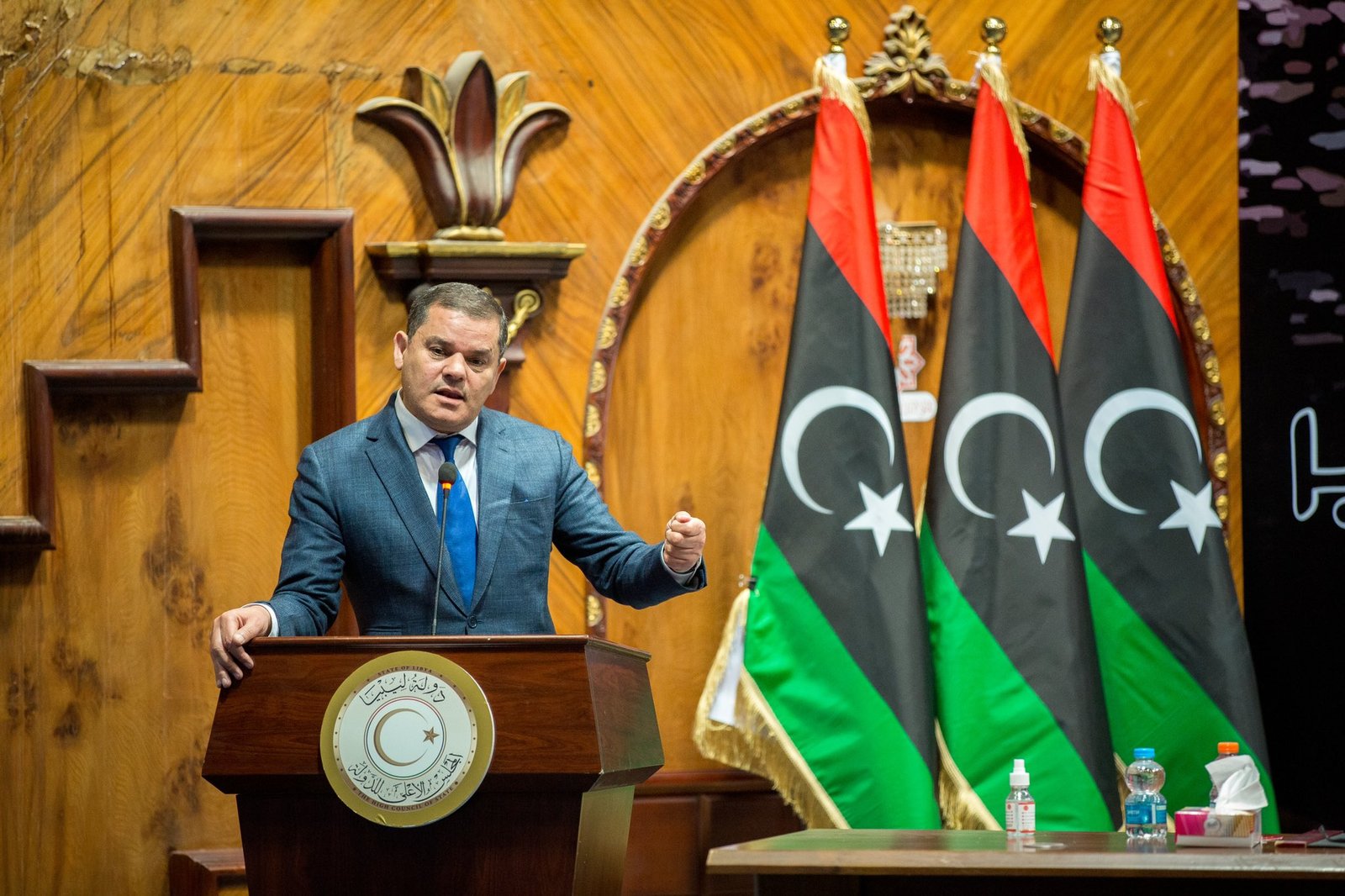
Libya is effectively split into two competing administrative and military poles. In the west, the internationally recognized Government of National Unity (GNU), based in Tripoli, is led by Prime Minister Abdul Hamid Dbeibeh. The GNU’s control relies heavily on an alliance of localized armed groups and militias, including the Deterrence Apparatus for Combating Organized Crime and Terrorism (Rada), the Stability Support Authority (SSA), and the 444 Brigade, which dominate the capital. Externally, the GNU is backed by Qatar and Turkey, the latter utilizing its position in western Libya to pursue its “Blue Homeland” strategy for greater maritime influence in the Mediterranean.
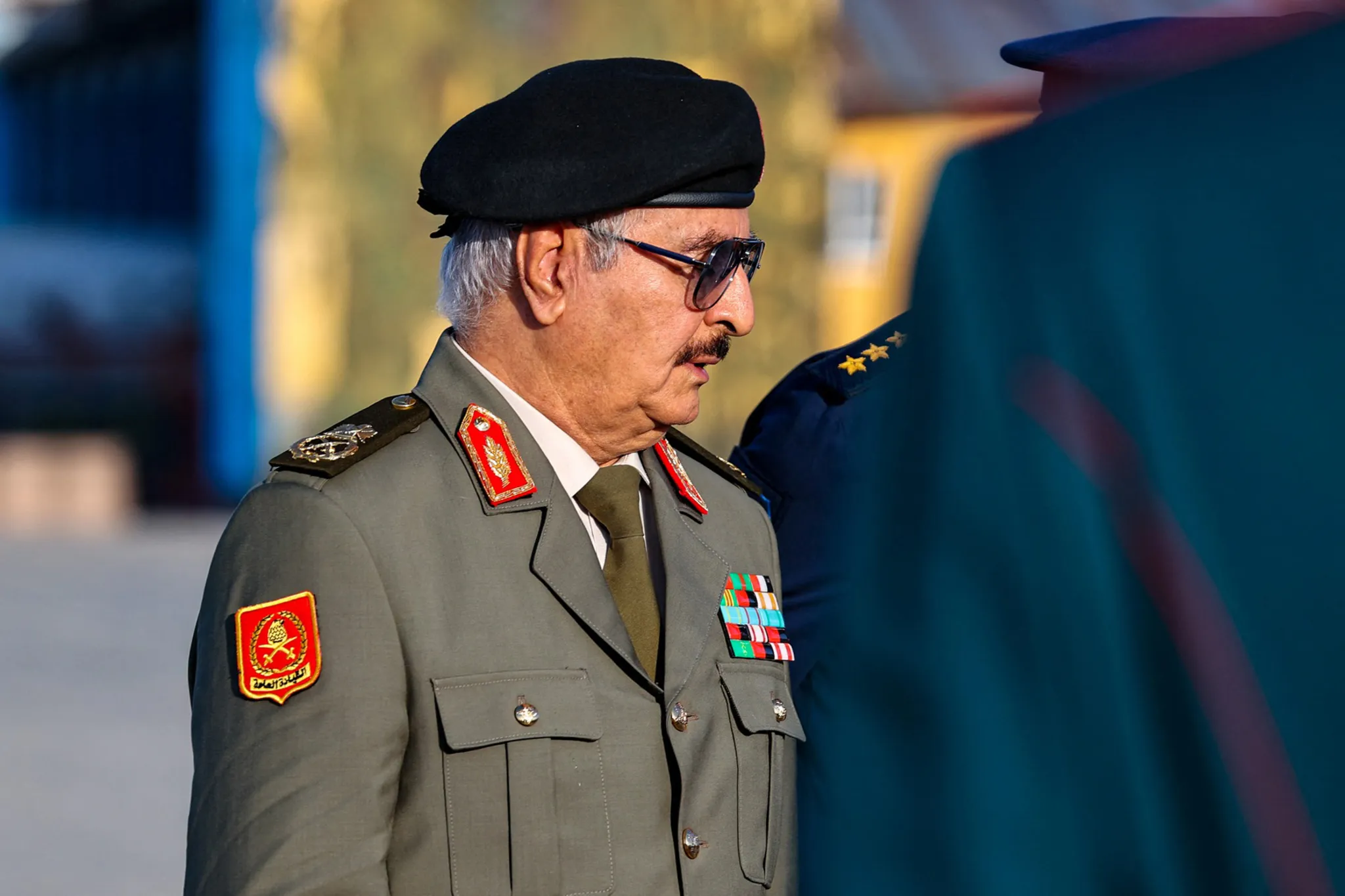
In the east and south, power is commanded by the House of Representatives (HoR) and the Libyan Arab Armed Forces (LAAF), led by 82-year-old General Khalifa Haftar. Operating from Benghazi, Haftar’s apparatus controls roughly 60% of Libya’s land, including the crucial “oil crescent”. This eastern administration is heavily bolstered by the UAE, Egypt, and Russia. Moscow has flooded the region with mercenaries via its Africa Corps (formerly the Wagner Group) to secure a strategic stronghold near NATO’s southern flank.
Furthermore, amidst this institutional void, extremist factions such as Ansar Al-Sharia and the Islamic State (ISIS) continue to operate in the central and eastern deserts, taking advantage of the state’s porous borders and fragmented security.
The Canceled Elections and the Institutional Impasse
The current iteration of the dual-government crisis directly stems from the collapse of the December 2021 presidential and parliamentary elections. The elections were derailed by deep structural obstacles, including disputes over the constitutional framework, the eligibility of highly polarizing candidates (including Dbeibeh, Haftar, and Saif al-Islam Gaddafi), and voter intimidation by armed militias.
Following the cancellation, the Tobruk-based HoR declared Dbeibeh’s mandate expired and appointed former interior minister Fathi Bashagha as a rival prime minister. Bashagha allied himself with Haftar and HoR Speaker Aguila Saleh, but Dbeibeh refused to step down, arguing he would only cede power to an elected government. This left the political roadmap deadlocked, with the United Nations actively pushing to form a unified interim government to organize future elections, while entrenched domestic factions continue to resist.
Expert Perspectives on Libya’s Crisis
To truly understand the depth of Libya’s stalemate, it is crucial to analyze the assessments of top international diplomats, researchers, and geopolitical scholars. Their insights reveal a system deliberately engineered to resist unification:
- Wolfram Lacher, Senior Associate at the German Institute for International and Security Affairs: Lacher views Libya’s current stability as “highly deceptive”. He elaborates that the absence of outright war masks the reality that local armed groups are exercising the true power behind the facade of formal institutions. He points out that the Libyan political elite has seamlessly adapted to this instability, reaping immense benefits from the rent-seeking opportunities directly tied to the fragmentation of the state.
- Karim Mezran, Resident Senior Fellow at the Atlantic Council: Mezran focuses on the international dimensions of the conflict, describing Libya as a “theater of managed competition” for foreign powers. He notes that nations like Turkey, Russia, France, and the UAE seek to expand their influence without triggering full-scale escalation. However, Mezran warns that if the fragile bargains between these external actors break down, the situation could rapidly escalate back into a military confrontation.
- Tarek Megerisi, Senior Policy Fellow at the European Council on Foreign Relations: Megerisi is highly critical of the international community’s approach, arguing that foreign powers “maintain the pantomime” of diplomacy. He observes that these nations publicly claim to support Libyan sovereignty while covertly financing and arming the very warlords who undermine it. Regarding the specific alliance between Bashagha, Saleh, and Haftar, Megerisi argues their bid for power rests on incredibly “wobbly” pillars, lacking true legitimacy and sufficient military dominance to force a resolution.
- Jonathan Winer, Former U.S. Special Envoy for Libya: Providing psychological insight into the eastern military leadership, Winer notes that Khalifa Haftar views himself as a “messianic figure out of the desert who controls the fate of nations” while only pretending to be an instrument of the people. Winer highlights that Haftar has repeatedly refused offers of legitimate power because he fundamentally refuses to be subservient to any civilian oversight or elected body.
The Future of a Fractured State
Ultimately, Libya does not face an imminent democratic resolution, but rather a precarious waiting game. The country’s political future depends less on formal electoral processes and far more on aligning the incentives of domestic elites and mitigating foreign interference. Until the international community can foster a structured, legally sound transition mechanism that limits external meddling and reins in militia power, Libya will remain a fractured state, ruled by armed proxies and parallel governments rather than unified, democratic institutions.