






From Prehistory to Imperial Capital
The settlement history of Ephesus is remarkably deep, with traces of occupation dating back to the seventh millennium BCE at the Neolithic Cukurici Mound. While it was officially founded as a Greek city in the 10th century BCE, the area boasts roots stretching as far back as 6000 B.C.. Over the centuries, the Ionian cities formed a confederacy under the leadership of Ephesus. In the fourth century BCE, Lysimachos one of Alexander the Great’s generals founded a new iteration of the city, shifting it away from its older center.
Ephesus reached its zenith after Asia Minor was incorporated into the Roman Empire in 133 BCE, subsequently becoming the designated capital of the new province of Asia. During this Roman period, it thrived as a vital commercial and religious hub, bolstered by its strategic coastal location near the Aegean Sea.
An Ecological Downfall
Despite surviving the political upheavals of Persians, Romans, and Alexander the Great, Ephesus was ultimately defeated by nature. Located within the estuary of the River Kaystros, the city was subject to continuous sedimentation that caused the shoreline to shift progressively from east to west. Over centuries, this ecological disaster caused the once-thriving harbor to silt up and turn into dry land, cutting off the maritime trade that sustained the city’s treasury. By the 7th century, the retraction of the sea led to the city’s final downfall a fate notably shared by the ancient city of Troy.
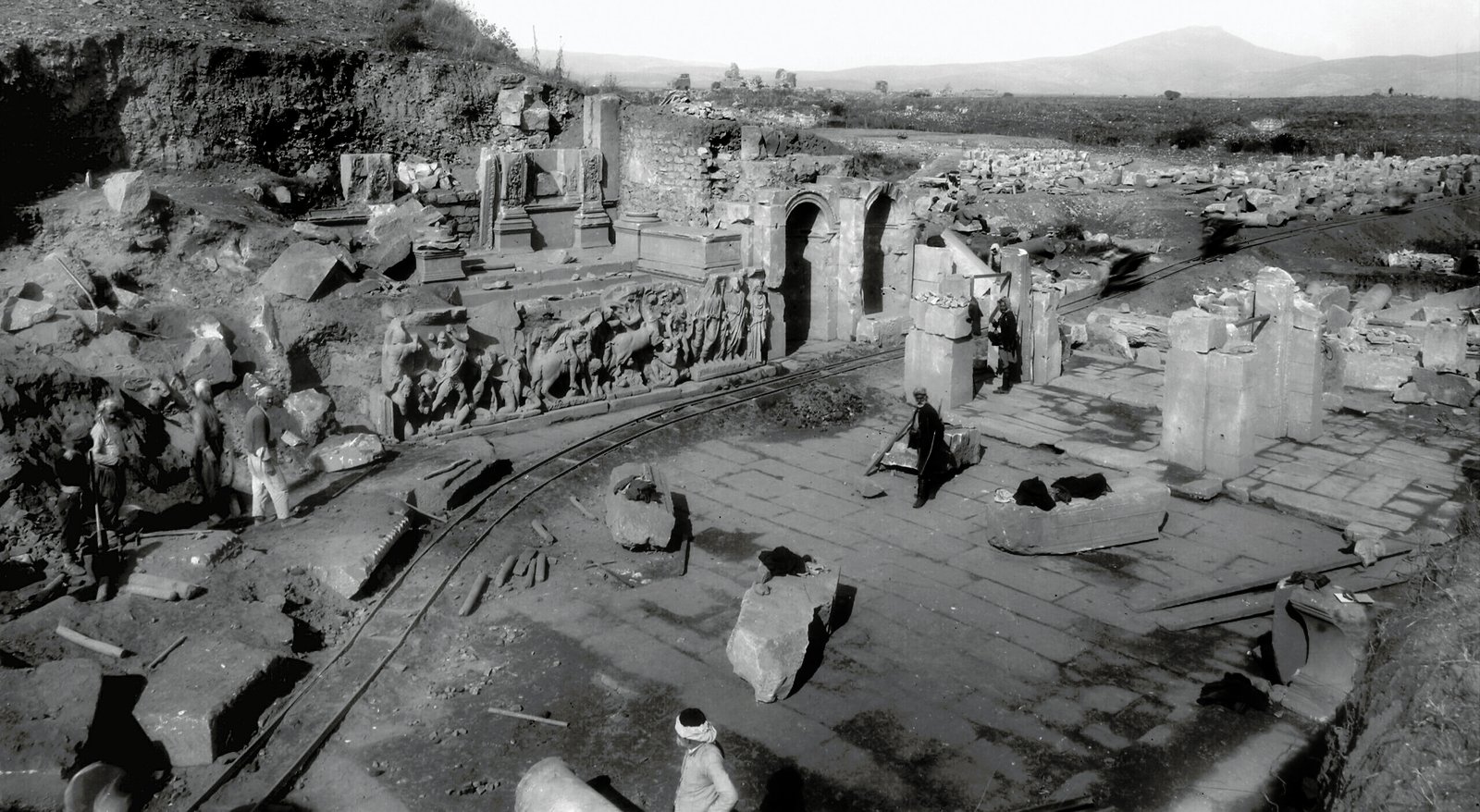
Architectural Marvels and Social Fabric
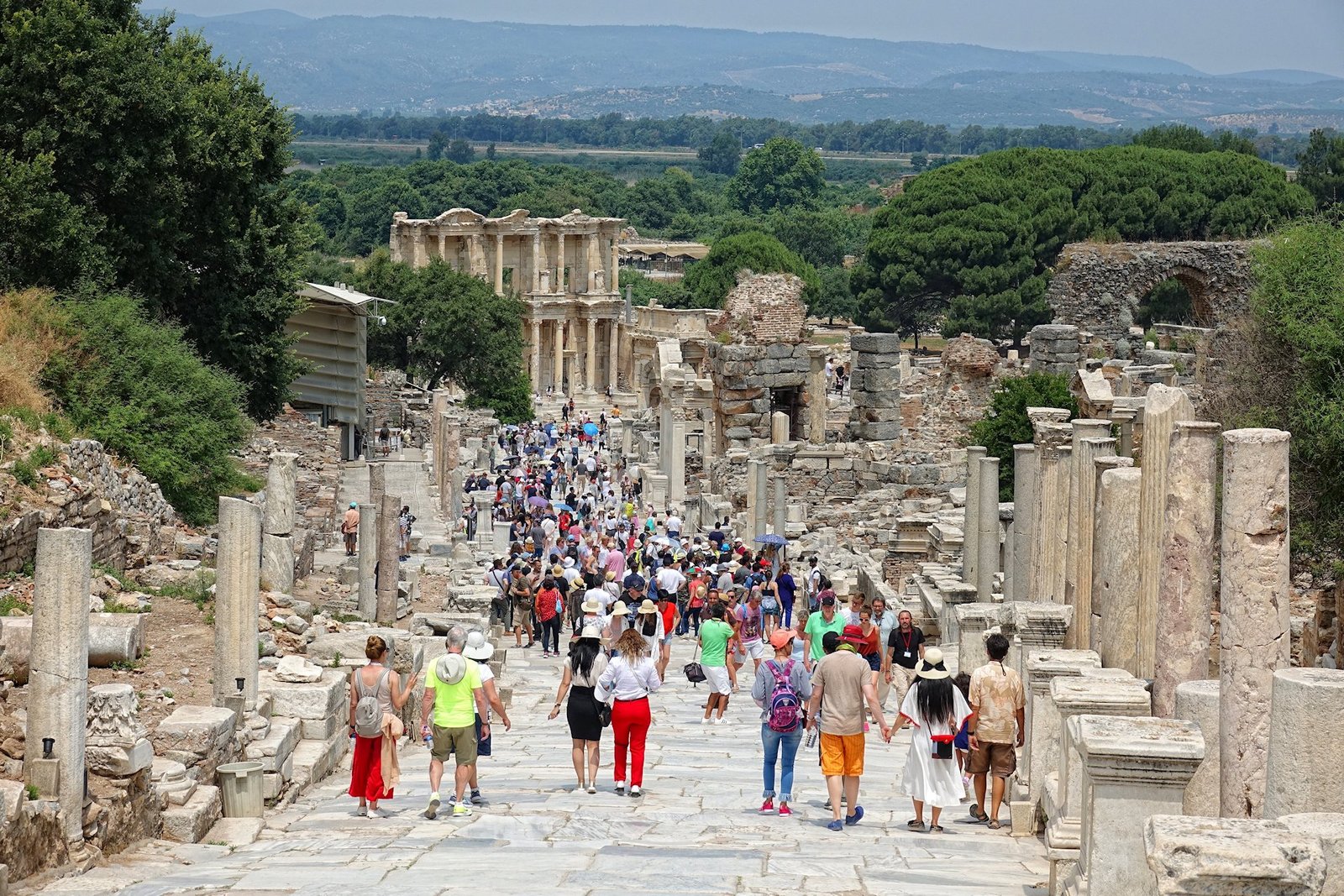
Today, only about 20 percent of Ephesus’s buildings are visible, yet they vividly showcase the city’s former glory.
- The Temple of Artemis: Originally dedicated to an Anatolian mother goddess, this sanctuary became one of the Seven Wonders of the Ancient World. Uniquely for the ancient world, the city employed female artists who chiseled magnificent marble sculptures with incredible, true-to-scale anatomical precision. Today, the temple is represented by a solitary 10-meter-high column unearthed by British archaeologists in the 1870s.
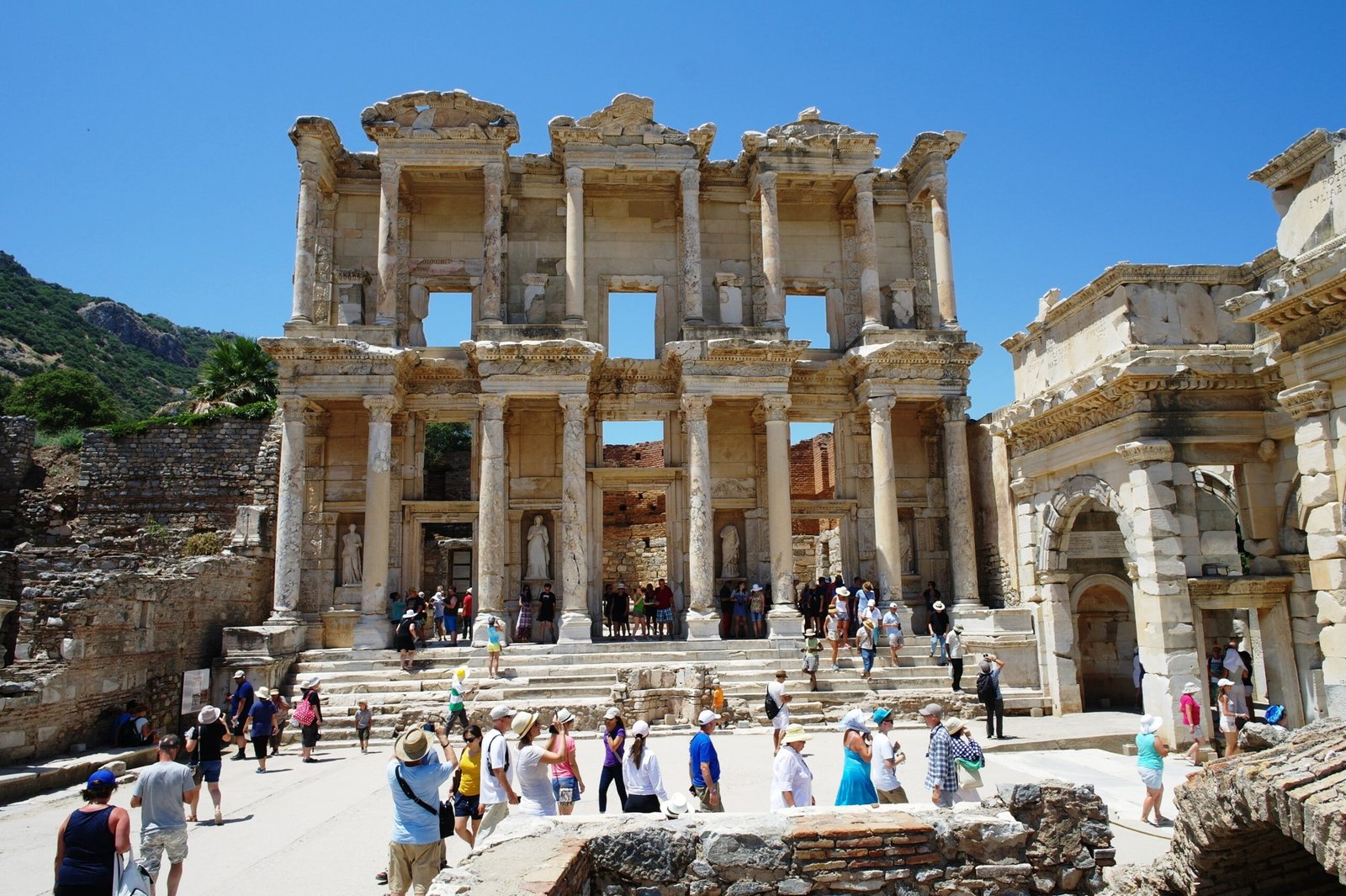
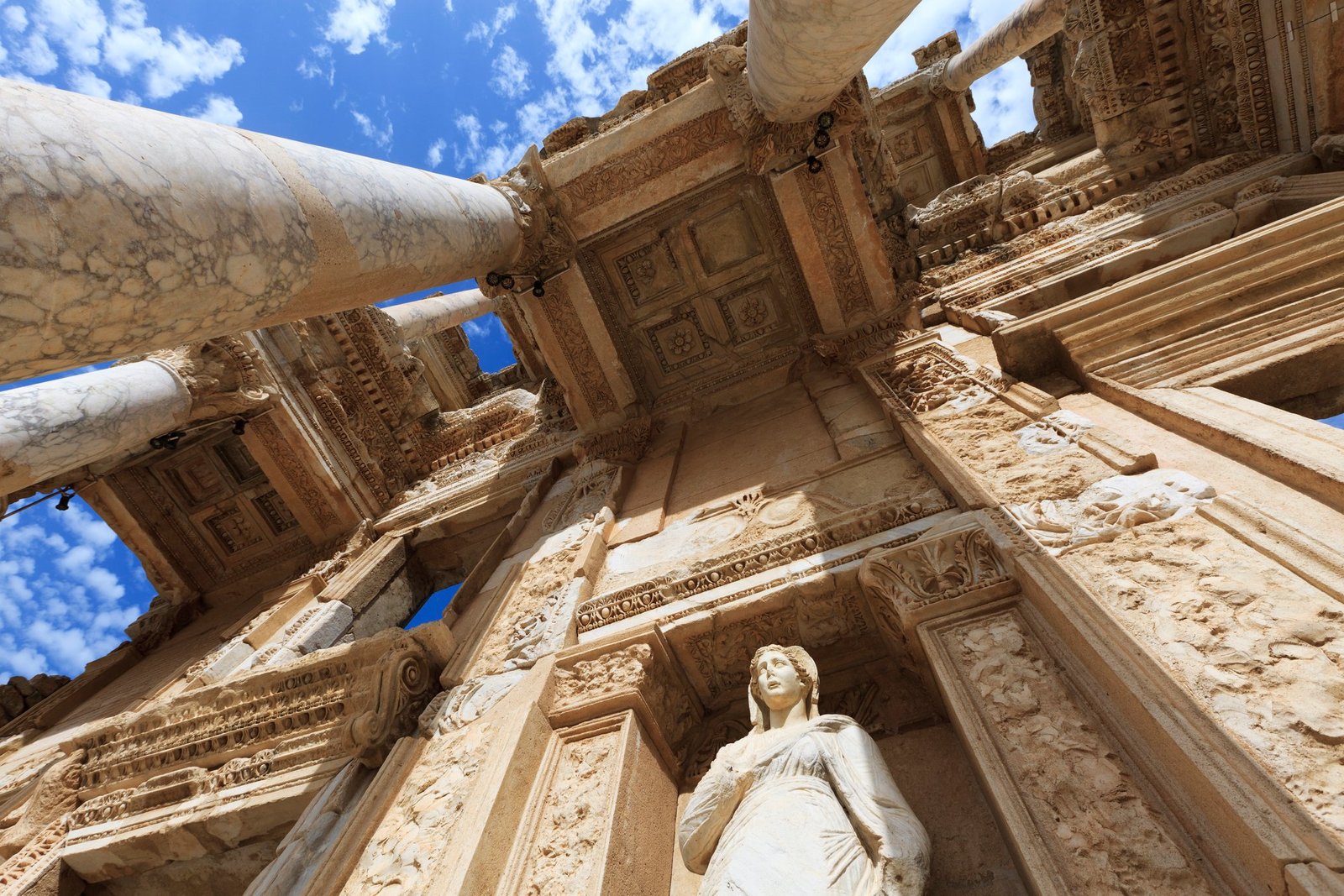
- The Library of Celsus: Ranked as the third-largest hall of records in the ancient world after Alexandria and Pergamon, this architectural marvel held up to 12,000 handwritten scrolls. Its grand facade is guarded by statues representing four female deities: Sophia (wisdom), Arete (goodness), Ennoia (judgment), and Episteme (knowledge and power).
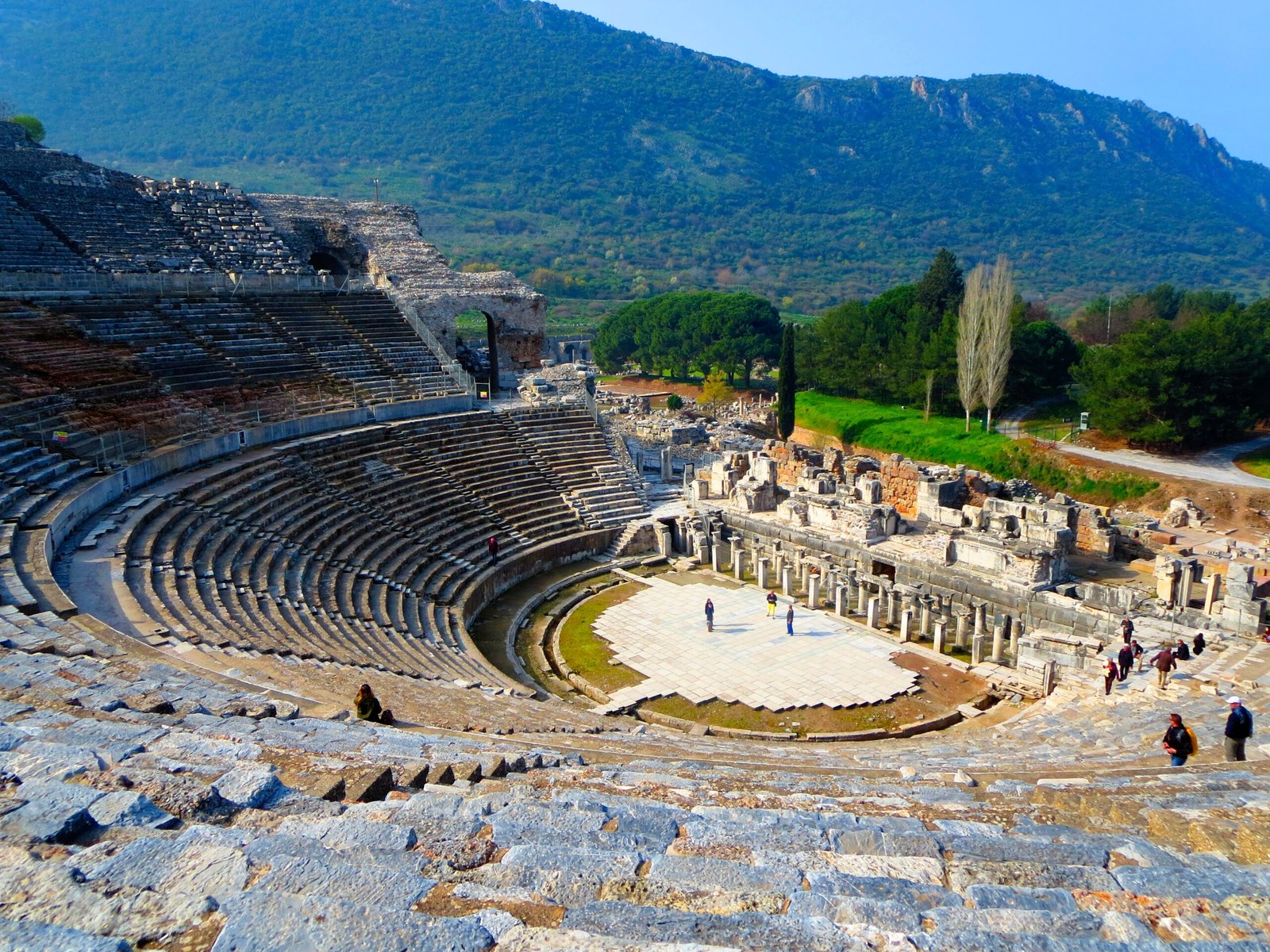
- Civic Infrastructure: The city featured a massive Great Theater capable of seating up to 25,000 spectators for theatrical performances and gladiatorial combat. Ephesus also boasted highly advanced aqueducts that fed public bathhouses and powered water mills. Archaeologists have even identified one of these mills as a sawmill used to cut the marble columns lining Harbour Street.
- The Terrace Houses: The wealthiest citizens and governors lived in opulent marble mansions. Structures like Terrace House 2 featured elaborate wall paintings, intricate mosaics, and highly advanced under-floor heating systems.
A Religious and Intellectual Epicenter
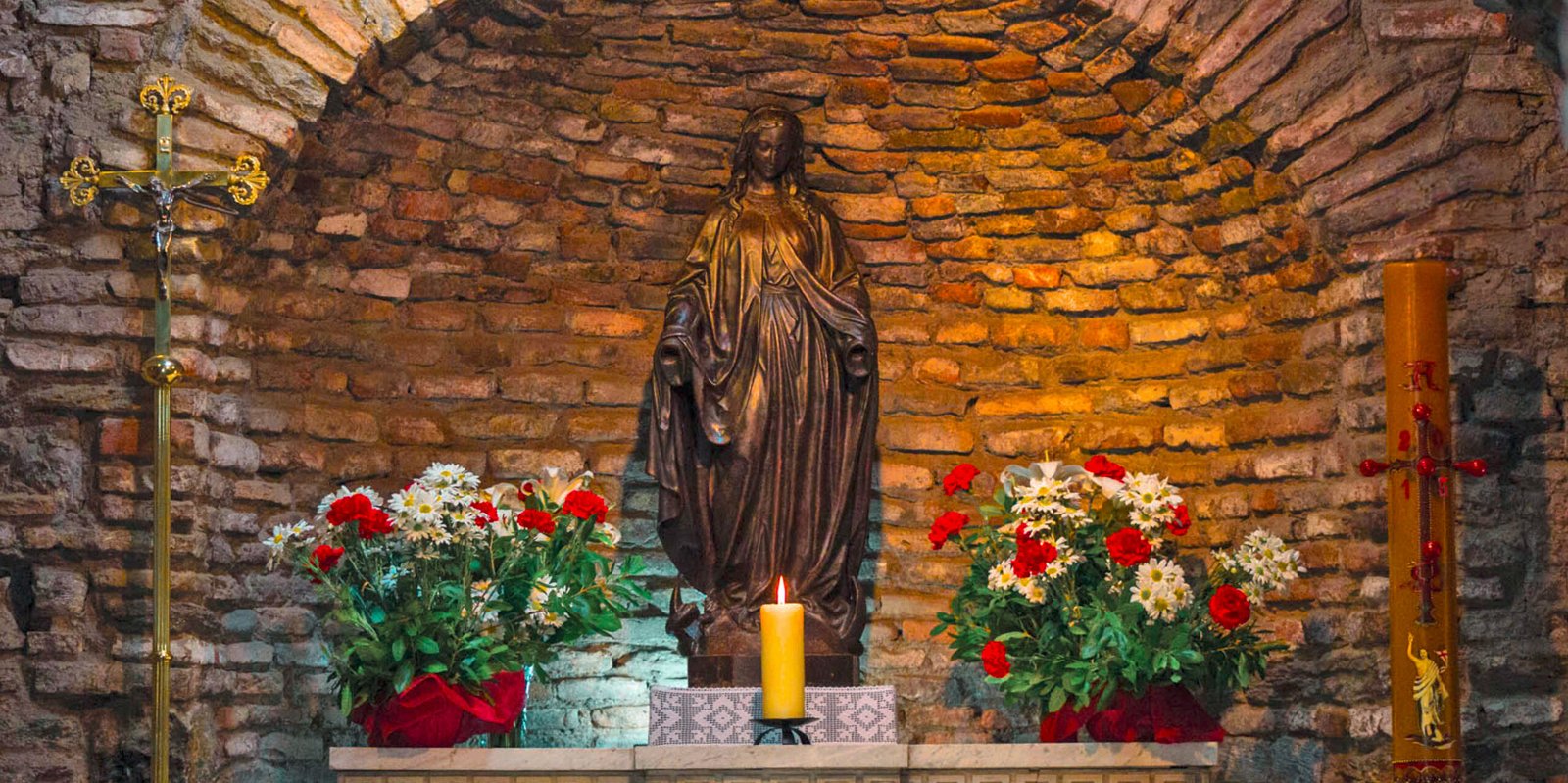
Ephesus played a decisive role in the spiritual evolution of the ancient world, serving as a bridge between traditional Anatolian cults and the modern revival of Christianity. The veneration of the Anatolian goddess Cybele and Artemis eventually gave way to the veneration of the Virgin Mary. The House of the Virgin Mary, a domed chapel located just outside the city, is believed to be where Mary spent her final years and has been a major site of Christian pilgrimage since the 5th century.
The city’s importance to early Christianity is further cemented by the massive Basilica of St. John and the fact that two major Church Councils were held there in 431 and 449 CE. Additionally, Ephesus was an intellectual powerhouse, hosting the second school of philosophy in the Aegean and greatly influencing medicine and thought. The later advent of the Selcuk and Ottoman Turks is marked by the medieval settlement on Ayasuluk Hill and the Mosque of Isa Bey.
Modern Tourism, Economy, and Preservation
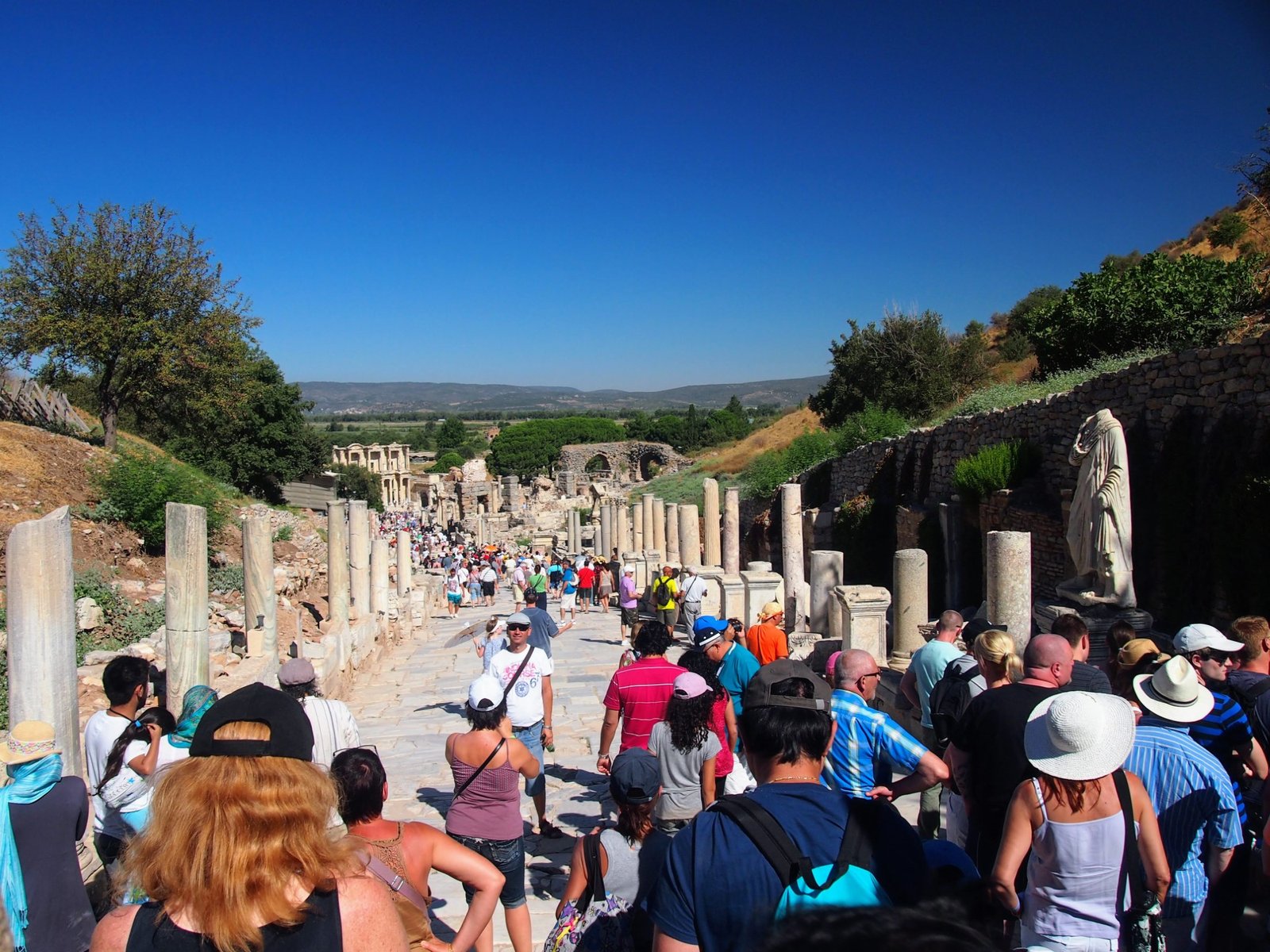
Today, Ephesus attracts between 2 and 3 million visitors annually, primarily from Europe, the United States, and Asia. This influx of tourism generates a massive economic multiplier effect for the Izmir region and the town of Selcuk, supporting local hospitality, transportation, and retail sectors.
However, the immense success of Ephesus as a tourist destination places the archaeological site under severe stress. Recognizing this, the site was included on the 2004 World Monuments Watch to address tourism management needs, prompting the World Monuments Fund to support the creation of a comprehensive conservation plan. Site managers continually struggle to balance the demands of eager tourists with the meticulous needs of excavators and conservators. Furthermore, environmental threats like climate change, erosion, and pollution pose ongoing risks to the ruins.
To ensure its survival, the property is strictly protected by the Izmir Regional Conservation Council under the National Law for the Conservation of Cultural and Natural Property. Recent interventions prioritize reversible techniques to rectify past damages caused by inappropriate restoration materials. Through careful sustainable tourism practices and ongoing international collaboration, Ephesus aims to safeguard its irreplaceable heritage, ensuring that the ancient stones continue to narrate the complex history of Anatolia for future generations.