







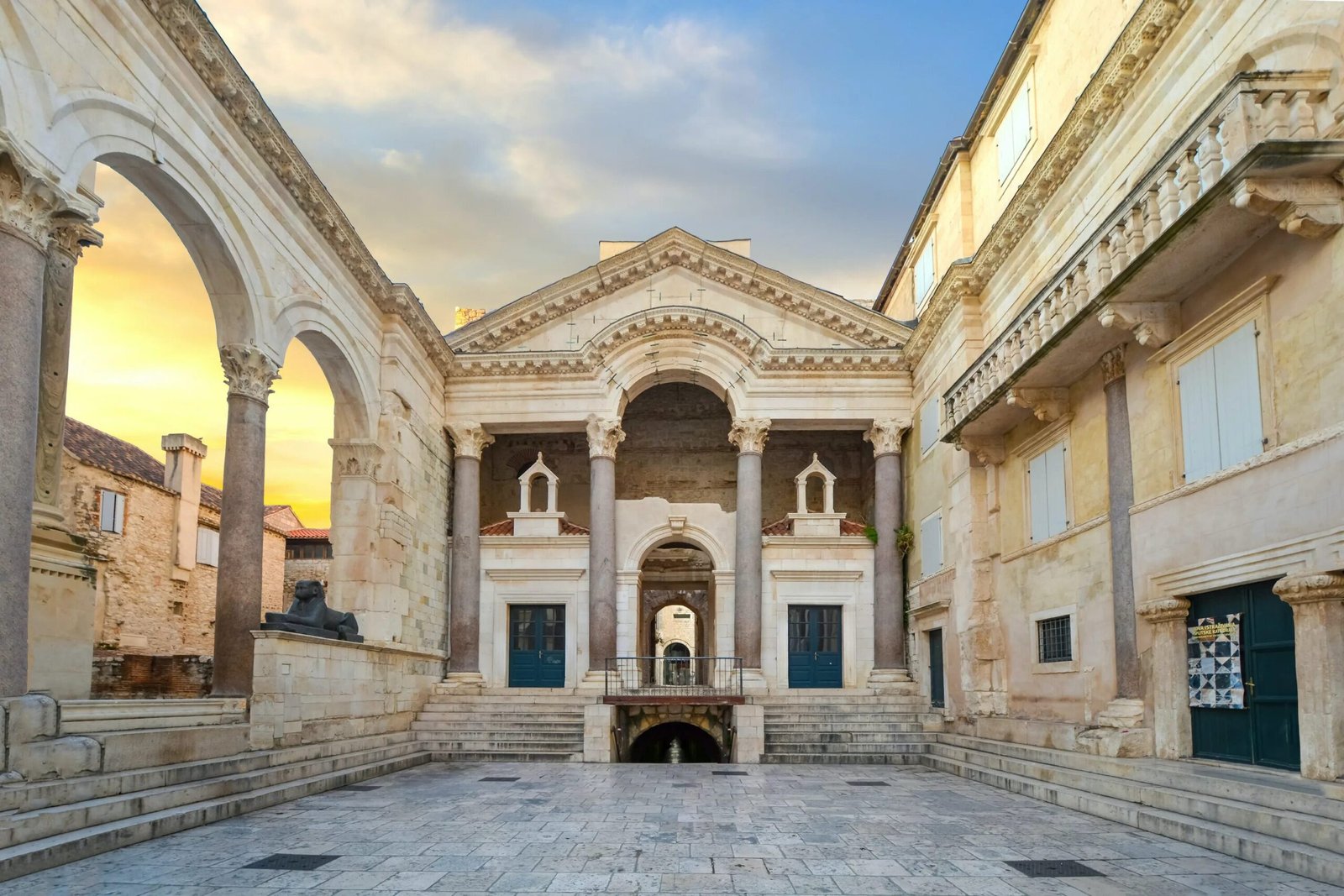
Historical Origins: Power, Abdication, and Design
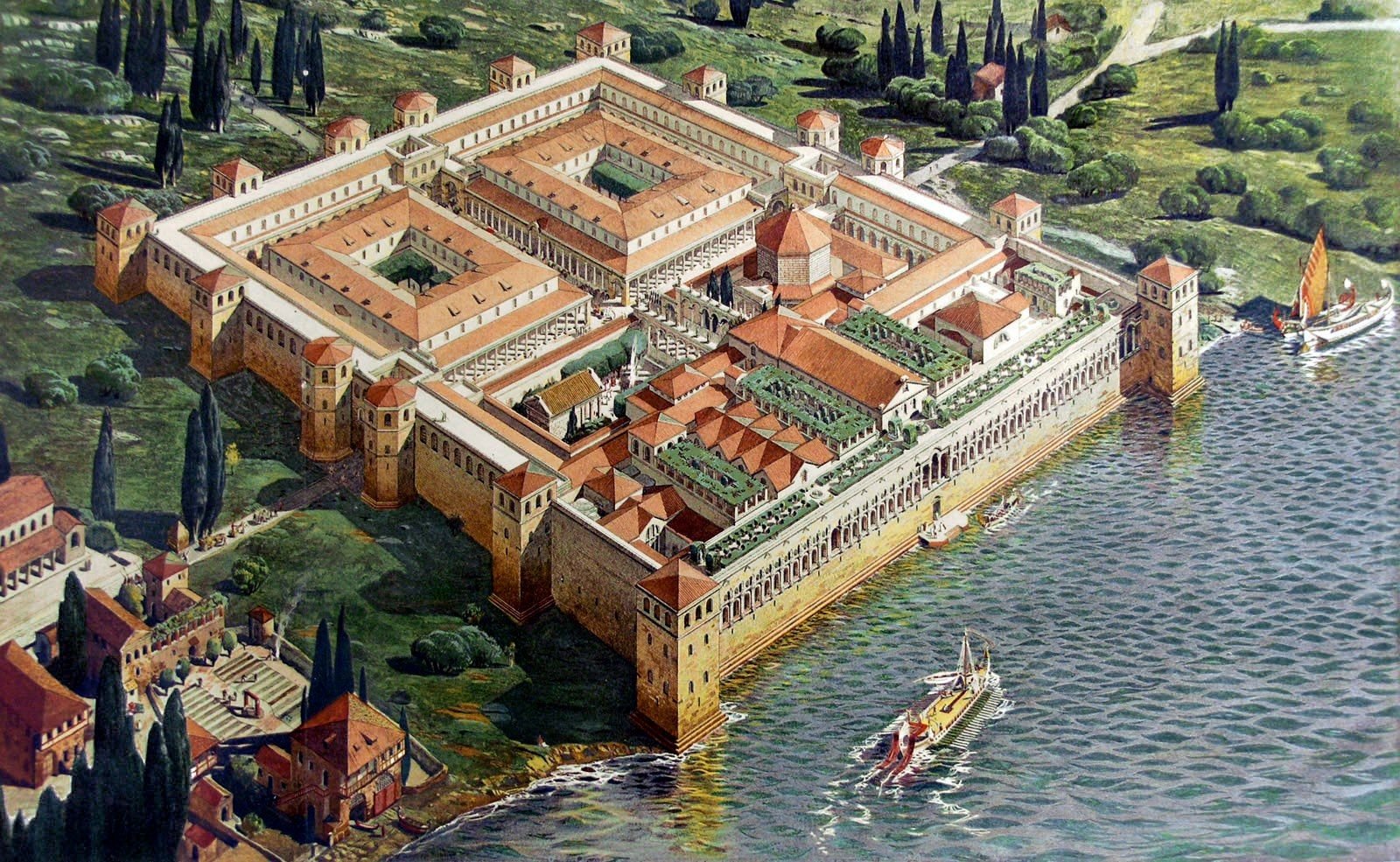
The palace was commissioned by the Roman emperor Diocletian at the end of the 3rd century AD, as a retirement residence following his voluntary abdication in 305—an almost unprecedented act in Roman political culture. Built over roughly a decade, the complex reflects both imperial ambition and personal retreat.
Architecturally, the structure is a hybrid: part luxury villa, part military fortress (castrum). Covering approximately 30,000 square meters, it was designed as a fortified rectangle with towers, monumental gates, and clearly divided functional zones. The southern section, facing the sea, housed the emperor’s private apartments, while the northern half accommodated soldiers and servants. This spatial hierarchy mirrored the rigid order of the late Roman Empire itself.
Materials and craftsmanship reveal the global reach of Roman power. White limestone from the island of Brač, marble from Italy and Greece, and Egyptian columns and sphinxes were all incorporated into the design. Even the workforce reflected imperial diversity, with evidence suggesting the involvement of builders from the eastern provinces.
Urban Evolution: From Imperial Residence to Living City
Unlike many ancient structures that fell into ruin, Diocletian’s Palace underwent continuous transformation. After the destruction of nearby Salona during the Slavic and Avar invasions in the 7th century, refugees settled within the palace walls. This marked the beginning of its second life—as a city.
Over centuries, the monumental Roman spaces were gradually adapted. Basements became storage and passageways, temples were converted into Christian structures, and new buildings filled the open spaces. Medieval houses, Renaissance elements, and modern additions layered themselves onto the Roman grid, creating a dense architectural palimpsest.
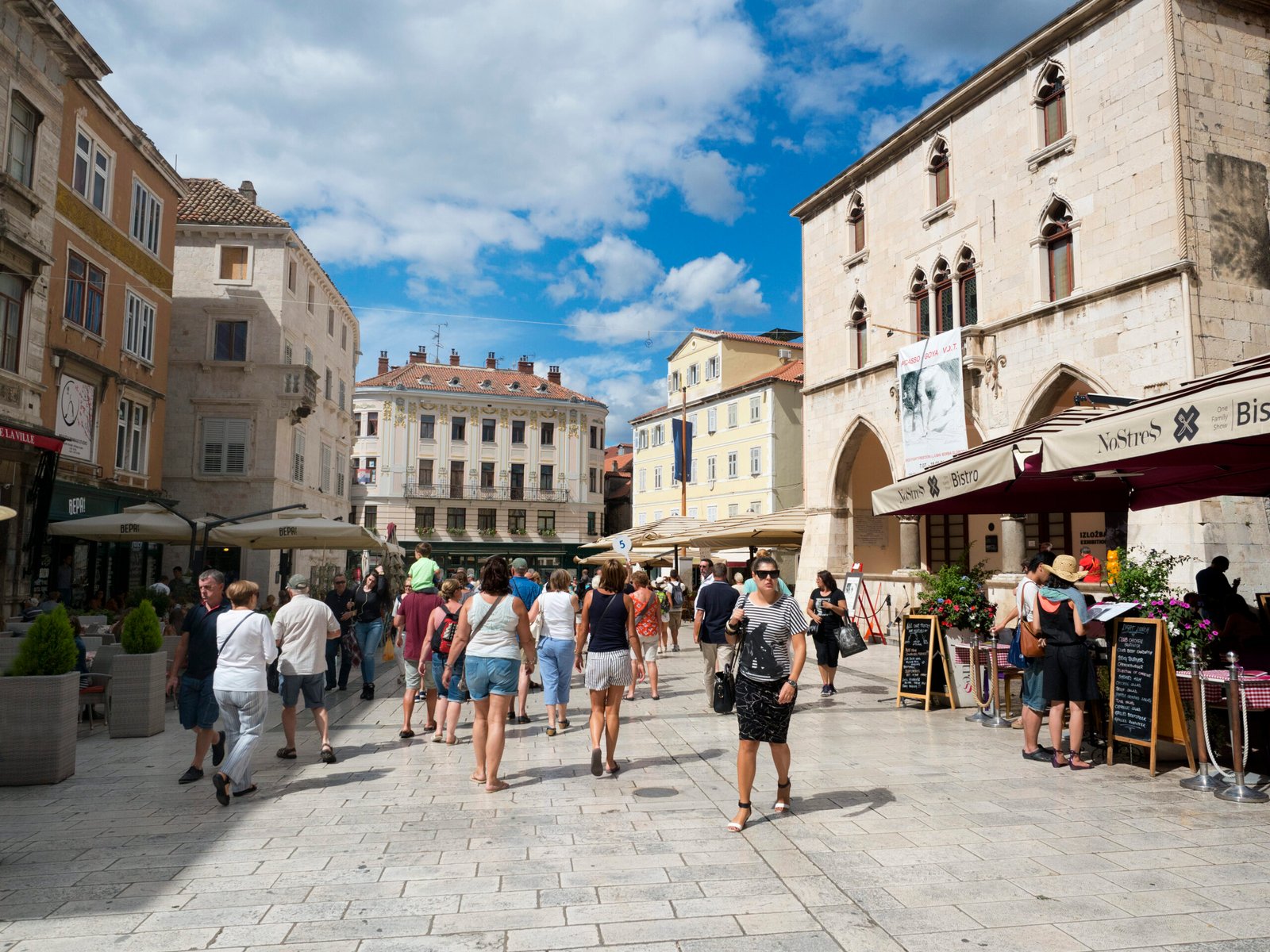
Today, the palace contains around 220 buildings and is home to approximately 3,000 residents. Daily life unfolds within its ancient fabric: laundry hangs between columns, children play against Roman walls, and music from bars echoes through corridors once walked by emperors. This continuous habitation distinguishes the palace from static archaeological sites—it is not preserved in isolation, but through use.
Architectural and Cultural Highlights
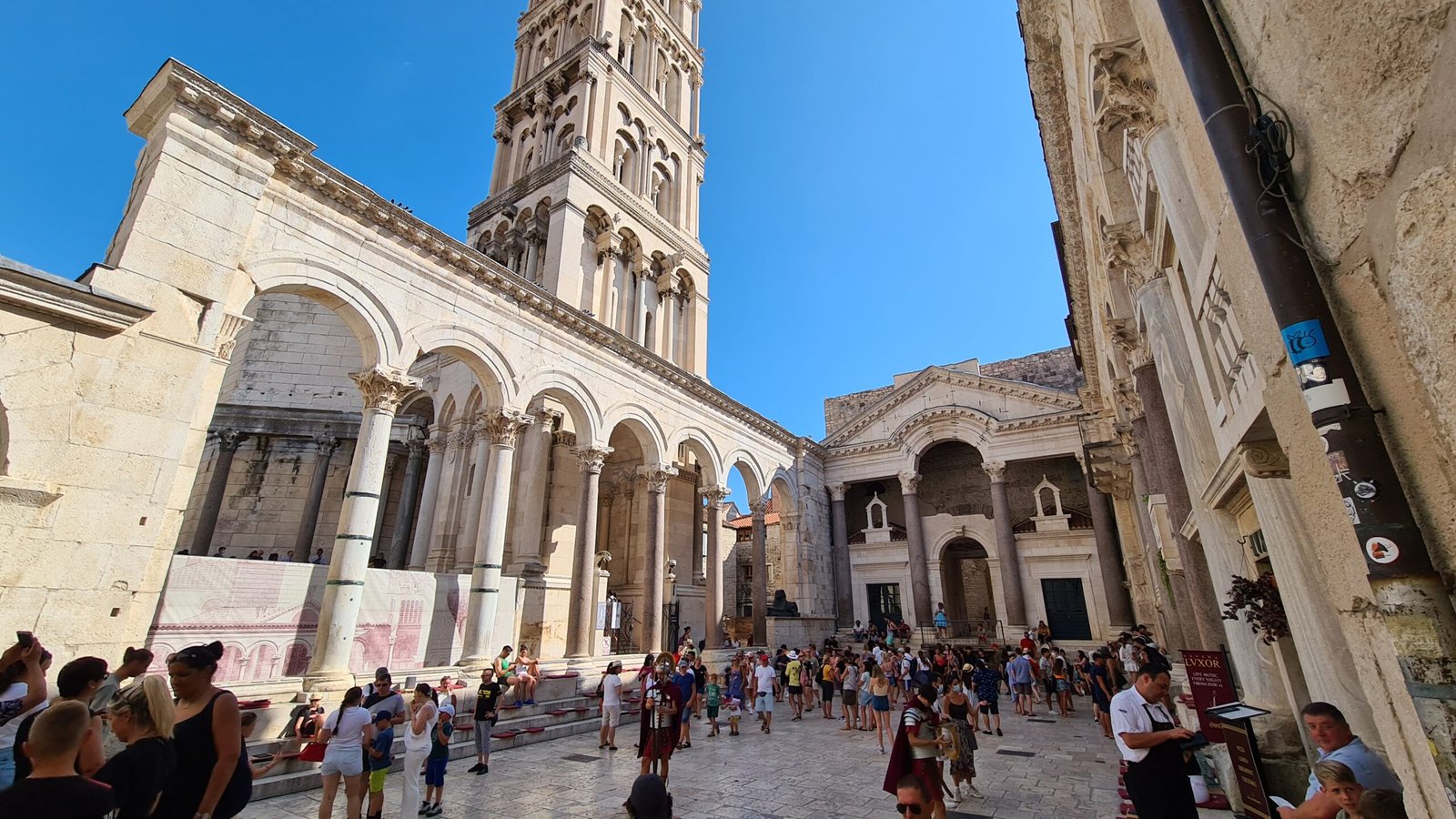
At the heart of the complex lies the Peristyle, a colonnaded courtyard that once functioned as the ceremonial center of imperial power. Nearby stands the Cathedral of Saint Domnius, originally built as Diocletian’s mausoleum—an ironic transformation given the emperor’s persecution of Christians.
Another key structure is the Temple of Jupiter, later converted into a baptistery, symbolizing the religious shifts that reshaped the palace over time. The underground substructures, with their vaulted stone corridors, remain among the most atmospheric parts of the site, preserving the original layout of the imperial apartments above.
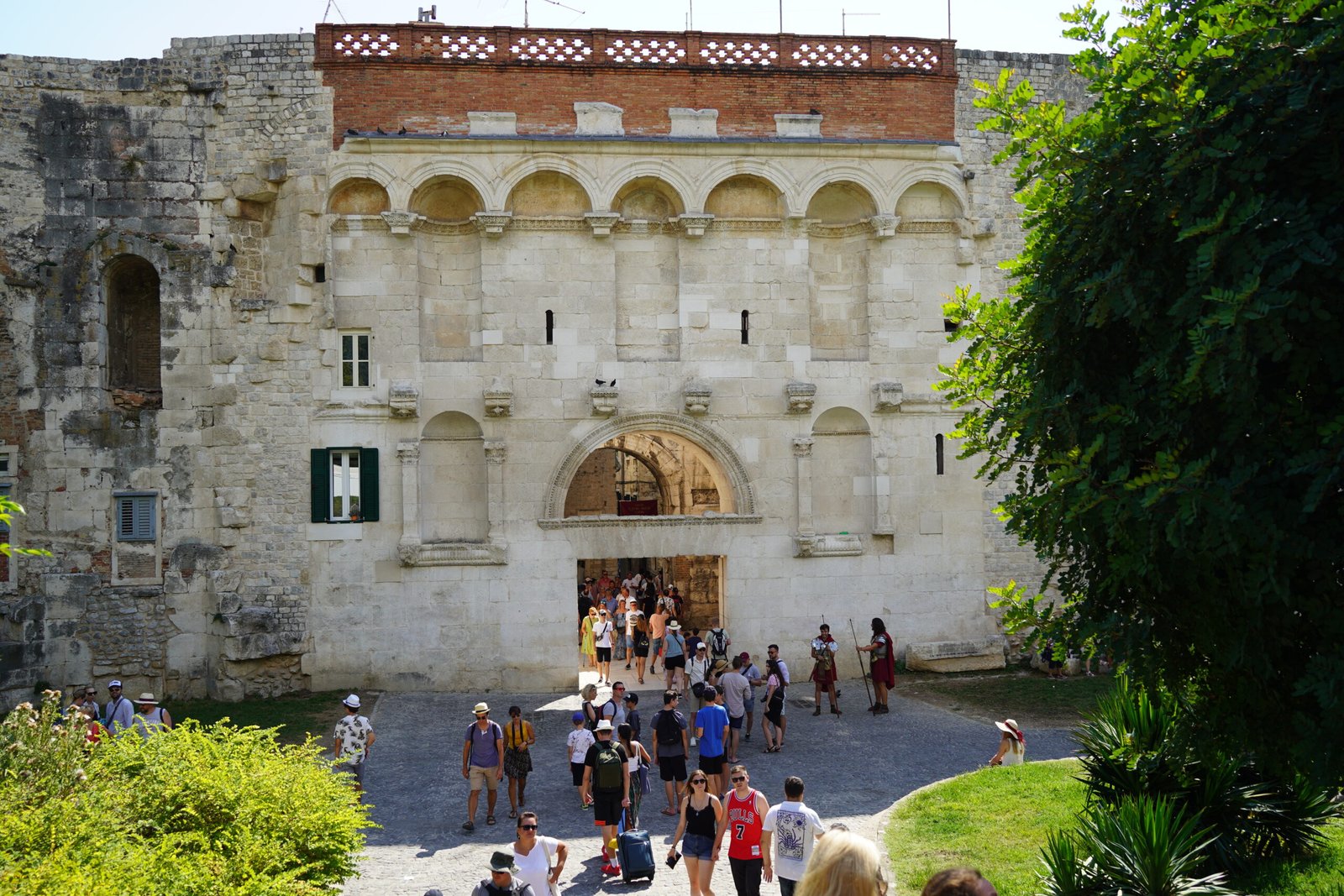
The palace’s four gates—Golden, Silver, Iron, and Bronze—reflect both symbolic and functional aspects of Roman urban planning. Notably, the southern Bronze Gate once opened directly onto the sea, allowing goods to be transported into the palace by ship, illustrating the integration of architecture and maritime life.
UNESCO Recognition and Global Importance
In 1979, the historic center of Split, including Diocletian’s Palace, was designated a UNESCO World Heritage Site. This recognition acknowledges not only the architectural integrity of the complex but also its exceptional state of preservation and continuous use.
The palace is widely regarded as one of the most complete surviving examples of a Roman residential complex. Its influence extends beyond archaeology into architectural history: in the 18th century, its study inspired the development of Neoclassical architecture in Europe, particularly through the work of architects like Robert Adam.
Tourism and Contemporary Relevance
Today, Diocletian’s Palace is the primary attraction of Split and a major destination on the Adriatic coast. Its appeal lies in its immersive character—visitors do not simply observe it but move through it as part of the city’s daily life. Shops, restaurants, and apartments are embedded within ancient walls, creating a unique blend of past and present.
The palace has also gained global visibility through popular culture, serving as a filming location for major television productions. This has further increased tourism, making it both an ეკონომic engine and a conservation challenge.
Challenges and the Future
The future of Diocletian’s Palace depends on balancing preservation with modern demands. Tourism, while economically beneficial, risks over-commercialization and the displacement of local residents. Past proposals for new developments within the palace walls have sparked public resistance, highlighting tensions between economic interests and heritage protection.
At the same time, international conservation efforts—supported by organizations such as the World Monuments Fund—are working to preserve the structural integrity of the site. Advances in restoration techniques and increased awareness of sustainable tourism offer hope for maintaining the palace’s authenticity.
Diocletian’s Palace is more than a relic of Roman antiquity; it is a dynamic cultural landscape where history is continuously reinterpreted. Its enduring significance lies in its ability to bridge eras—serving as an imperial residence, a refuge, a medieval town, and a modern urban center. As both a UNESCO-protected site and a living city, it challenges conventional notions of preservation, demonstrating that heritage can be not only conserved, but lived.