
Historical Roots and the Spirit of Cultural Preservation
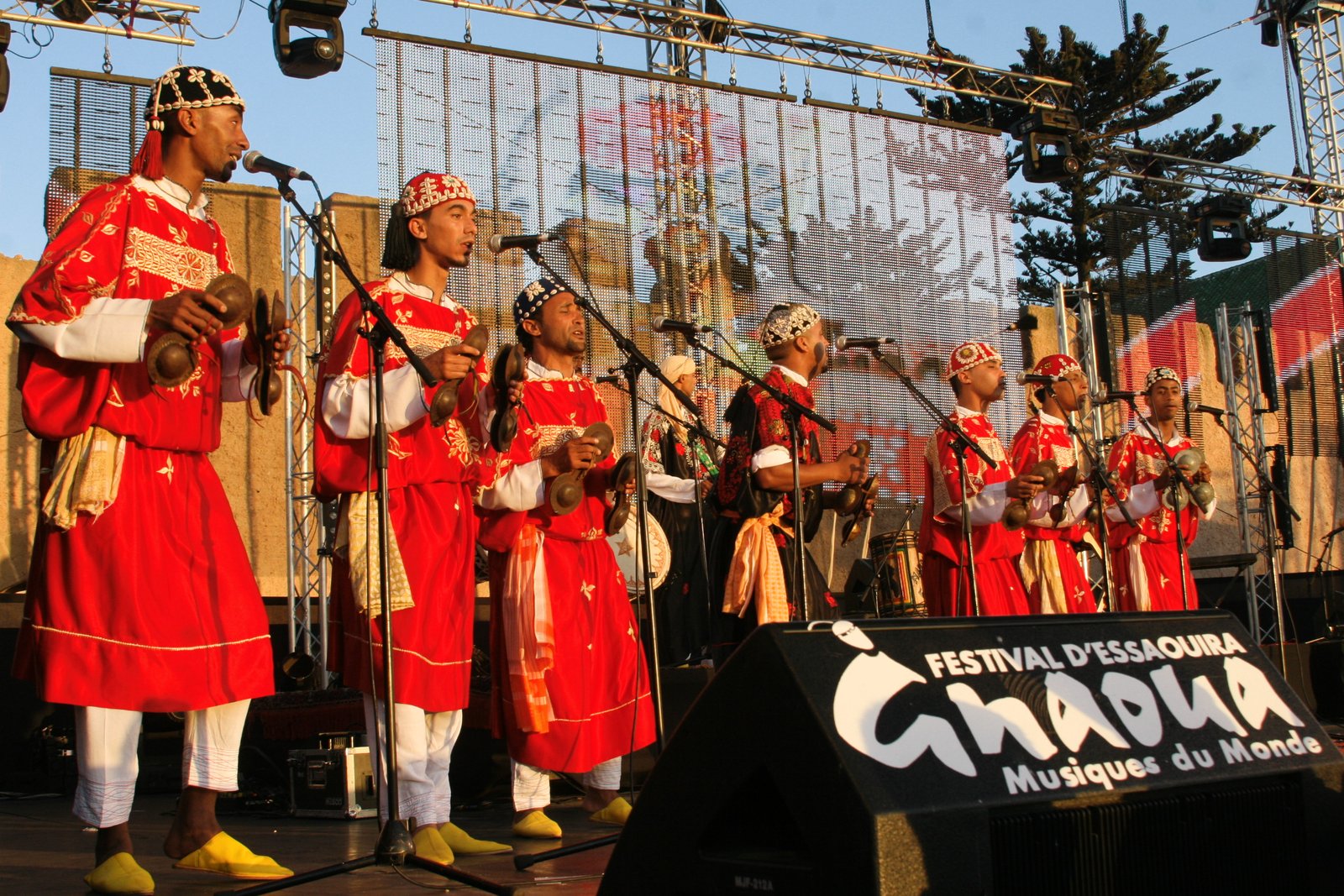
Gnaoua music is deeply woven into the historical fabric of Morocco, carrying the memory of sub-Saharan migration, displacement, and resistance. The genre originated from the ancestral narratives and spiritual practices of enslaved populations brought to Morocco from West African regions such as Mali, Guinea, and Ghana. Over centuries, these communities fused Islamic spiritual songs with sub-Saharan rhythms and rituals, giving birth to a distinct folklore centered around the Lila—an all-night communal ceremony dedicated to prayer, psychological healing, and divine invocation led by a Maâlem (master musician).
For much of Moroccan history, Gnaoua practitioners occupied the socio-economic margins of society, and their mystical practices were largely rejected by the cultural elite. A pivotal shift occurred in 1998 when British cultural organizer Jane Loveless, captivated by the healing energies of the music, cut through institutional bureaucracy and logistical hurdles to establish the very first Gnaoua World Music Festival in Essaouira. The festival’s purpose was radical yet simple: to preserve a vulnerable oral heritage, grant traditional masters access to an international stage, and build a cultural bridge across common musical roots. The global validity of this heritage was permanently solidified in 2019, when Gnaoua was officially inscribed on the UNESCO Representative List of the Intangible Cultural Heritage of Humanity.
The 2026 Programme: Crossings, Education, and Plural Expression
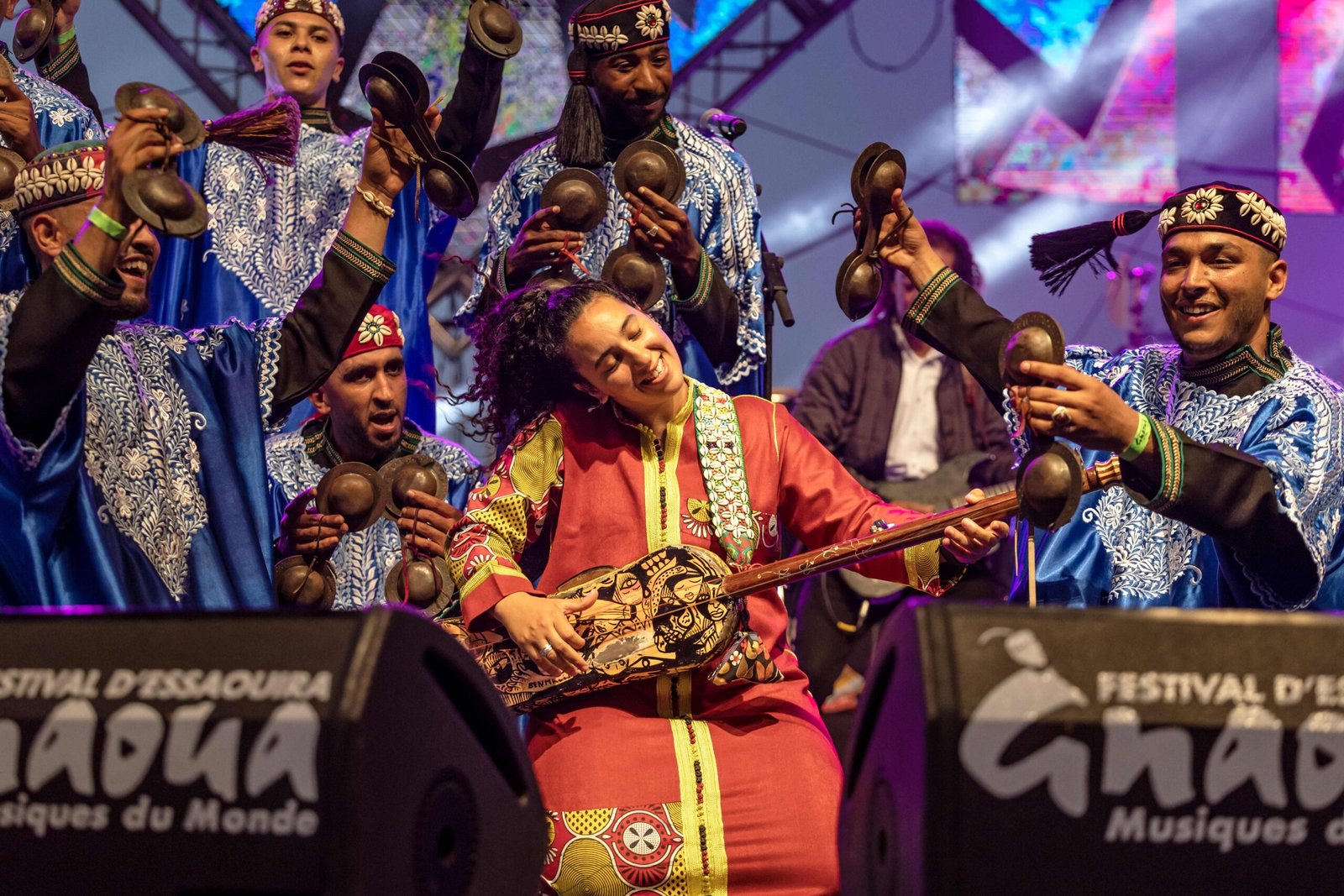
The June 2026 edition of the festival anchors its artistic direction around the core theme of maritime circulation and port cultures. Under the ongoing guidance of seasoned professionals like Maâlem Abdeslam Alikkane and drummer Karim Ziad, the 2026 lineup features more than 300 performers from territories deeply shaped by historic migratory crossings, including Lebanon, Cameroon, Brazil, France, India, Palestine, Ethiopia, and the United States. Traditional ensembles perform alongside contemporary international groups, dissolving genre boundaries in a high-energy “musical laboratory”.
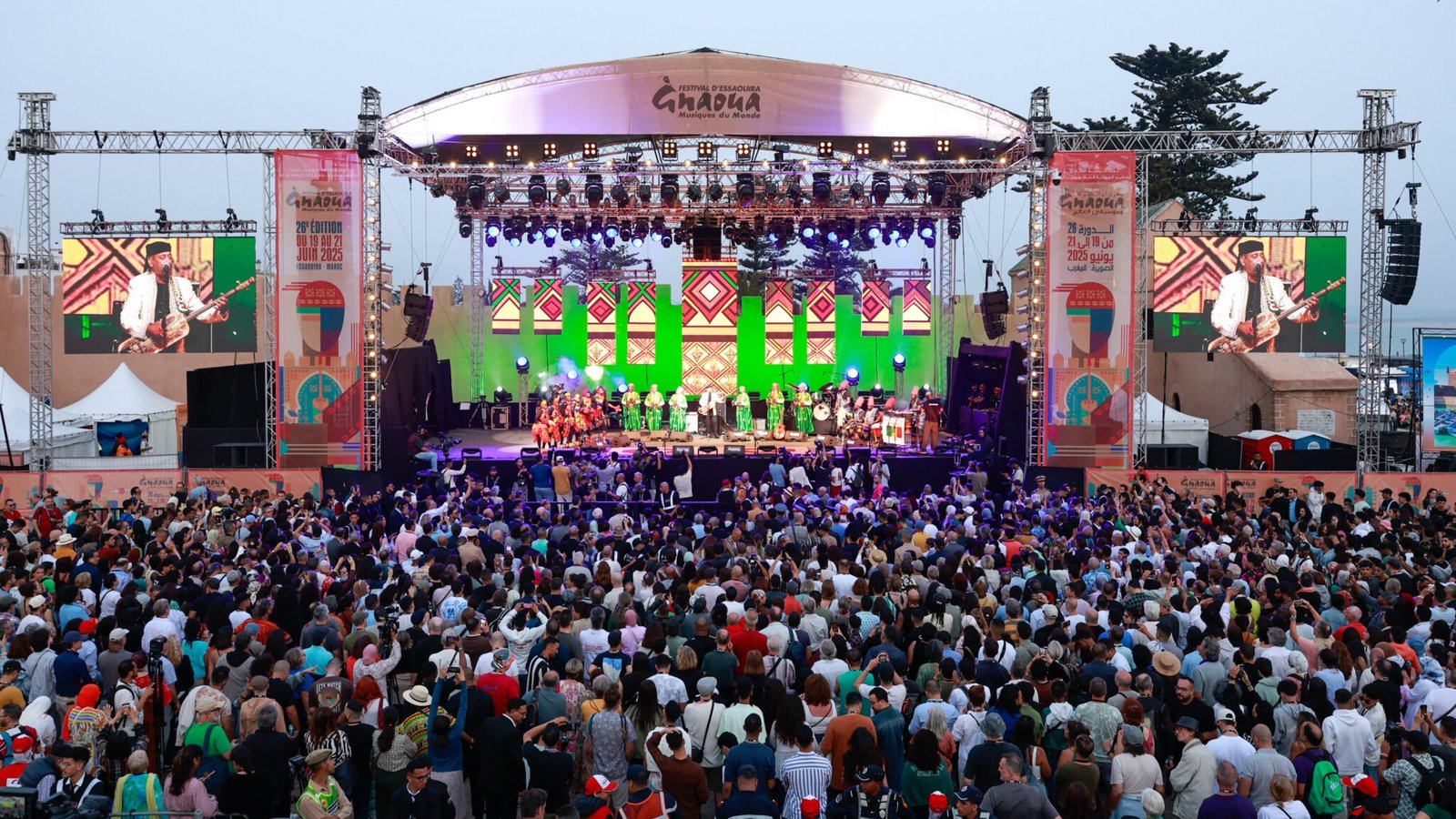
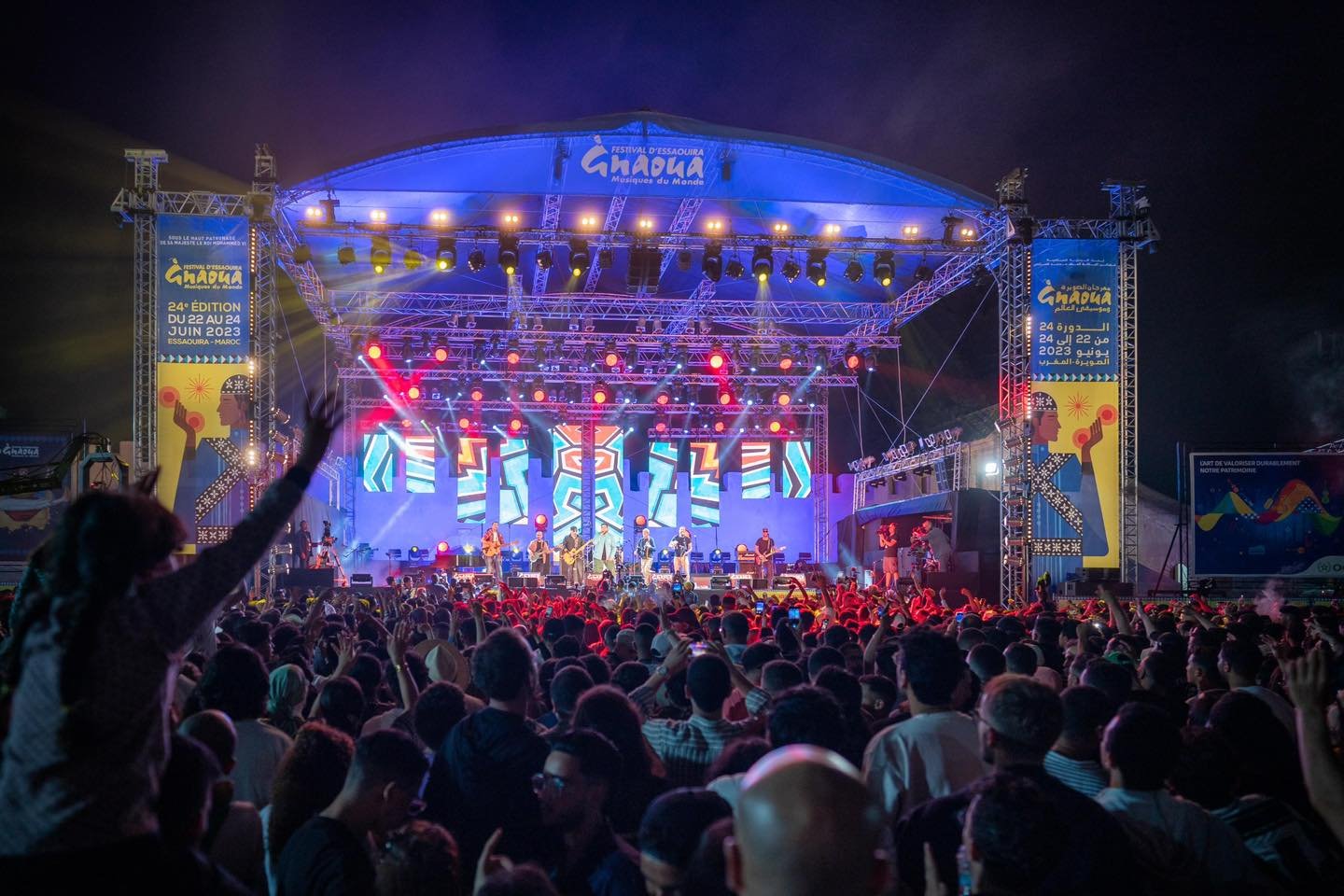
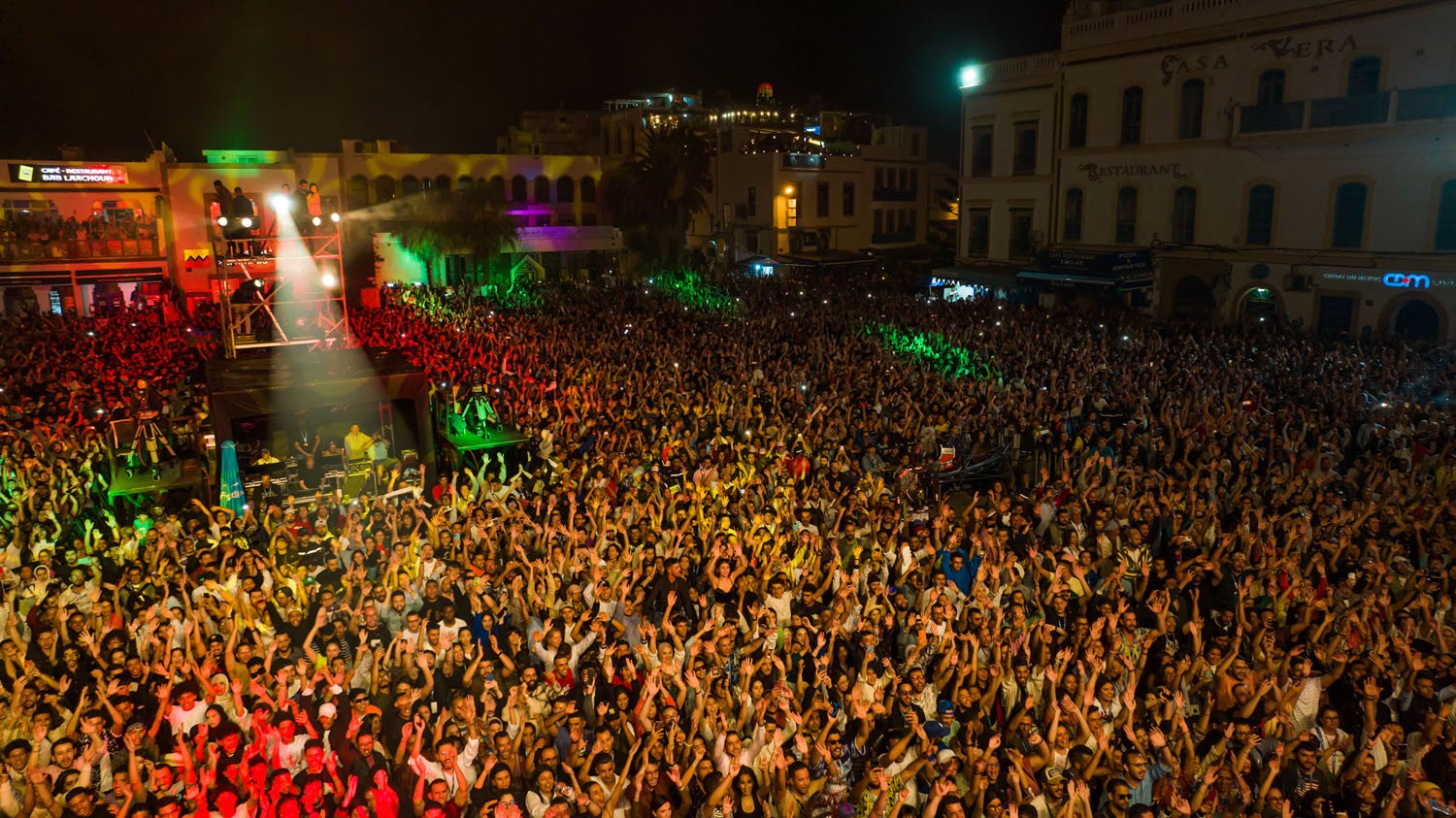
The 2026 festival spans five distinct stages through and outside the historic city walls. Massive free-admission performances dominate the iconic Moulay Hassan Square and the Beach Stage, while more intimate, sacred acoustic rituals are observed inside traditional venues like Zaouia Issaoua and Dar Loubane. Beyond the musical stages, the 2026 festival has significantly expanded its intellectual and educational infrastructure:
- The Human Rights Forum: Celebrating over twelve years of debate, the 2026 forum is explicitly dedicated to the theme “Youth of the World: Freedom, Identity, Future,” convening researchers, thinkers, and artists to address contemporary social transformations.
- The Berklee at the Gnaoua Festival Programme: In partnership with the Berklee College of Music, this program provides rigorous academic and practical training to professional and semi-professional musicians, analyzing the complex grooves and harmonic structures of Gnaoua music to elevate the domestic music scene.
- The Chair of Transitions: Developed alongside University Mohammed VI Polytechnic (UM6P), this academic initiative formally examines the cultural circulations and hybridizations that form the festival’s modern identity.
Economic Engine and the Tourism Renaissance
The festival’s impact on the host city of Essaouira is transformative, driving a profound economic and touristic renaissance. Annually attracting an international and domestic audience of over 500,000 spectators, the four-day event completely saturates the local hospitality sector. Hotels, restaurants, and artisanal street vendors throughout the crowded Medina experience a massive surge in economic activity, demonstrating how intentional cultural investment can serve as a primary lever for regional wealth generation. This sustained commitment to integrating culture into urban development directly led to Essaouira joining the UNESCO Creative Cities Network in 2020.
Critical Perspectives: Nation-Branding vs. Commodification
While the festival is undeniably a global success story of cultural openness, critical sociological and economic analyses reveal an underlying systemic tension. Scholars note that the Moroccan state strategically utilizes the festival for “nation-branding”—employing the imagery of Gnaoua’s spiritual depth and multicultural tolerance as a soft power diplomatic tool to shape international perceptions.
The ethical risk of this strategy lies in the intense commodification of a sacred practice rooted in historical trauma. Critical observers point out that replacing deeply meaningful, hours-long healing rituals with shortened, digestible stage sets for foreign tourists can reduce a rich memory of enslavement and resistance into a mere exotic spectacle. Furthermore, a economic discrepancy persists: while well-funded international headliners receive substantial compensation, many local Gnaoua musicians who sustain the foundational heritage return to marginalized communities with minor changes to their long-term socio-economic realities.
To bridge the gap between celebration and exploitation, cultural experts emphasize that future iterations of the festival must continually prioritize local artist ownership, ensure fair baseline compensation for traditional masters, and maintain robust educational programming regarding the music’s painful origins. By empowering the actual bearers of the tradition alongside global musical experimentation, the Gnaoua World Music Festival 2026 can ensure that its global footprint remains a profound exercise in genuine human collaboration rather than a hollow echo of its sacred past.