The Giro d’Italia, professional cycling’s first Grand Tour of the season, has returned for its 109th edition in 2026, bringing with it the familiar blend of breathtaking landscapes, grueling mountain passes, and fierce tactical battles. This year’s race has captivated millions of viewers globally, drawing immense interest not only from traditional cycling strongholds but across the Mediterranean and beyond.
A Century of Pink: The Historical Context
To understand the prestige of the 2026 Giro, one must look at its origins. The race was first organized in 1909 by La Gazzetta dello Sport as a promotional tool to increase newspaper sales. The iconic “Maglia Rosa” (pink jersey), awarded to the overall race leader, was introduced in 1931 to match the pink paper on which the sports daily was printed.
Over the decades, the Giro has been the stage for some of the sport’s greatest legends and rivalries. The mid-20th century was defined by the bitter, nation-dividing rivalry between conservative Tuscan Gino Bartali and the innovative, secular Fausto Coppi. The race later saw absolute dominance by figures like Eddy Merckx in the 1970s and the explosive climbing of Marco Pantani in the late 1990s. Recently, the race has been won by modern titans, including Tadej Pogačar in 2024 and Simon Yates, who claimed a dramatic victory in 2025 by overturning a deficit on the penultimate stage.
The 2026 Route: From the Balkans to Rome
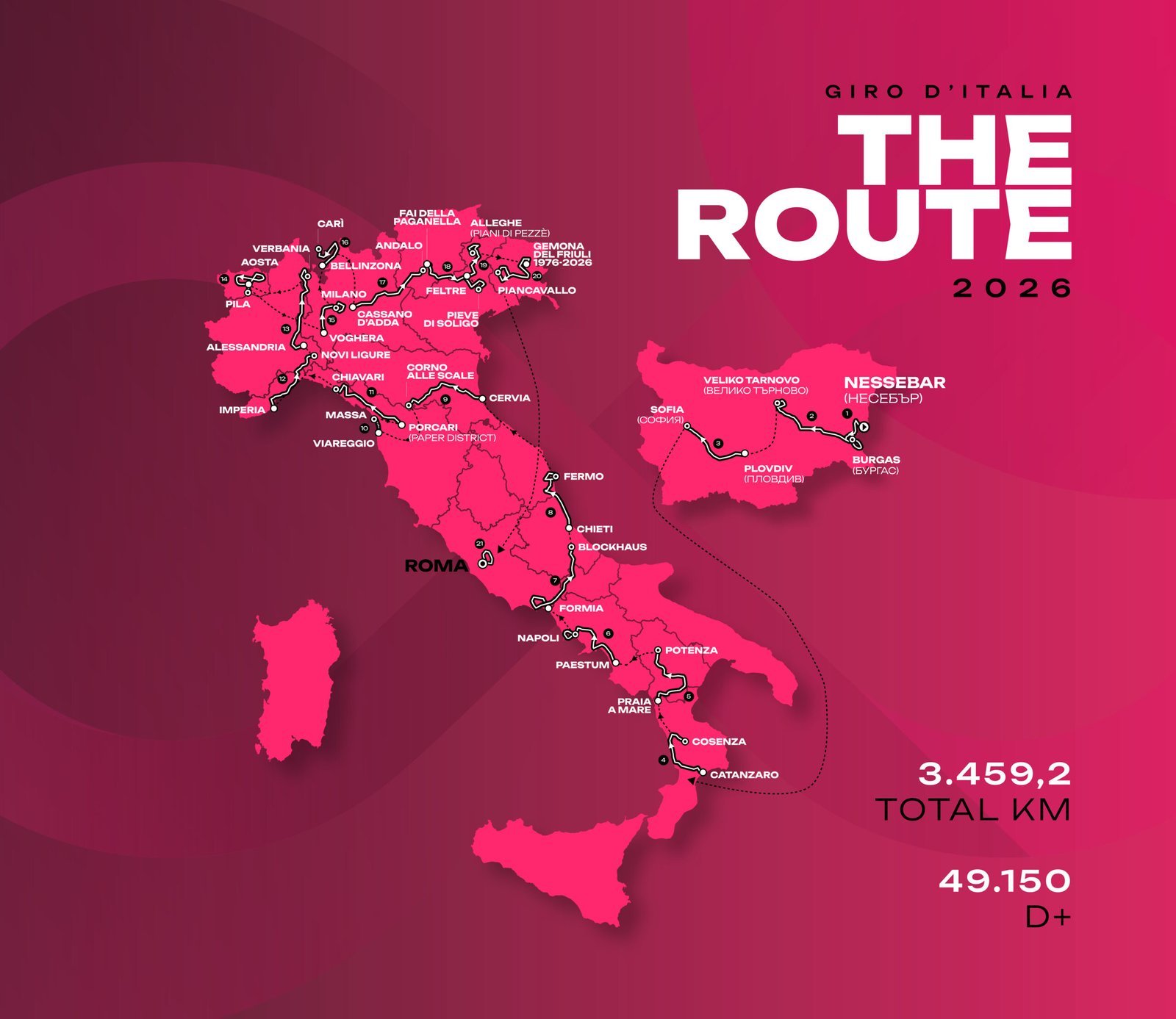
The 2026 edition broke new ground with a Grande Partenza (Big Start) in Nessebar, Bulgaria, marking the Giro’s 11th foreign start and making it the first time the race has featured back-to-back starts outside of Italy following Albania in 2025. Hosting the opening stages required a significant investment from Bulgaria, estimated at €25 million.
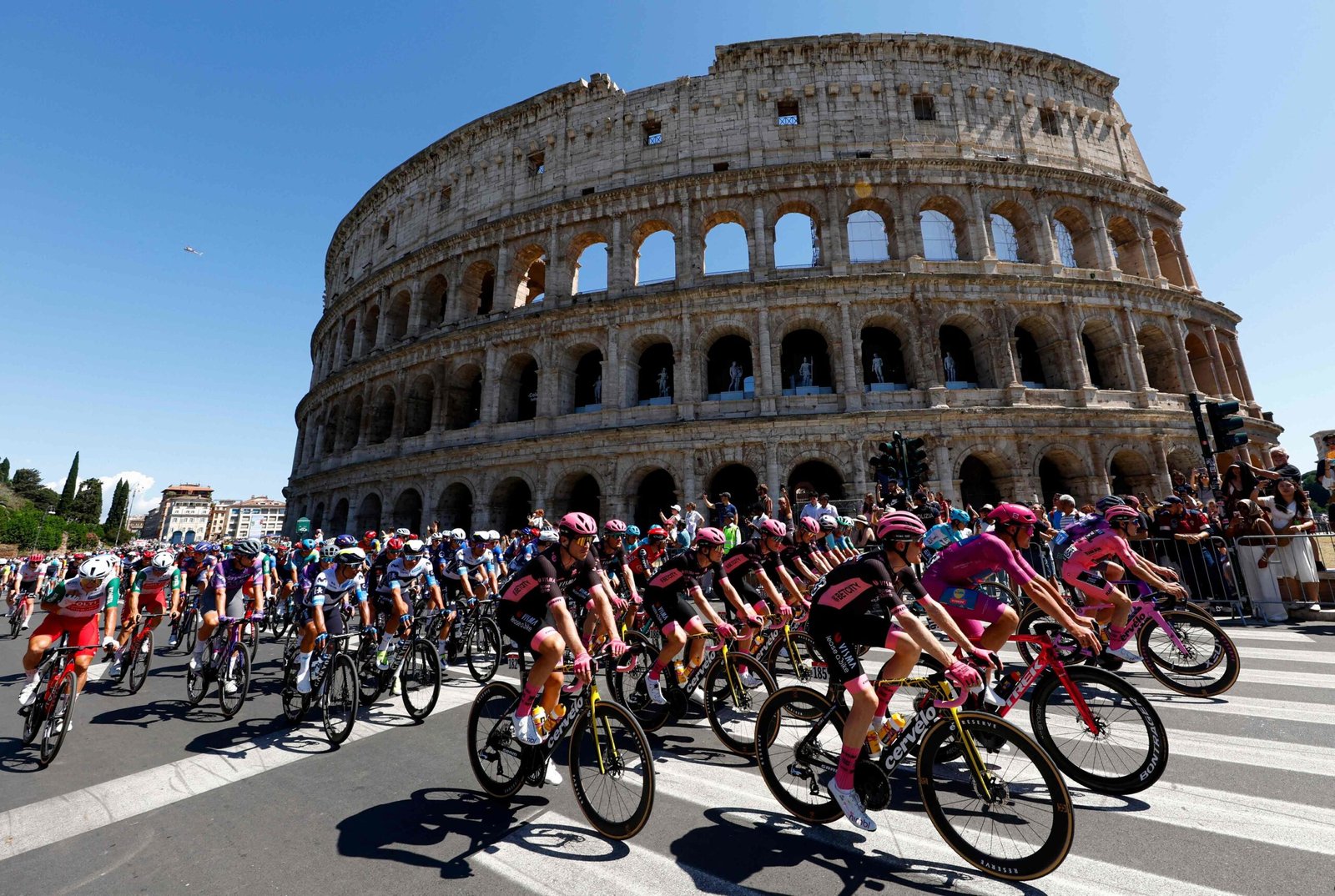
Following three days in the Balkans, the peloton moved to the Italian mainland to tackle a total race distance of 3,468 kilometers and 48,764 meters of climbing. While slightly less elevated than the 2025 edition, the route is remarkably punishing. Key battlegrounds include:
- Stage 7: A grueling 244-kilometer stage finishing on the infamous Blockhaus climb in Abruzzo, featuring a 13.6-kilometer ascent with ramps up to 14 percent.
- Stage 10: A critical 42-kilometer pan-flat individual time trial (ITT) stretching from Viareggio to Massa along the Tirreno coast.
- Stage 14: A sawtooth profile in the Aosta Valley featuring five categorized climbs packed into just 133 kilometers.
- Stage 19: The Queen Stage, featuring over 5,000 meters of climbing and the “Cima Coppi” (the highest point of the race) atop the Passo Giau, before a treacherous descent.
The Contenders: Vingegaard’s Quest for the Triple Crown
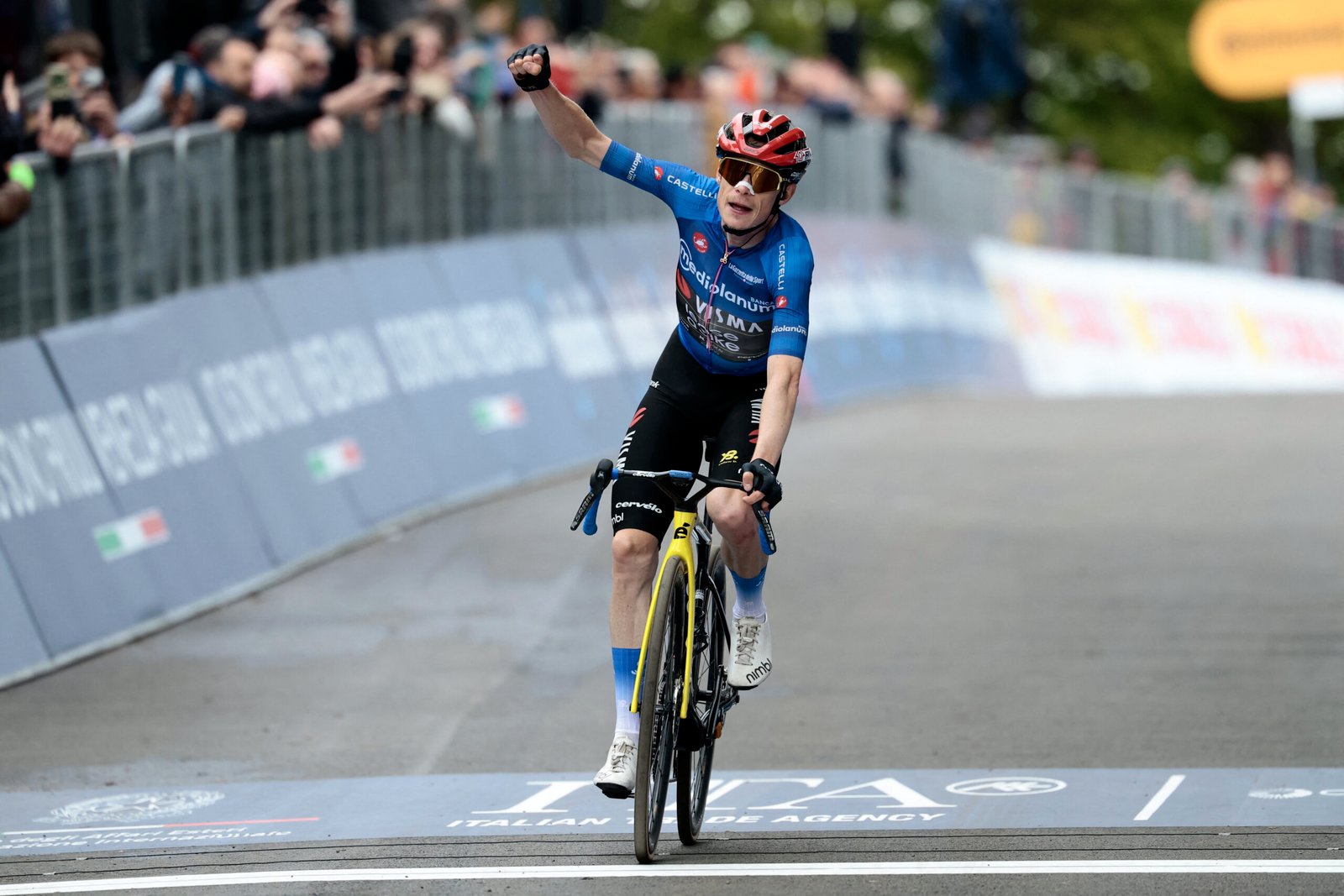
The defining narrative of the 2026 Giro is Jonas Vingegaard’s pursuit of cycling history. Following his previous Tour de France and Vuelta a España victories, the Danish rider entered the race as the overwhelming favorite, attempting to become the first man since Chris Froome to hold all three Grand Tour titles and join an elite club of only seven riders to achieve a career triple crown. Visma-Lease a Bike management noted that Vingegaard is in top form, having fully recovered from a severe crash in 2024 to comfortably win Paris-Nice and the Volta a Catalunya earlier in the season.
Vingegaard’s path to pink was slightly cleared by the pre-race withdrawals of key general classification (GC) threats, including Joao Almeida, Richard Carapaz, and Mikel Landa. However, he still faces stiff competition. Key challengers include 22-year-old Italian sensation Giulio Pellizzari, who possesses a graceful climbing style and a lethal kick, and UAE Team Emirates’ Adam Yates and Jay Vine. The Netcompany INEOS squad also boasts a formidable multi-leader strategy with Egan Bernal and Thymen Arensman.
Stage 10 and the State of the Race
As the race moved into its second week, Stage 10 served as a massive inflection point. The 40-kilometer flat time trial provided a prime opportunity for GC contenders to separate themselves. Analysts widely predicted that Vingegaard would utilize this stage to seize the Maglia Rosa, exploiting the fact that lightweight climbers like Afonso Eulálio and Felix Gall were expected to lose significant time—potentially up to two or three minutes—on such a specialized course. Meanwhile, pure time-trial specialists like Filippo Ganna were heavily favored to battle for the stage victory.
The race has also been defined by sheer unpredictability. One of the most talked-about moments of the 2026 edition occurred during a brutal mountain stage where aggressive attacks, combined with severe weather conditions and steep gradients, completely upended the standings. Analysts have already labeled this chaotic stage as one of the defining moments of the entire 2026 cycling season.
The Economic Engine of the Grand Tour
Beyond the athletic spectacle, the Giro d’Italia operates as a colossal economic driver for Italy and the international stage towns it visits. The financial footprint of the modern race is staggering, generating an estimated €2 billion in immediate and long-term economic value. The event attracts over 5.5 million live spectator presences, with recent data indicating an average daily per-capita expenditure of €124. This influx of capital heavily benefits local hotels, restaurants, and small regional businesses along the route.
The economic catalyst begins before the race even starts. Hosting the Grande Partenza is a highly coveted investment; for the 2026 edition, Bulgaria spent an estimated €25 million to host the opening stages, aiming to recoup the costs through massive international exposure and a surge in tourism. Furthermore, the race acts as a powerful infrastructural accelerator. Preparations for the Giro often fast-track municipal public works, resulting in the rapid resurfacing and repair of hundreds of kilometers of regional roads that might otherwise take years to complete.
Internationally, the Giro serves as a premier ambassador for the “Made in Italy” brand. With a global television audience reaching nearly 800 million viewers across 200 countries, this exposure translates into tangible export growth. Market analysis from the Bike Economy Forum reveals that international viewers develop a strong propensity to purchase Italian technical equipment, bicycles, and agri-food products following the race, generating upwards of €2.5 billion in secondary international market value.
Sustainability: Driving the ‘Ride Green’ Initiative
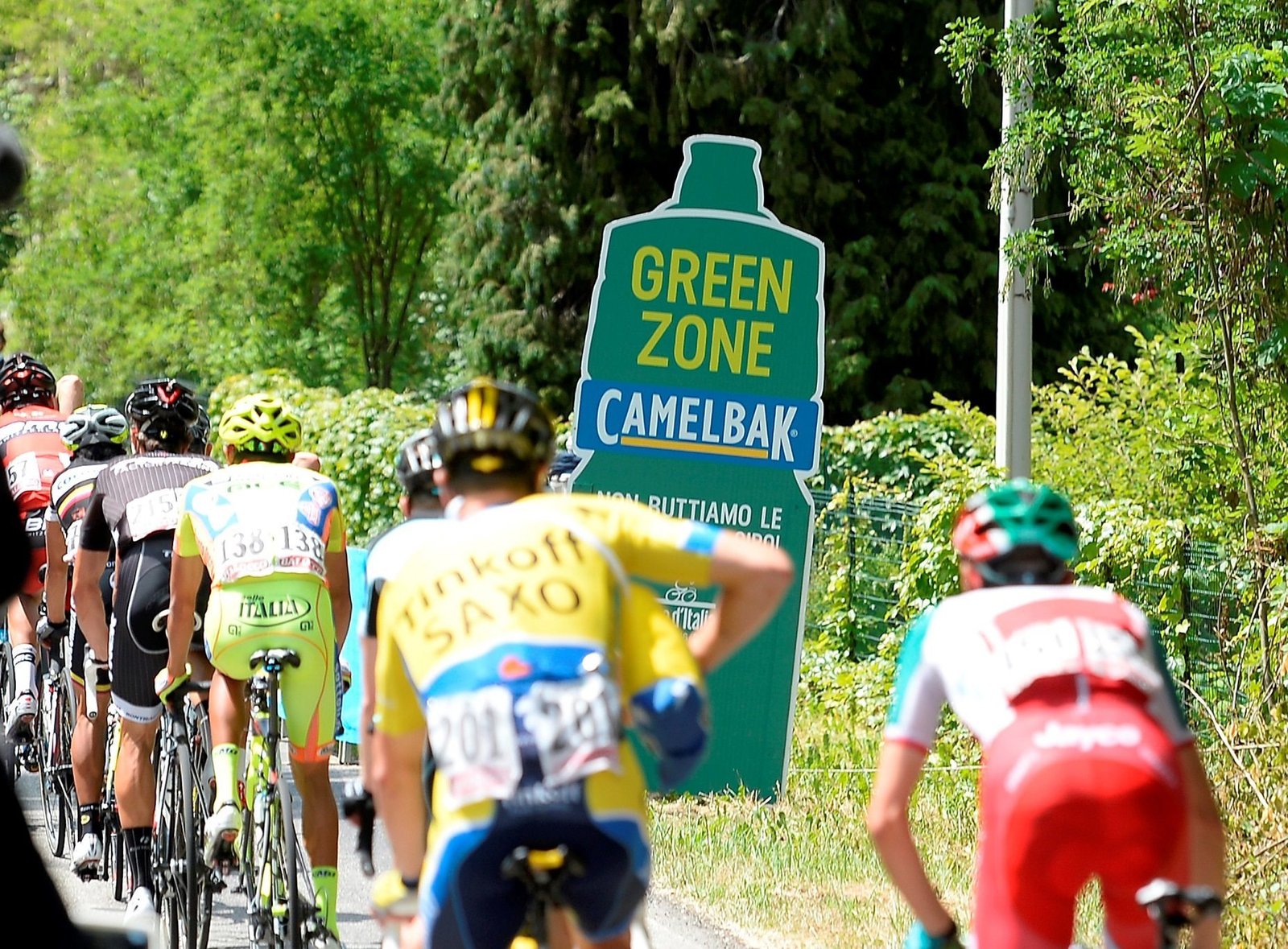
As the Giro has expanded globally, so has its commitment to mitigating its environmental footprint. Environmental sustainability was a formalized, central theme in 2026, pivoting the three-week race toward regenerative event models. Organizers actively promoted greener transportation, which included the expansion of the Giro-E platform—a parallel event that highlights sustainable e-bike mobility and clean energy.
The cornerstone of these ecological efforts is the “Ride Green” program, a comprehensive waste management and traceability system designed to protect the landscapes the peloton crosses. By coordinating with local municipalities and deploying hundreds of volunteers, the Giro successfully collects and sorts over 70,000 kilograms of waste along the route, achieving an overall recycling rate that exceeds 92%. In top-performing stage towns, separate waste collection rates routinely soar past 95%. Furthermore, organizers drastically reduced single-use plastics, ensuring that 100% of the internal catering packaging was plastic-free and made exclusively from paper or compostable materials.
The 2026 sustainability mission also extended beyond waste management into physical environmental restoration. Through strategic corporate partnerships, the Giro integrated reforestation initiatives into its route, committing to planting thousands of trees in Alpine and Dolomite regions that had been previously devastated by severe weather events. Coupled with nationwide educational programs like BiciScuola, which teaches environmental awareness to younger generations, the modern Giro d’Italia has proven that a massive, traveling sporting event can leave a lasting, positive green trail.