From Modest Trade to a Comprehensive Partnership
Historically, bilateral trade between Morocco and South Korea has been relatively modest but steadily growing, traditionally characterized by Moroccan exports of phosphate products and industrial goods, alongside imports of Korean vehicles, machinery, and electronic equipment. However, the relationship is currently undergoing a rapid transformation.
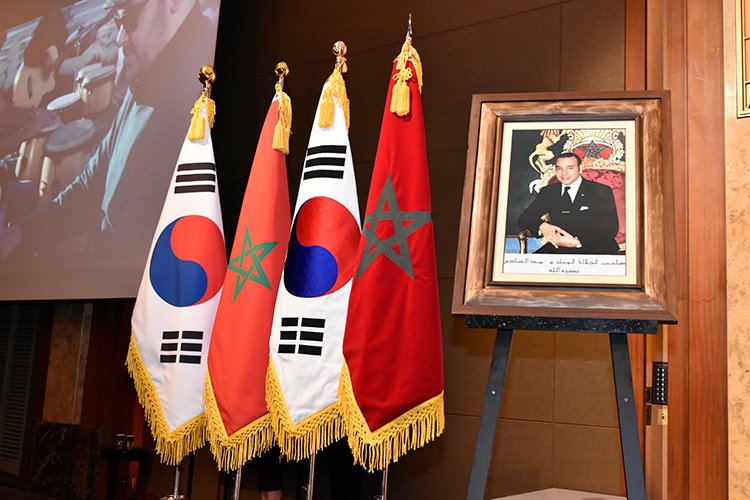
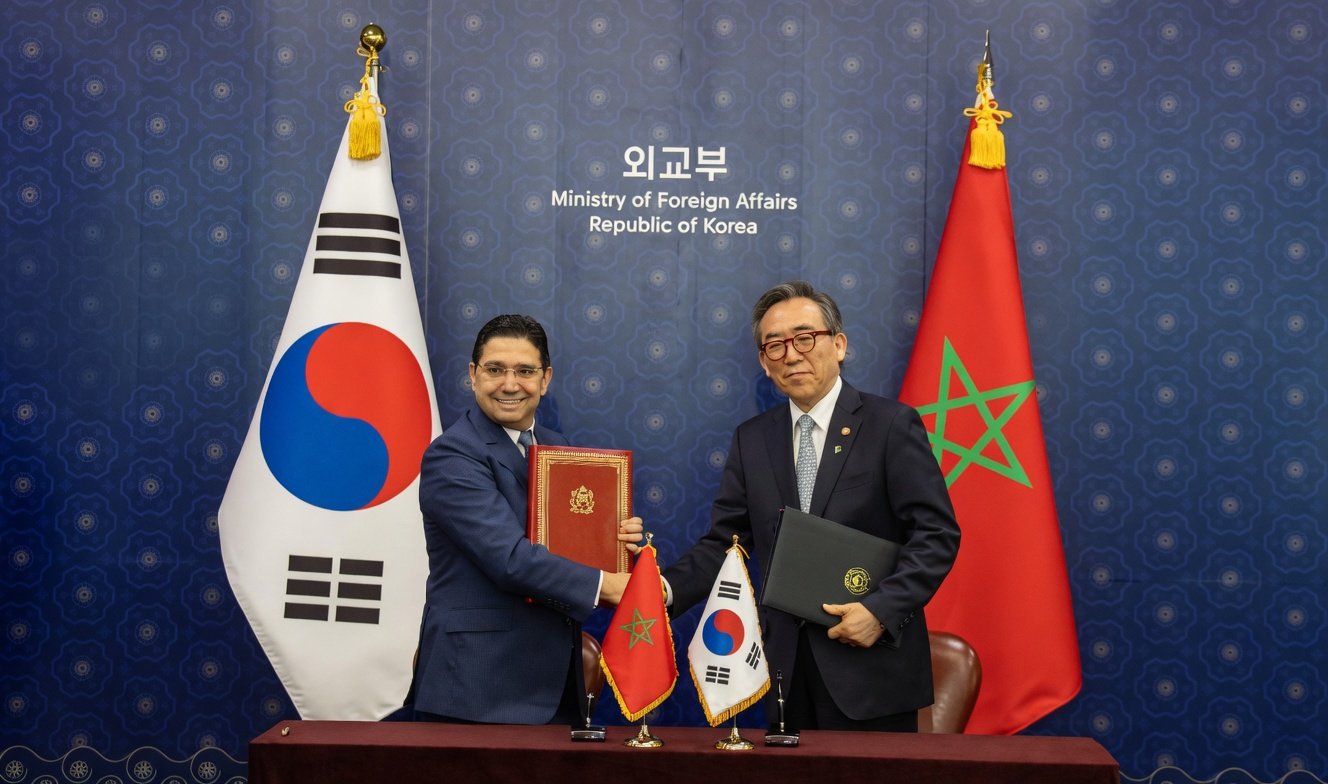
In 2024, bilateral trade stood at approximately $550 million, with investments increasingly concentrating on critical minerals, automotive manufacturing, and industrial equipment. To formalize and accelerate this growth, Moroccan Secretary of State for Foreign Trade Omar Hejira and South Korean Trade Minister Yeo Han-koo held a virtual meeting on May 6, 2026, agreeing to launch formal negotiations for a Comprehensive Economic Partnership Agreement (CEPA). A follow-up working visit is scheduled for June 2026 in Rabat to give the bilateral partnership a strategic dimension that goes beyond a simple trade agreement.
The CEPA is designed to reduce tariffs, improve market access, and foster high value-added industrial collaborations. Because Morocco currently lacks an active free trade or economic partnership agreement with East Asian countries, this deal acts as a vital bridge linking South Korea’s advanced manufacturing sector to Morocco’s massive phosphate and critical mineral reserves.
Industrial Upgrading and Green Technology
For Rabat, the Korean partnership is a catalyst for its broader economic strategy: transitioning from low-value assembly activities to creating highly integrated, technologically advanced industrial ecosystems. Having already achieved a 69% local integration rate in the automotive sector—making Morocco Africa’s leading producer of passenger vehicles—officials aim to replicate this success in electric mobility, battery manufacturing, and green technologies. Key economic milestones in this new era include:
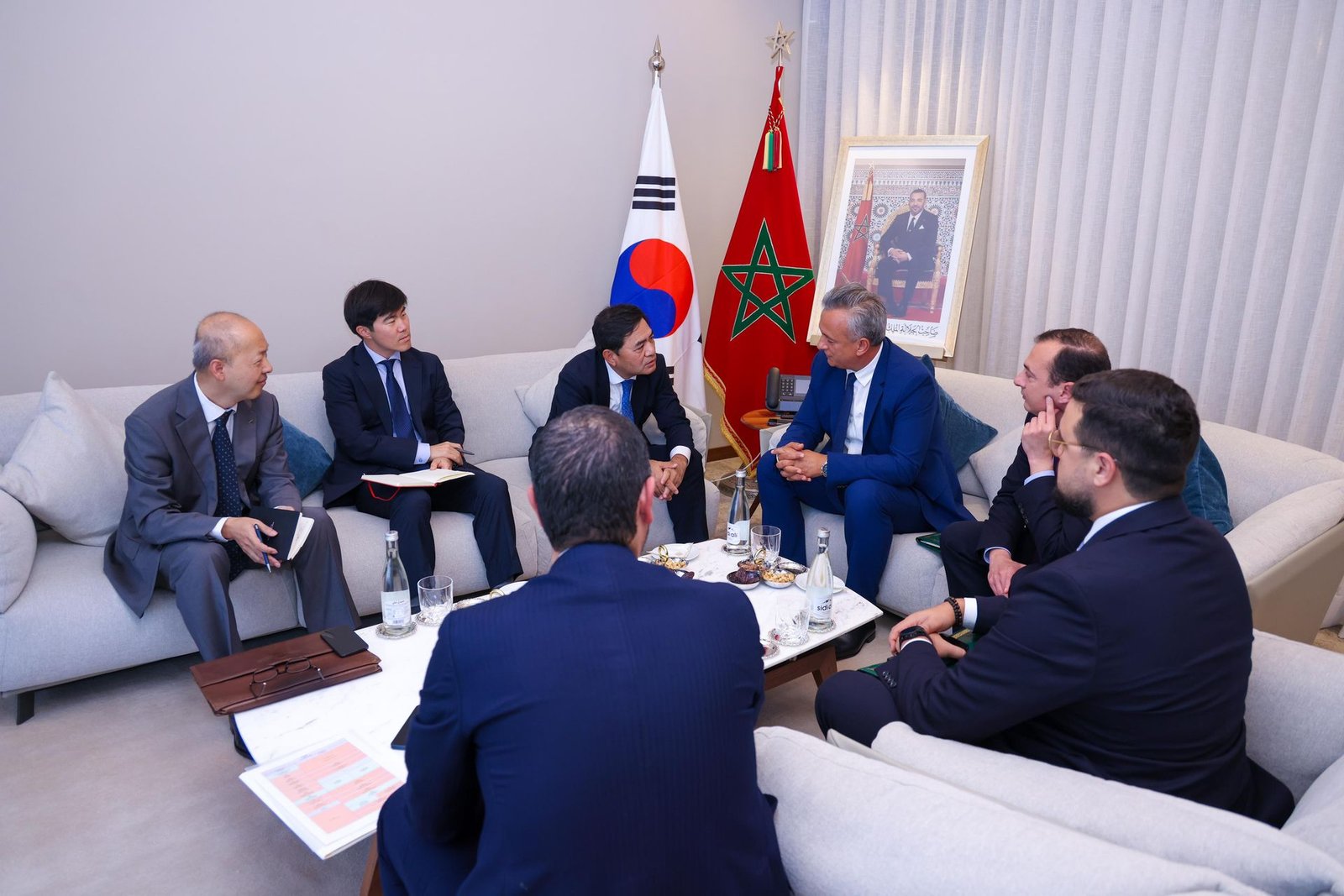
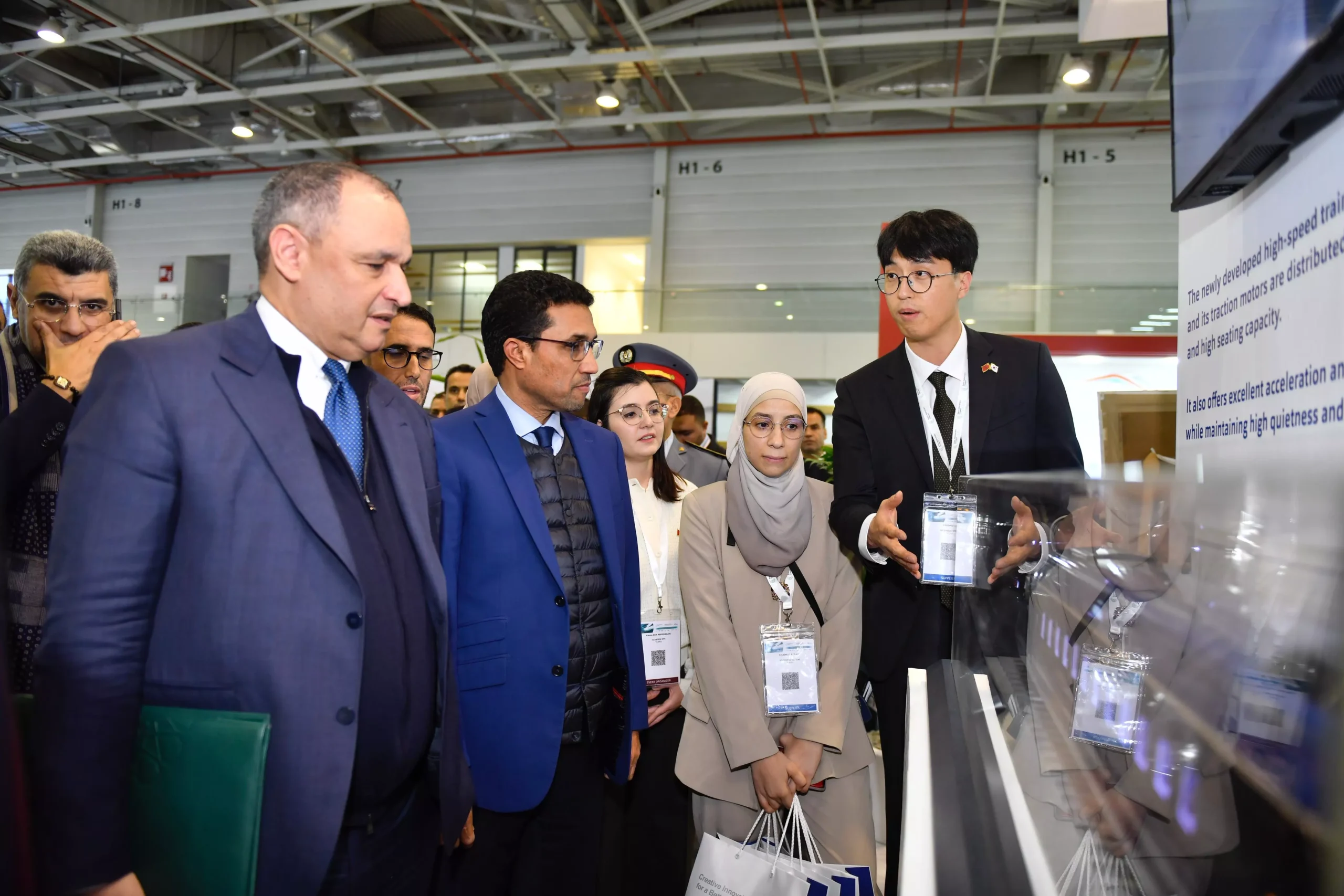
- Railway Infrastructure: South Korea’s Hyundai Rotem secured a massive contract worth approximately $1.53 billion (€1.5 billion) to supply double-decker electric trains for Morocco’s national railway operator. Deliveries are scheduled between 2027 and 2032 to coincide with the 2030 FIFA World Cup, with part of the manufacturing process planned to take place locally in Morocco.
- EV Batteries: Officials are actively discussing LG Energy Solution’s investment in a Moroccan lithium smelter project to support the development of a domestic electric vehicle battery value chain.
- Green Transition: In March 2026, the Moroccan Agency for Energy Efficiency (AMEE) and the Korean agency KOICA launched a $13.5 million program aimed at supporting green jobs and decarbonizing Moroccan industries.
Military Synergy: Tanks, Submarines, and Sovereignty
The economic synergy has rapidly paved the way for advanced defense cooperation. During a recent visit to Seoul, Morocco’s Minister of Industry and Trade, Ryad Mezzour, evaluated several high-tech South Korean military systems to modernize the Royal Armed Forces.
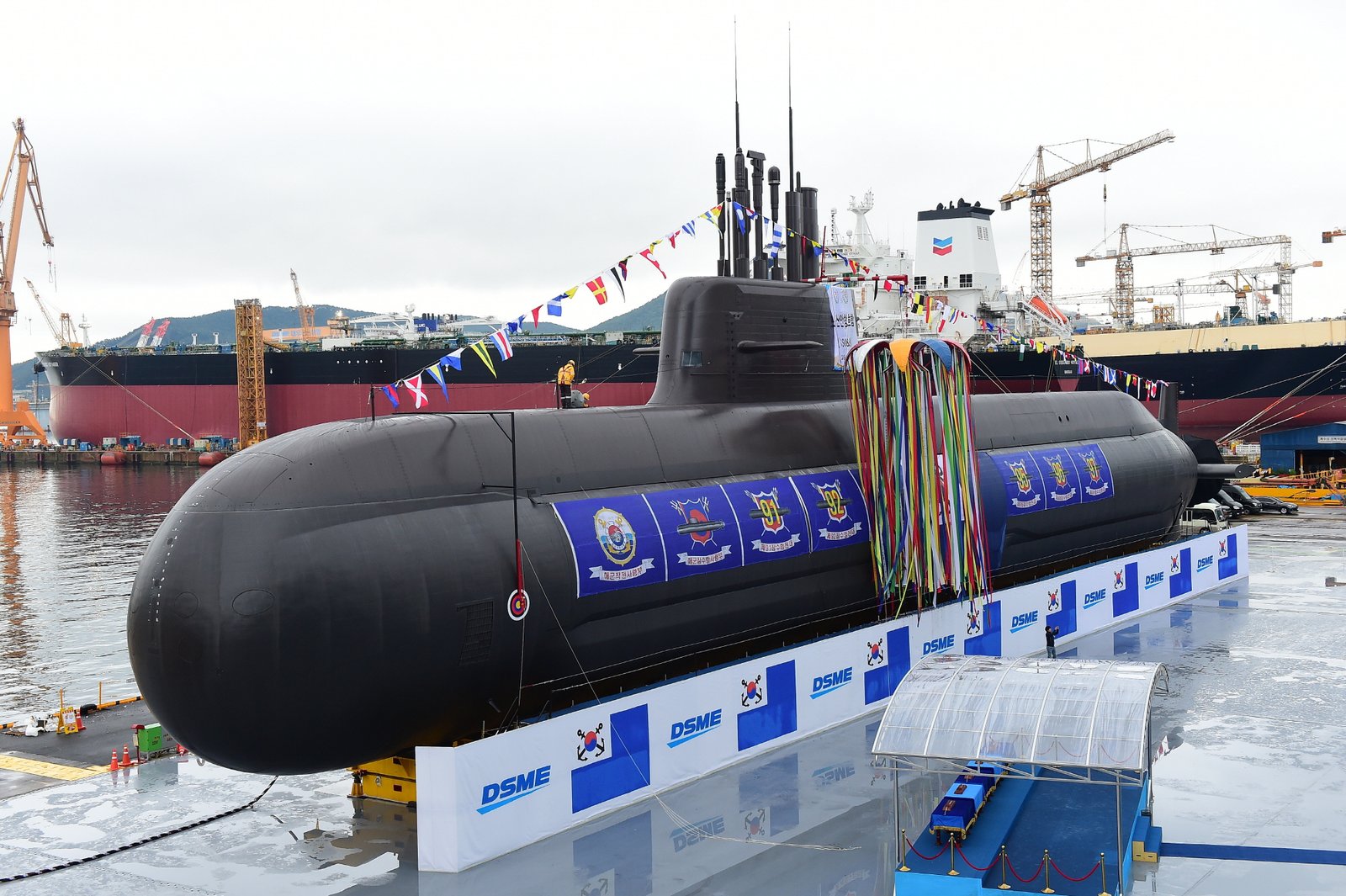
Morocco has shown strong interest in the K2 Black Panther tank (equipped with a 1,500-horsepower engine) and the Cheongung (KM-SAM) air defense system, designed to intercept ballistic missiles and fighter jets. Most notably, Morocco is closely eyeing the KSS-III, a highly advanced 3,000-ton conventional attack submarine.
The potential acquisition of submarines represents a major doctrinal shift for the Royal Moroccan Navy. A “2026 Outlook Report” by Mirae Asset Securities placed Morocco in its potential sales pipeline, projecting the sale of three KSS-III Batch-I units for a unit price of around $900 million, with a horizon of 2027.
While the financial report indicates strong commercial momentum from Seoul, defense experts urge caution regarding the timeline. Military consultant Abdelhamid Harifi notes that the 2027 horizon likely marks the opening of a formal consultation and tender phase rather than an actual delivery date, especially since Morocco currently lacks a “submarine capability base”. Nevertheless, Harifi emphasizes that acquiring submarines is a global sovereignty imperative for Morocco. Possessing underwater capabilities would allow the Kingdom to secure the Strait of Gibraltar against state and asymmetric threats, safeguarding global maritime traffic and protecting its vital port infrastructures.
Impact on the Mediterranean Economy
The deepening ties between Seoul and Rabat carry profound implications for the wider Mediterranean and African economies. South Korean Ambassador Yoon Yeonjean has highlighted Morocco’s political stability and its modern transport infrastructure—particularly the Tanger Med port, one of the largest logistics hubs in the Mediterranean—as major draws for Asian investors.
For South Korean companies looking to reorganize their supply chains and reduce reliance on a limited number of production centers, Morocco serves as the ultimate gateway. By manufacturing locally in Morocco, Asian exporters can simultaneously access the markets of Africa, Europe, and the Americas through a highly competitive and integrated global value chain.
Ultimately, this comprehensive partnership signifies Morocco’s successful transformation into a central industrial link between three continents. By combining Korea’s technological supremacy with Morocco’s strategic assets and geostrategic location, both nations are securing their economic and defensive footprints in an increasingly competitive global landscape.