
The Export Boom: A Surge in Numbers
Recent data from 2024 and 2025 highlights a striking acceleration in Egypt’s textile and garment exports. After readymade garment exports rose 18% to $2.84 billion in 2024, the sector accelerated sharply in early 2025. In the first quarter of 2025 alone, exports jumped 24% year-on-year to $812 million, heavily driven by increased orders from Spain, Italy, Germany, and the Netherlands.
This momentum was sustained throughout the year; in the first seven months of 2025, Egypt’s ready-made garment exports surged by approximately 26%, generating roughly $1.94 billion compared to $1.54 billion during the same period the previous year. Buoyed by this strong regional market integration—where Turkey alone accounted for 41% of the garment export value in the first half of 2025—the industry has set an ambitious target of reaching $12 billion in textile exports by 2031. Furthermore, broader industrial strategies envision achieving $20 billion in apparel exports by 2030, aligning with the objectives of Egypt Vision 2030.
Strategic Advantages Driving Global Interest
Global brands are increasingly turning to Egypt due to three converging competitive advantages:
- Labor Cost Arbitrage: Egyptian textile workers earn a minimum wage of approximately $146 per month. This is dramatically lower than the $500–900 monthly range in Turkey, making Egypt highly competitive for labor-intensive manufacturing.
- Preferential Trade Access: Egypt benefits from Qualified Industrial Zone (QIZ) agreements that provide duty-free access to the US market, alongside the EU Association Agreement which grants tariff advantages to European buyers. These mechanisms are increasingly valuable amidst rising global tariffs.
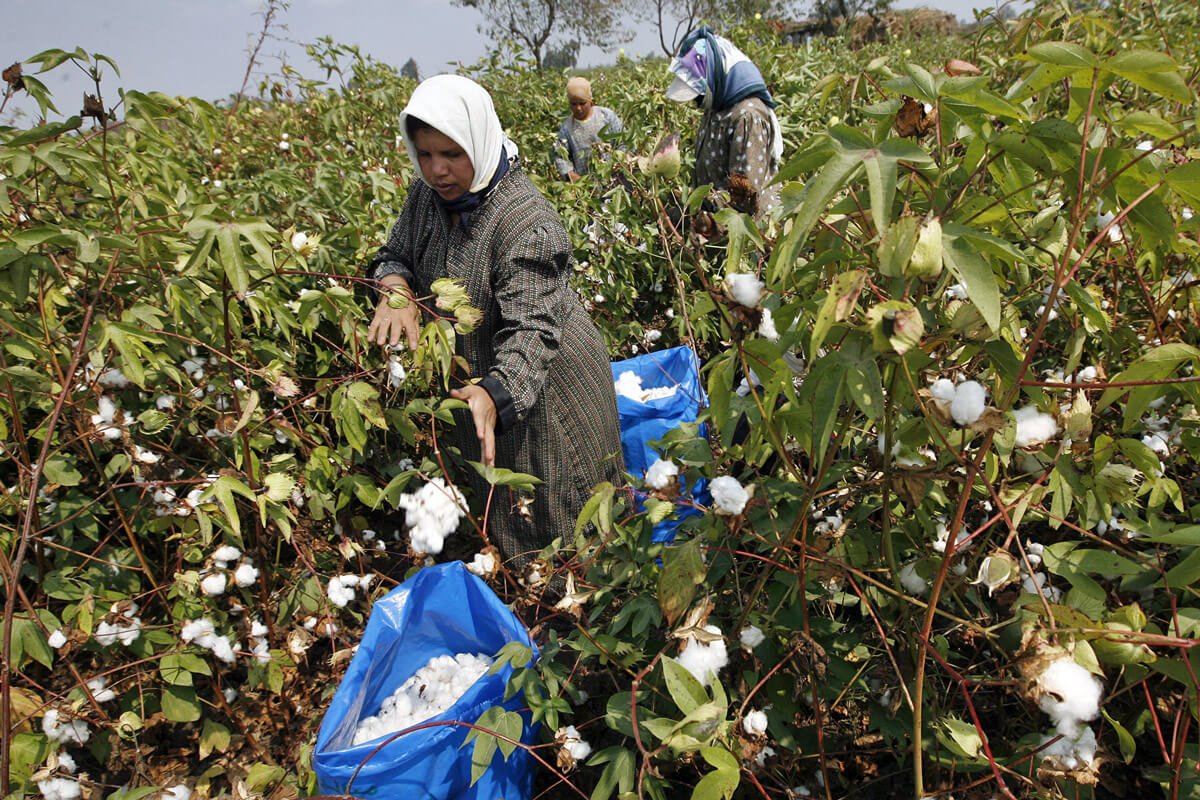
- Premium Raw Materials: Egyptian Giza cotton, particularly the ultra-premium Giza 45 variety, remains globally recognized for its extra-long staple length and is highly preferred for high-end apparel. In 2024, Egypt produced roughly 2.5 million bales of cotton, accounting for nearly 1.5% of global production.
State-Led Modernization and Foreign Direct Investment
To capitalize on these advantages, the Egyptian government has initiated a comprehensive overhaul of the textile and spinning industry, allocating $1.2 billion to modernize infrastructure and establishing plans for 10 new industrial zones spanning 6 million square meters. Government initiatives also include low-interest loans for small and medium-sized enterprises (SMEs) and direct cash subsidies for exporting firms, which have driven a 10-12% increase in textile exports over the past three years.
Foreign direct investment (FDI) has acted as a crucial catalyst in this expansion. The Suez Canal Economic Zone (SCZone) has emerged as a premier manufacturing magnet, offering integrated customs, bonded warehouses, and 48-hour container dwell times. Notable investments in 2025 include:
- – A $10 million facility by Jiangsu Guotai in the SCZone, designed to produce 4 million garments annually for European fast-fashion chains.
- – Explorations by Chinese investors to build a dedicated textile industrial park within the SCZone that could host over 20 manufacturing units.
- – Plans by Hong Kong-based Crystal Martin Group to establish a 1.5 million square meter production hub, which is anticipated to create about 4,000 jobs and localize advanced manufacturing.
- – Turkish investments that have injected vital technical expertise and capital into local production ecosystems.
Expert Perspectives: Navigating the Crossroads
Despite this impressive trajectory, industry experts warn of significant hurdles. Mahmoud Ghazal, CEO of MGS Industry and a member of the Textile Industries Chamber, notes that Egypt’s textile industry “stands at a crossroads, balancing mounting cost pressures and fierce international competition with opportunities for growth”.
While Ghazal emphasizes Egypt’s advantages—such as its long-staple cotton and geographic proximity to Europe—he cautions that bureaucracy, high domestic financing costs, and a limited adoption of modern technology hinder the sector’s global expansion. Ghazal explains that producers are weighed down by the rising costs of raw materials, energy, and logistics, alongside “sunk costs” tied to major infrastructure investments. The macroeconomic environment exacerbates this; Egypt’s urban inflation reached 27.4% in May 2025, introducing severe cost pressures for manufacturers.
Ghazal also points to the intense competition Egypt faces from nations like Bangladesh, Vietnam, India, and China. To compete effectively, he advocates for improved operational efficiency, enhanced training programs, and the wider adoption of advanced technologies. Ultimately, Ghazal concludes that, “A comprehensive national strategy to support exports, develop labour skills, and modernise technology is the real path to restoring Egypt’s place at the forefront of the global textile industry”.
Structural Challenges and the Path Forward
Beyond inflation and bureaucracy, systemic supply chain vulnerabilities pose a threat to long-term growth. Egypt still imports over $2.5 billion in textile raw materials annually from China, and heavily relies on imported fabrics and intermediate inputs from Turkey. Industry leaders argue that achieving vertical integration—localizing production fully from spinning to finished garments—is essential for Egypt’s next growth phase.
Furthermore, environmental factors are threatening the sector’s foundational raw material. Water scarcity along the Nile River, exacerbated by climate change, is negatively impacting cotton production, forcing many farmers to switch to other crops due to low returns.
To secure its future, Egypt must pivot toward sustainability and innovation. Opportunities exist in producing eco-friendly fabrics from organic cotton, diversifying into high-value technical textiles for the medical and automotive industries, and integrating artificial intelligence and 3D knitting into smart manufacturing processes.
Ultimately, Egypt cannot entirely replace the sheer manufacturing scale of Asia—China alone exports $141 billion in textiles annually. However, it does not need to. For global brands seeking resilient supply lines, shorter lead times, and duty-free access to Western markets, Egypt has already proven itself as a highly compelling and strategic alternative.