
A Metropolis of Contrasts
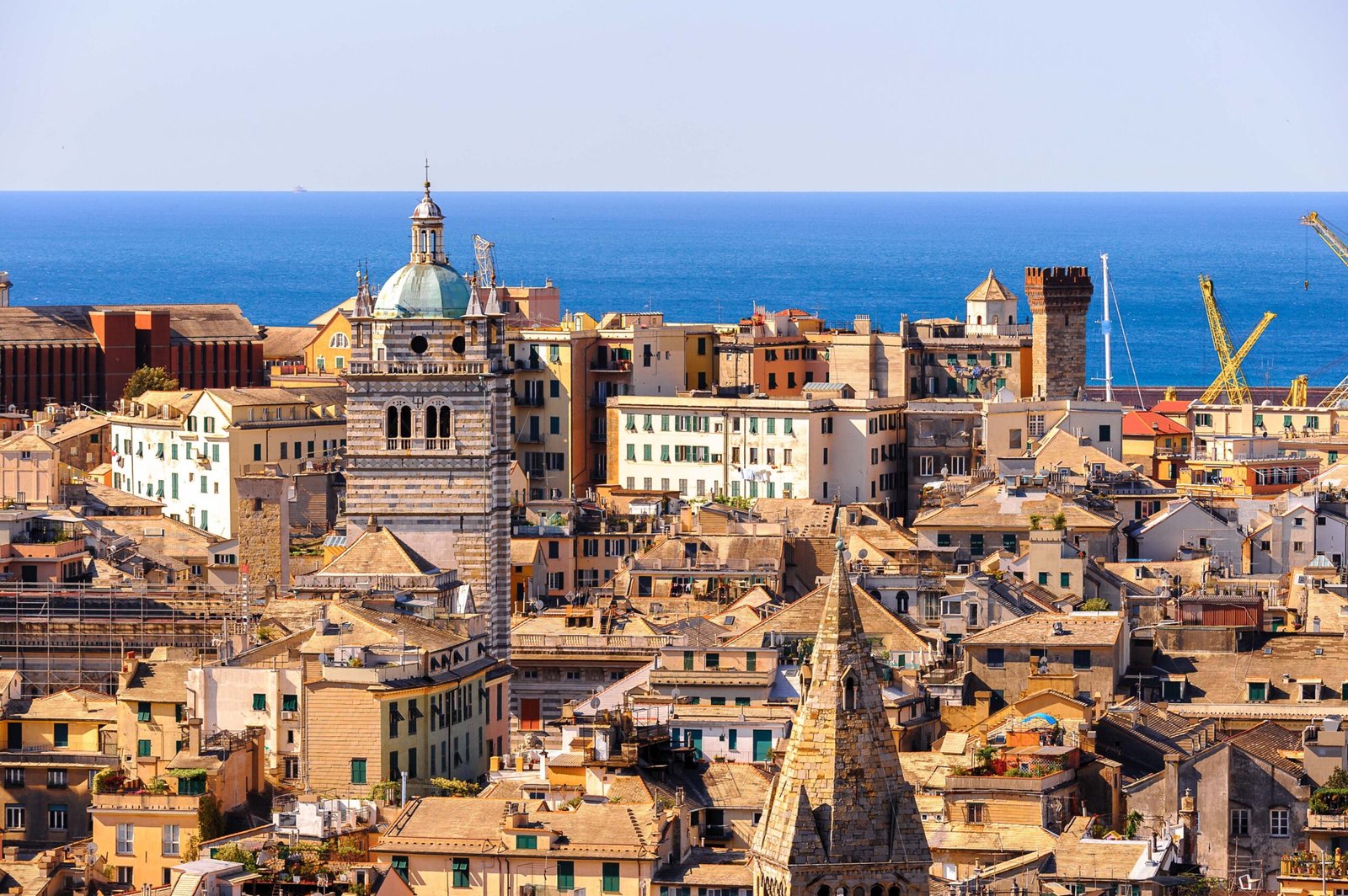
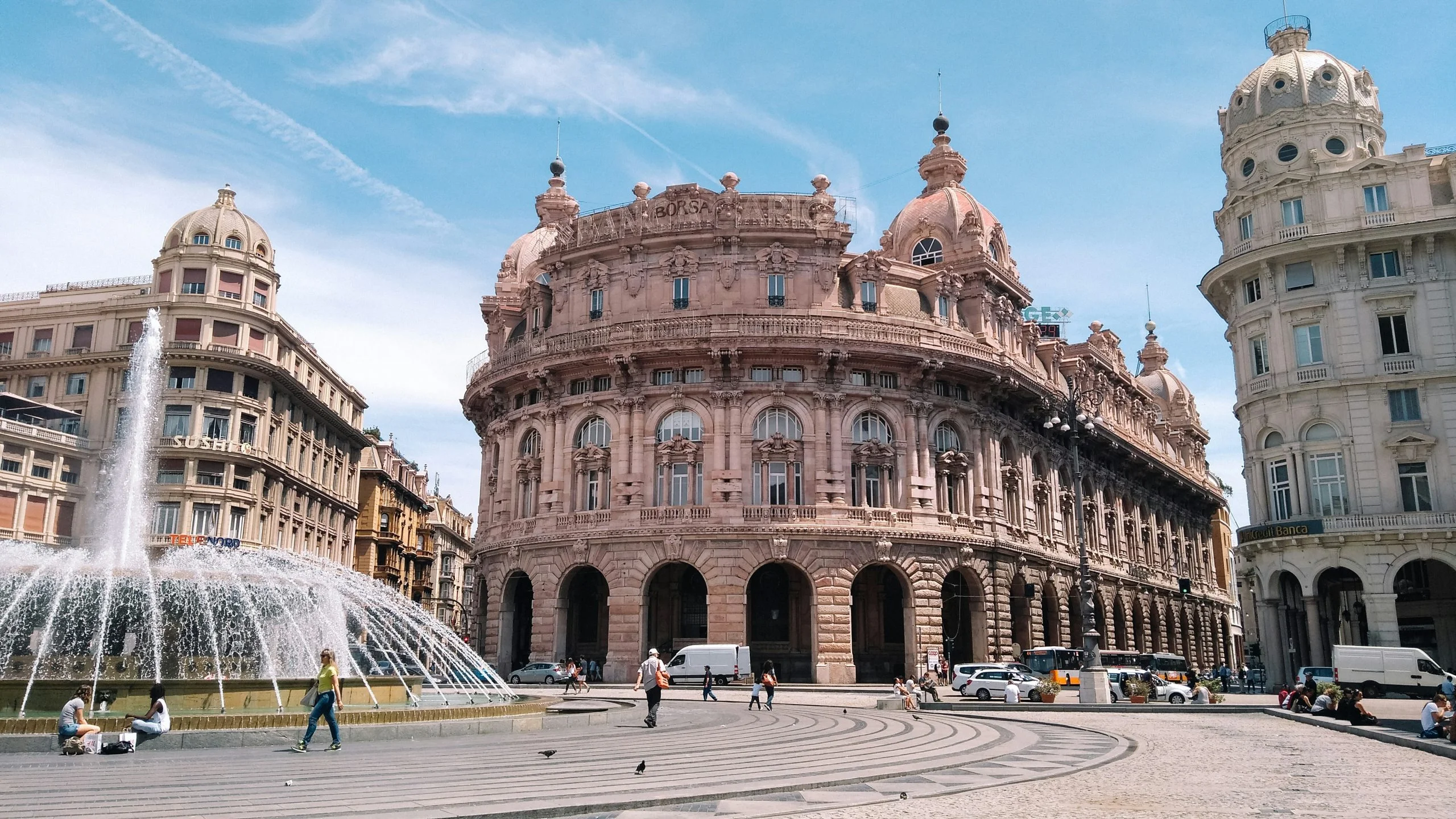
Genoa, the illustrious capital of Liguria, is dramatically situated between the rugged Apennine foothills and the azure expanse of the Ligurian Sea. As a historically dominant maritime republic within the Mediterranean basin, the city evolved into a cosmopolitan nexus, resulting in a contemporary urban panorama defined by striking juxtapositions. Beyond its modernized Porto Antico and internationally renowned aquarium, Genoa harbors one of Europe’s most extensive continuous medieval centers. Within these ancient fortifications, remnants of a majestic past intertwine with avant-garde architectural modernizations, most notably the visionary interventions of architect Renzo Piano.
The “Strade Nuove” and the “Palazzi dei Rolli”
The authentic spirit of Genoa resides within its “caruggi”—a labyrinthine network of narrow, shadowed alleys that offer an immersive journey through centuries of civic history. In 2006, the profound cultural significance of this district was validated when UNESCO designated large sectors of the historic center as a World Heritage Site. Central to this accolade are the “Strade Nuove,” an extraordinary urban planning endeavor from the 16th century, bordered by the magnificent “Palazzi dei Rolli”. Historically, these opulent Renaissance and Baroque edifices functioned as elite lodgings for visiting state dignitaries, allocated through a formalized lottery system known as the “Rolli”. Today, 42 of the original hundred-plus palaces hold World Heritage status; they have been meticulously restored to illuminate the staggering wealth and architectural mastery of the Genoese banking aristocracy.
Via Garibaldi, originally designated as the “Strada Nuova,” stands as the architectural pinnacle of this era. It is flanked by monumental estates such as Palazzo Cambiaso and Palazzo Carrega-Cataldi. The street’s cultural epicenter is the “Musei di Strada Nuova,” a tripartite museum complex encompassing three vital residences:
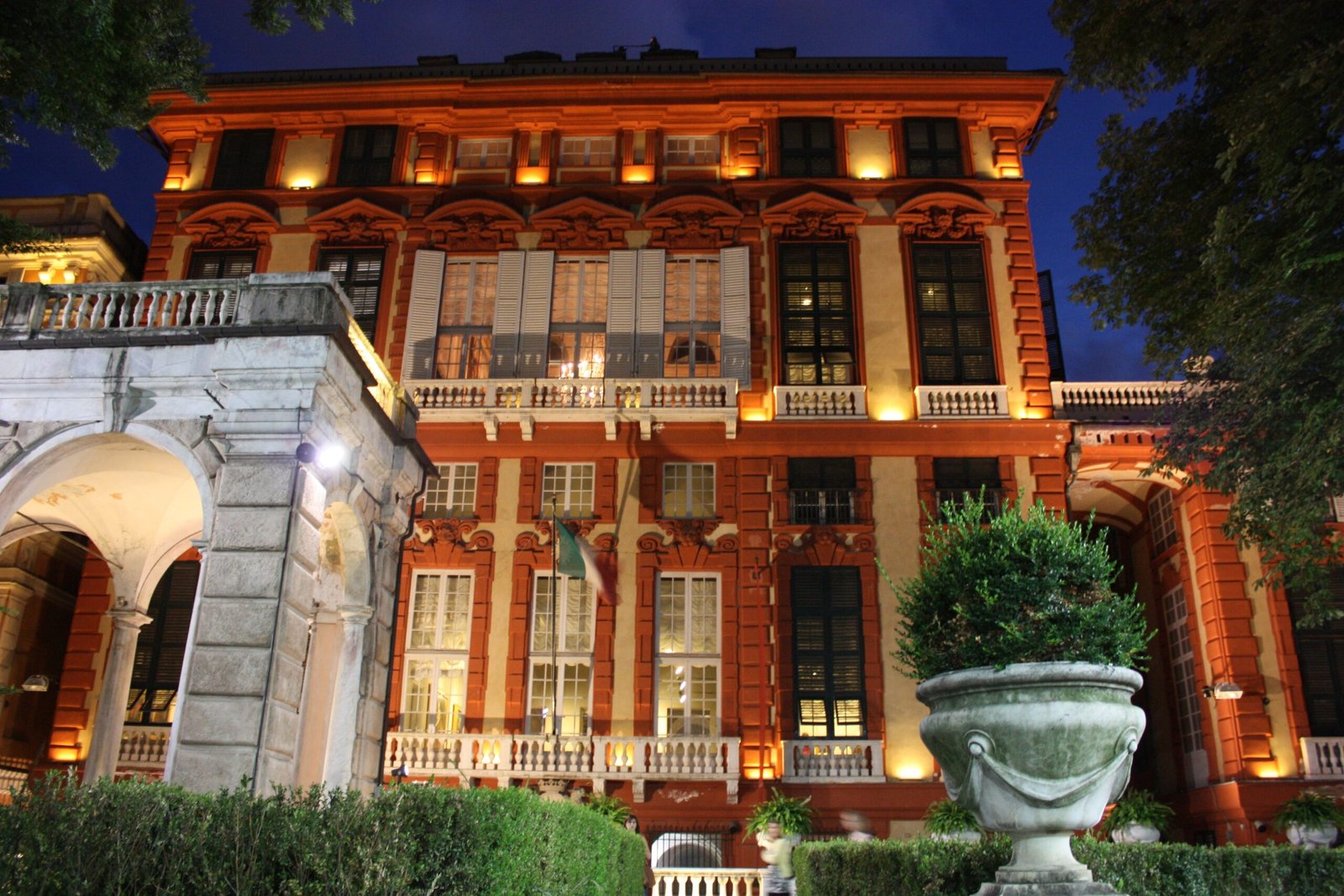
Palazzo Rosso: A 17th-century marvel recognizable by its crimson facade, featuring aristocratic chambers adorned with historical furnishings and a premier art collection boasting works by Albrecht Dürer, Veronese, Guercino, and Anthonis van Dyck.
Palazzo Bianco: Located directly opposite, this structurally understated palace contains a critical gallery of Italian, French, Spanish, and Flemish paintings spanning the 16th to 18th centuries, reflecting Genoa’s broad European cultural exchanges.
Palazzo Doria Tursi: The monumental culmination of the ensemble, which presently serves as the municipal headquarters. It houses priceless tapestries, historical ceramics, and the “Sala Paganini”. This specific exhibition space safeguards “Il Cannone,” the legendary 1743 Guarneri del Gesù violin once played by native virtuoso Niccolò Paganini, which remains in use for exclusive contemporary performances.
The Royal Splendor of Palazzo Reale
Further demonstrating the city’s aristocratic grandeur is the Palazzo Reale on Via Balbi. Originally constructed in the mid-17th century for the prominent Balbi family, the estate was acquired by the House of Savoy in the 19th century, serving as their official royal residence in Genoa. The palace’s opulent interior is accessed via a monumental staircase, leading to chambers adorned with precious marble, gilded stucco, and frescoes by Valerio Castello. The collection includes masterpieces by Tintoretto and Anthonis van Dyck, alongside impeccably preserved aristocratic furniture. The estate’s crowning achievement is the Hall of Mirrors, an optical marvel inspired by the galleries of Rome and Versailles, featuring strategically placed mirrors and gilded sculptures. Transitioning into state ownership in 1919, the museum also features a terraced garden that presents sweeping panoramic views over the historic harbor.
Monuments of Faith: San Lorenzo and Santissima Annunziata
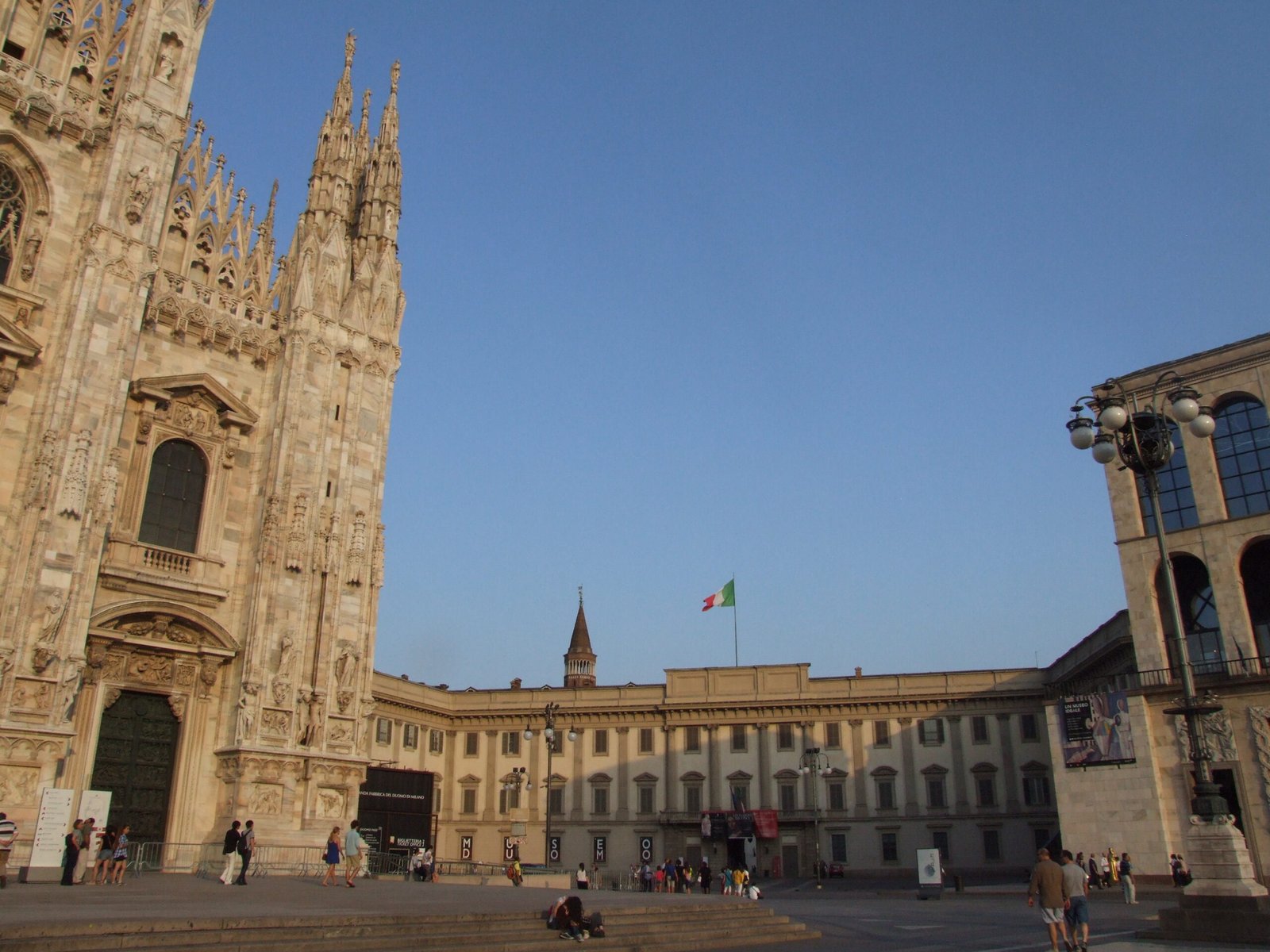
The Cathedral of San Lorenzo serves as the spiritual nucleus of the city, its architecture providing a chronological record of Genoa’s evolution. Initiated in the 9th century, the structure culminates in a majestic 13th-century Gothic western facade, distinguished by a central rose window and the region’s traditional black-and-white marble striping. This is juxtaposed with Romanesque side walls and a prominent 16th-century dome and bell tower. The three-nave interior features the Chapel of St. John the Baptist, which preserves the relics of the city’s patron saint within a precious ark. Beneath the cathedral lies the “Museo del Tesoro,” safeguarding masterworks of sacred goldsmithing, including the “Sacro Catino,” a vessel historically revered as the Holy Grail.
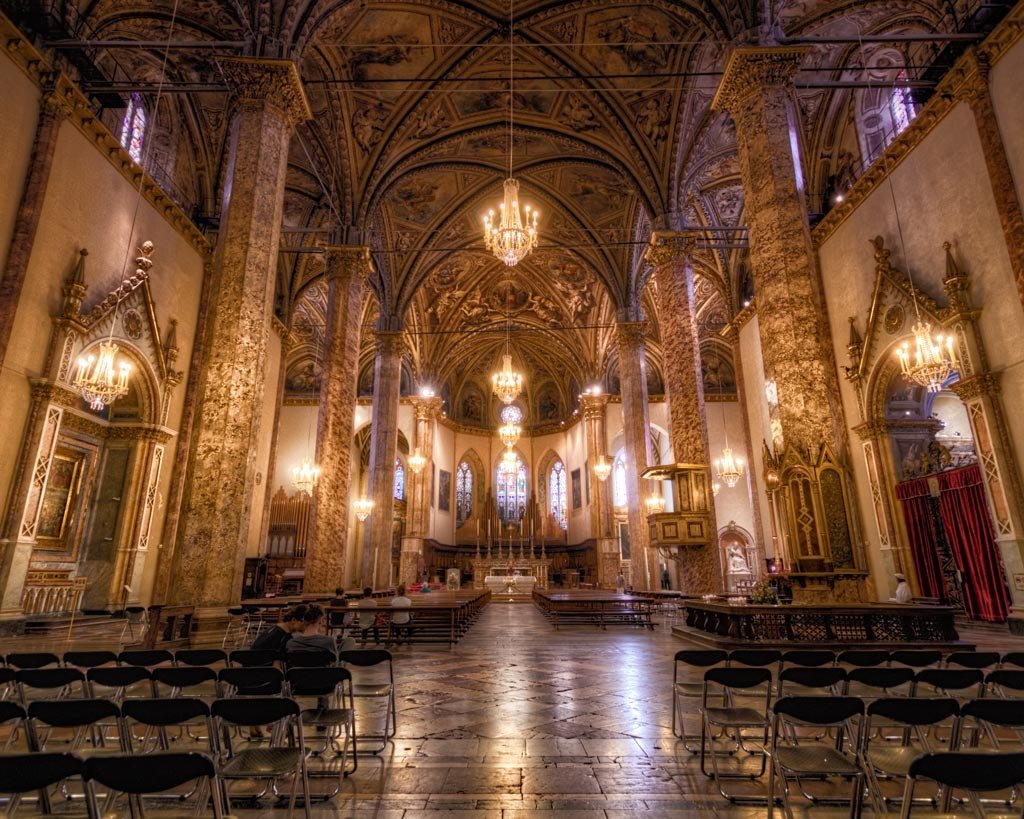
Equally breathtaking is the Basilica Santissima Annunziata del Vastato in the university district. While its 19th-century neoclassical portico projects austere elegance, the interior is a masterclass in Italian High Baroque opulence. Built upon older Franciscan foundations, the church was assumed by the Theatine order and transformed into an architectural manifesto of Counter-Reformation triumph. The vast interior is a spectacle of gilded stucco and intricate marble, dominated by Giovanni Andrea Ansaldo’s visionary dome frescoes depicting the life of Mary in breathtaking perspective. Further enriched by contributions from Domenico Fiasella and the Carlone brothers, the basilica was meticulously restored following severe Second World War bombardments to reflect the Republic’s former affluence.
The Seat of Secular Authority: Palazzo Ducale
Located in Piazza Matteotti, the Palazzo Ducale operated as the official residence of the Doges and the administrative epicenter of the Republic from the 14th until the late 18th century. The complex is a fascinating architectural palimpsest; while preserving 13th-century Gothic fragments, it is currently defined by a Mannerist facade and Neoclassical expansions instituted after a devastating 1777 fire. The sprawling courtyards and monumental staircases lead to the “Sale del Maggior e Minor Consiglio” (Halls of the Great and Small Council), where the Genoese elite deliberated state affairs. Presently, the palace functions as a premier socio-cultural venue, hosting elite literary festivals, conferences, and art exhibitions. For a poignant historical contrast, visitors may explore the Grimaldina Tower’s former prisons, where centuries-old inscriptions from inmates remain etched into the stone.
The Maritime Transformation: Porto Antico to the Modern Hub
Transitioning from the ancient center, guarded by the 12th-century twin-towered Porta Soprana and the reconstructed childhood home of Christopher Columbus, visitors encounter the Porto Antico. Revitalized by Renzo Piano for the 1992 Columbus Year, this former industrial dock is now a thriving cultural hub. It features the Genoa Aquarium—Italy’s preeminent marine park—which houses 12,000 animals representing 600 species within 70 exhibition tanks, including an emotionally resonant dolphin enclosure designed by Piano.
Adjacent innovations include the Biosphere, a steel-and-glass sphere harboring a tropical ecosystem with free-flying butterflies, and the Bigo panoramic elevator, modeled after historical loading cranes. Educational facilities include the “Città dei Bambini e dei Ragazzi,” an interactive science center for youth. The Galata Museo del Mare offers profound historical immersion through full-scale reconstructions of a 17th-century Genoese galley and a brigantine, alongside the floating “Nazario Sauro” submarine and the “Mirador” viewing terrace.
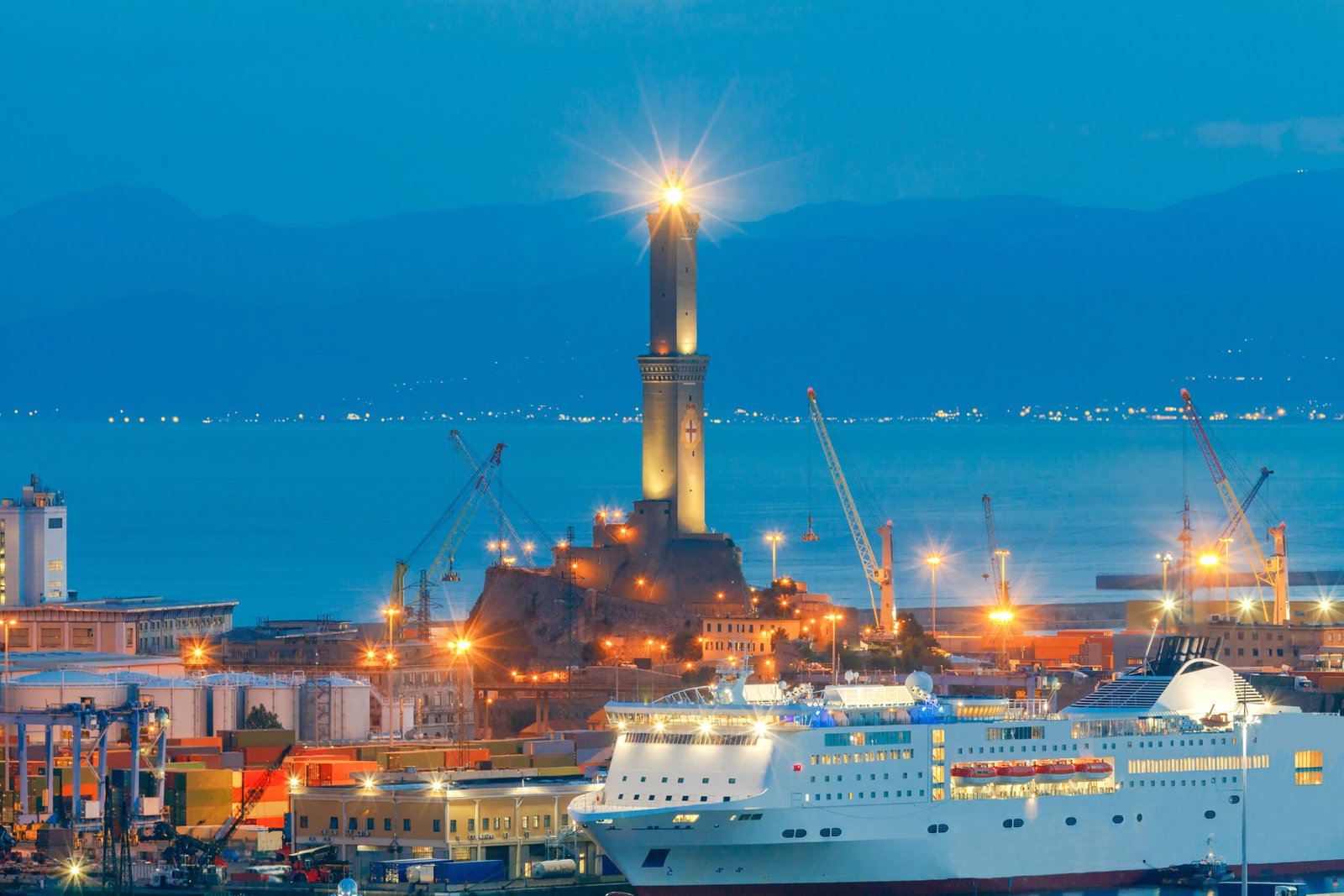
Further west lies the modern commercial port, Italy’s largest seaport, dominated by container gantry cranes and the expansive VTE terminal in Voltri. This logistical powerhouse also serves as a premier center for superyacht maintenance and international ferry transit. Watching over this entire maritime expanse is the Lanterna, Genoa’s 77-meter-tall lighthouse. Established in 1128 and assuming its current dual-square-tower configuration in 1543, it remains a symbol of the city’s enduring resilience and features a multimedia museum at its fortified base.
Elevated Perspectives and Culinary Heritage
To fully appreciate Genoa’s topographical complexity, one must visit the Spianata Castelletto. Accessible via an exquisite early-20th-century Art Nouveau elevator, this elevated terrace offers a mesmerizing panorama of the slate-roofed historic center against the backdrop of the modern harbor.
Genoa’s charm is further solidified by its culinary traditions, heavily featuring freshly caught seafood, artisanal focaccia, and the globally celebrated Pesto Genovese. Whether exploring the idyllic coastal enclave of Boccadasse or traversing the vibrant city squares, visitors experience a raw, unvarnished authenticity rare in modern European destinations.
Practical Guidelines for Travelers
Safety and Navigation: The historic “caruggi” are bustling and generally safe during daylight, though travelers should exercise standard urban precautions and favor well-lit squares during late evening hours. Sturdy footwear is highly recommended to navigate the uneven cobblestones and frequent stairways safely.
Cultural Etiquette: When entering the city’s numerous cathedrals and basilicas, visitors must ensure their shoulders and knees are respectfully covered.
Optimal Visitation Windows: Spring and autumn provide the most favorable climate for exploration and smaller crowds. The “Rolli Days,” occurring in May and October, offer a truly exceptional opportunity, as many private aristocratic palaces open their doors exclusively to the public during these periods.
Itinerary Planning: While a single day permits a cursory viewing of primary landmarks like Via Garibaldi and the Porto Antico, a dedicated stay of two to three days is strongly advised to properly immerse oneself in the city’s museums, historical depth, and culinary offerings.